
The global landscape of industrial thermal management is currently anchored by a sophisticated reliance on precision electronics. As heavy industries—ranging from petrochemical refining to high-volume food processing—transition toward more sustainable and energy-efficient operations, the demand for specialized control hardware has reached an all-time high. At the center of this technological surge is the industrial heater control board factory, a specialized manufacturing hub that bridges the gap between raw electrical power and intelligent thermal regulation. These facilities do not merely assemble components; they engineer the core intelligence that allows massive heating systems to operate with surgical precision, ensuring that safety, efficiency, and reliability are never compromised in the pursuit of industrial productivity.
Modern industrial heaters are no longer simple resistive coils governed by primitive thermostats. They are complex systems that require real-time data processing, multi-stage power modulation, and seamless integration into broader factory automation networks. This complexity has shifted the burden of innovation onto the industrial heater control board factory, where engineers and production specialists work in tandem to develop high-performance circuit assemblies. By focusing on the unique rigors of industrial environments—such as extreme temperature fluctuations, mechanical vibration, and electrical noise—these factories provide the essential backbone for the thermal processes that drive the modern world.
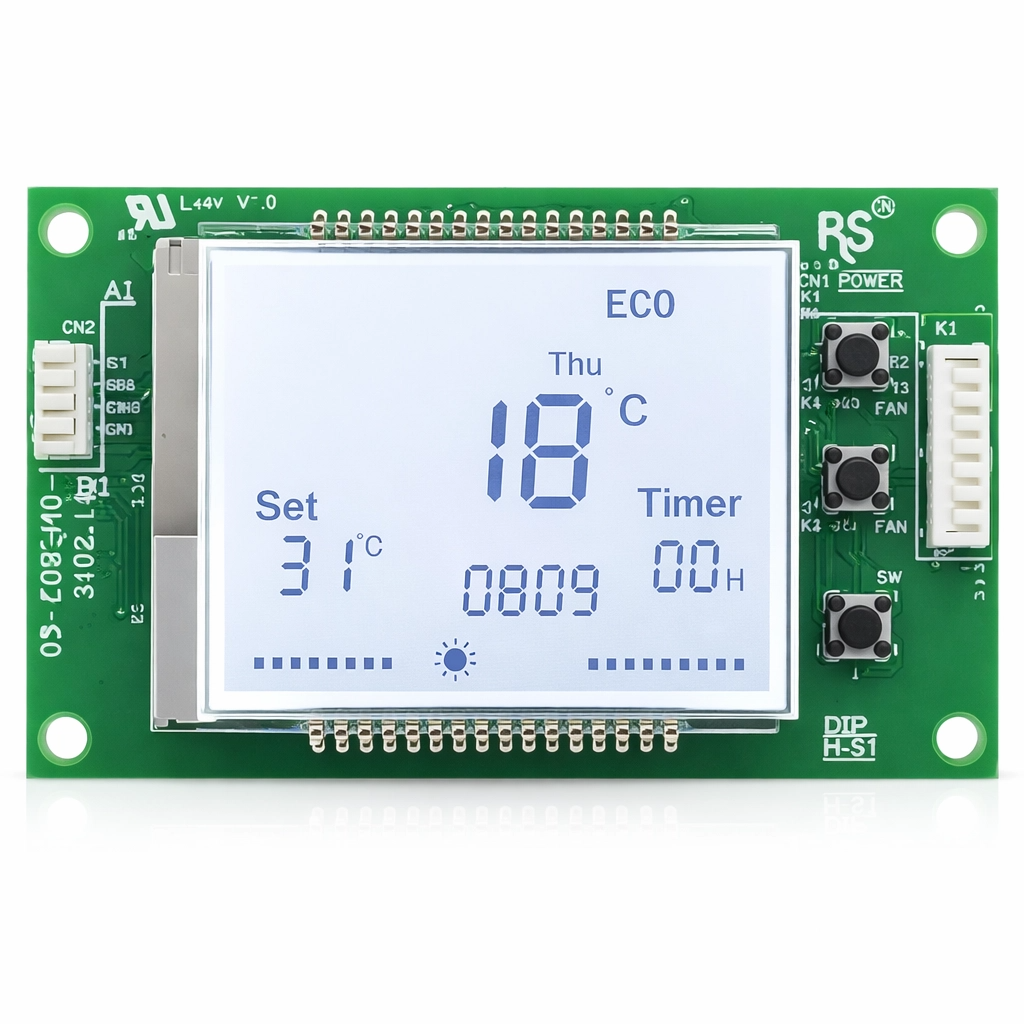
The Strategic Importance Of Heater Control Board OEM ODM Services
In an era defined by rapid product cycles and specialized niche markets, the ability to bring a unique heating product to market quickly is a significant competitive advantage. This is where the value of heater control board oem odm services becomes apparent. Original Equipment Manufacturing (OEM) and Original Design Manufacturing (ODM) models allow industrial brands to leverage the existing infrastructure and technical expertise of a dedicated electronics partner. For a company that excels in mechanical heater design but lacks deep expertise in surface-mount technology (SMT) or firmware development, partnering with an ODM allows them to integrate cutting-edge smart features without the massive overhead of building an in-house electronics division.
A premier heater control board oem odm provider offers a comprehensive suite of services that begins long before the first soldering iron is heated. The process starts with a deep dive into the specific application requirements, whether it involves a high-voltage kiln controller or a precision chemical bath regulator. The factory’s engineering team analyzes thermal profiles, load requirements, and safety compliance standards to create a customized blueprint. This collaborative approach ensures that the final control board is not just a generic component, but a tailored solution optimized for the specific mechanical and electrical constraints of the client’s heating system.
Technical Mastery Of The Custom Electric Heater PCBA Manufacturer
The role of a custom electric heater PCBA manufacturer is defined by an obsession with quality and a commitment to material science. Industrial-grade circuit boards are fundamentally different from consumer electronics. They must be built on high-Tg (glass transition temperature) substrates that remain structurally sound even when subjected to the intense heat radiation of a nearby furnace. Every trace, via, and solder joint must be engineered to handle the thermal expansion and contraction cycles that occur thousands of times over the lifespan of the equipment.
A leading custom electric heater PCBA manufacturer utilizes advanced manufacturing techniques such as heavy copper plating and selective soldering to ensure that high-current paths can operate without generating parasitic heat. Furthermore, the selection of components—from automotive-grade microcontrollers to high-reliability capacitors—is dictated by the need for a twenty-year service life in harsh conditions. By implementing rigorous Automated Optical Inspection (AOI) and X-ray analysis, these manufacturers can guarantee the integrity of complex Ball Grid Array (BGA) components and multi-layer board structures, ensuring that the “brain” of the heater remains functional in the most punishing industrial settings.
Engineering Resilience Into The Industrial Electric Heater PCBA
The industrial electric heater PCBA must act as a resilient shield against the chaotic electrical environment of a modern factory. Large industrial motors, arc welders, and power switchgear generate significant electromagnetic interference (EMI) and voltage spikes that can easily cripple a standard circuit board. To combat this, engineers at an industrial heater control board factory incorporate sophisticated filtering stages, galvanic isolation, and specialized shielding into the PCBA design. This ensures that the control logic remains unperturbed by the electrical “noise” surrounding it, maintaining a stable temperature regardless of the external conditions.
Safety is another critical pillar in the design of the industrial electric heater PCBA. Because failure in an industrial heater can lead to fires, explosions, or toxic leaks, the control board must feature multiple layers of hardware-level protection. This includes redundant sensor inputs, ultra-fast electronic fusing, and “fail-safe” states that automatically shut down the power if a critical component or communication link is lost. This meticulous attention to safety engineering is what allows high-power industrial heaters to operate autonomously within sensitive production environments, providing the peace of mind that facility managers require.
Holistic Integration Via A Heating System Control PCBA Solution
The trend toward “Industry 4.0” has transformed the standalone heater into a connected node within a digital ecosystem. A modern heating system control PCBA solution is no longer just about managing heat; it is about managing data. Today’s control boards are equipped with high-speed communication interfaces like Modbus TCP, Ethernet/IP, or even wireless LoRaWAN modules. This allows the heater to provide real-time feedback to a centralized SCADA system, reporting on energy consumption, heating element health, and operational efficiency.
By providing a comprehensive heating system control PCBA solution, the manufacturer enables predictive maintenance. Instead of waiting for a heater to fail and halt production, the control board can detect subtle changes in current draw or thermal lag that indicate a component is nearing the end of its life. This intelligence allows the industrial operator to schedule repairs during planned downtime, significantly reducing the Total Cost of Ownership (TCO) for the equipment. As factories become smarter and more integrated, the sophisticated software embedded in the PCBA becomes just as important as the copper and silicon that carry the current.