
The global landscape of consumer electronics and industrial automation has shifted toward a future defined by seamless connectivity and intelligent processing. At the core of this transformation is a sophisticated piece of hardware that acts as the brain for a thousand different applications. The rise of the esp32-based iot appliance pcba represents a significant milestone in how we design, manufacture, and interact with the objects in our daily lives. As manufacturers and designers seek to balance power consumption with high-speed data transmission, the integration of specialized control boards has become the primary differentiator between a standard product and a market-leading smart device.
Creating a reliable communication bridge between a physical machine and a cloud-based server requires more than just a simple microcontroller. It demands a holistically engineered system where every copper trace and passive component is optimized for wireless performance. For original equipment manufacturers, the move toward an integrated esp32 iot pcba allows for a reduction in physical footprint while simultaneously increasing the computational overhead available for edge AI and local data processing. This evolution ensures that the next generation of smart appliances—ranging from intelligent kitchen tech to sophisticated HVAC systems—can operate with the autonomy and security required by modern digital standards.
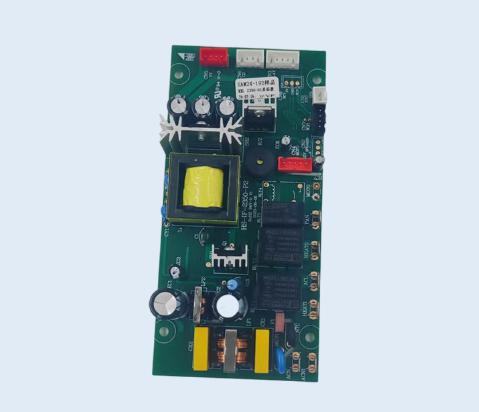
Technical Integration Of The ESP32 Wi-Fi BLE 5.0 Control Board In High-Density Environments
Wireless interference remains one of the most persistent challenges in the deployment of smart technology, especially in urban or industrial settings where dozens of signals compete for bandwidth. The development of a specialized esp32 wi-fi ble 5.0 control board addresses this issue by utilizing the latest advancements in Bluetooth Low Energy standards alongside robust 2.4 GHz Wi-Fi. The inclusion of BLE 5.0 is particularly transformative, as it offers a significantly increased range and higher throughput compared to previous generations, all while maintaining an incredibly low power profile. This dual-mode capability allows a device to be easily commissioned via a smartphone and then switch to a long-range Wi-Fi connection for continuous telemetry.
The engineering of such a board requires a deep understanding of radio frequency (RF) design. In a compact iot development board pcba esp32, the placement of the antenna relative to the switching power supply and high-speed digital lines is critical. A poorly designed layout can lead to signal attenuation or “blind spots” in connectivity, which frustrates end-users and increases support costs for the manufacturer. By employing advanced simulation tools and high-quality dielectric substrates, engineers can create a stable environment where wireless signals remain clear even when the board is enclosed in metal or dense plastic housings. This precision ensures that the smart appliance remains responsive and reliable throughout its entire operational lifecycle.
Designing An ESP32 Wireless Control Board For IoT Devices In Demanding Industrial Scenarios
While consumer-grade electronics often prioritize aesthetics, industrial and commercial applications demand a level of ruggedness that standard hardware cannot provide. An esp32 wireless control board for iot devices intended for a commercial laundry system, a smart factory sensor, or an outdoor lighting controller must be built to survive. This involves the selection of wide-temperature range components and the implementation of protective measures such as conformal coating. This microscopic layer of resin protects the sensitive silicon and solder joints from moisture, dust, and chemical vapors, which are common in many IoT deployment environments.
Furthermore, the electrical architecture of an esp32-based iot appliance pcba must be capable of handling the “dirty” power often found in industrial grids. Voltage spikes, brownouts, and electromagnetic noise from heavy machinery can easily reset or damage a standard microcontroller. To prevent this, professional-grade PCBA designs incorporate advanced power filtering, optical isolation, and transient voltage suppression. This creates a “hardened” hardware foundation that allows the ESP32 to focus on its primary tasks—processing sensor data and maintaining secure cloud connections—without being interrupted by environmental electrical instability. This focus on durability is what separates professional IoT solutions from hobbyist prototypes.
The Strategic Advantage Of Custom ESP32 IOT PCBA Fabrication For Scalable Product Lines
As a product moves from the conceptual phase into mass production, the efficiency of the manufacturing process becomes a vital factor in its commercial success. A dedicated esp32 iot pcba is designed with manufacturability in mind, utilizing surface mount technology (SMT) that allows for high-speed, automated assembly. This consistency is essential for maintaining quality across thousands of units. When every resistor and capacitor is placed with robotic precision, the risk of “infant mortality” in electronic components is significantly reduced. This reliability builds trust with the end-user and strengthens the brand’s position in the global market.
Beyond the physical assembly, a specialized iot development board pcba esp32 provides the necessary hooks for automated functional testing. Modern production lines use “bed-of-nails” testing fixtures that can verify every electrical pathway on the board in a matter of seconds. This includes testing the wireless signal strength, verifying sensor accuracy, and pre-flashing the board with the latest encrypted firmware. This level of vertical integration ensures that when the PCBA is finally installed into the appliance, it is a fully validated and secure engine ready to power a smart ecosystem. By reducing the complexity of the final assembly, manufacturers can lower labor costs and improve overall throughput.
Future-Proofing Smart Ecosystems With Advanced IoT Development Board PCBA ESP32 Solutions
The rapid pace of software development means that hardware must be designed with the future in mind. The generous memory and processing power of the ESP32 make it an ideal candidate for long-term deployments. An esp32-based iot appliance pcba is capable of receiving over-the-air (OTA) updates that can add new features, patch security vulnerabilities, or improve energy efficiency long after the product has left the factory. This capability transforms the hardware from a static investment into an evolving asset that can adapt to new communication protocols like Matter or Thread.
The role of the esp32 wireless control board for iot devices also extends into the realm of sustainability. By optimizing the sleep modes and power states of the ESP32, designers can create appliances that consume significantly less “vampire power” when in standby. In a world increasingly focused on energy conservation and carbon footprints, the intelligence of the control board is a key factor in meeting green building certifications and international energy standards. The synergy between high-performance hardware and efficient software is what will ultimately define the success of the Internet of Things, creating a world where technology works silently and efficiently in the background to improve our quality of life.
Ultimately, the journey of a smart appliance begins with the quality of its foundation. By prioritizing the engineering of the PCBA, focusing on wireless integrity, and ensuring industrial-grade durability, manufacturers can create products that not only meet the current demands of the market but are prepared for the challenges of the next decade. The ESP32 remains the heartbeat of this movement, providing the processing power and connectivity needed to turn any ordinary appliance into an extraordinary smart device.