
In the current era of hyper-connectivity, the architecture of household and industrial equipment is undergoing a radical transformation. The shift from mechanical switches to intelligent, cloud-connected interfaces has placed a significant emphasis on the underlying hardware that governs these systems. At the center of this revolution is the ESP32 microcontroller, a versatile and powerful chip that has become the gold standard for wireless communication. However, the true potential of this silicon is only realized when it is integrated into a professionally engineered circuit. This is where the expertise of a custom esp32 iot appliance pcba manufacturer becomes the most critical link in the supply chain, bridging the gap between a conceptual digital idea and a tangible, high-performance physical product.
Building a smart appliance is no longer just about adding a Wi-Fi module to an existing design. It requires a holistic rethinking of power management, sensor integration, and signal integrity. A dedicated manufacturer understands that an esp32 control board pcba must be designed to withstand the unique rigors of its intended environment, whether that involves the high-temperature surroundings of a smart oven or the moisture-rich atmosphere of an intelligent washing machine. By focusing on specialized fabrication techniques, these manufacturers ensure that the heartbeat of the appliance remains steady and secure throughout its operational lifespan.
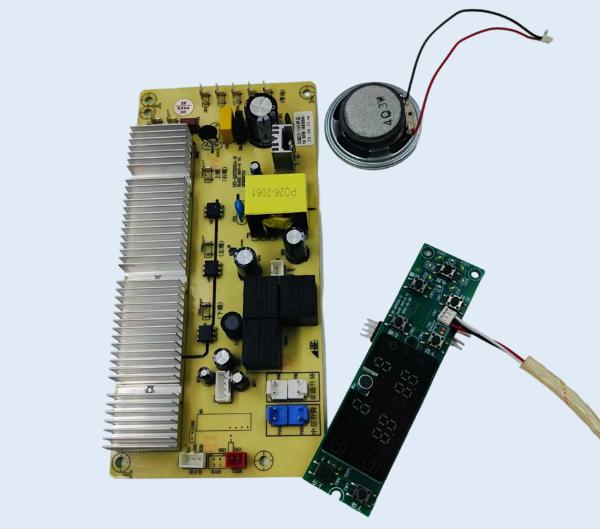
Engineering Precision Within A Custom ESP32 Control Board For Smart Home Ecosystems
The design phase of a custom esp32 control board is a delicate balancing act between form factor and functionality. As consumer expectations shift toward sleeker, more compact devices, the real estate available on a printed circuit board diminishes. A sophisticated manufacturer employs high-density interconnect technology to pack immense processing power into minimal space. This involves complex multi-layer routing that prevents electromagnetic interference from disrupting the sensitive Wi-Fi and Bluetooth signals that the ESP32 is famous for. Without this level of engineering rigor, a smart device might suffer from frequent disconnections or erratic sensor readings, which can ultimately damage a brand’s reputation in a competitive marketplace.
Furthermore, the integration of user interface elements like capacitive touch, LED indicators, and haptic feedback requires a deep understanding of the ESP32’s peripheral capabilities. A manufacturer specializing in this niche does not simply populate a board with components; they optimize the electrical paths to ensure that the response time is instantaneous. When a user interacts with a smart thermostat or a connected lighting panel, the latency must be imperceptible. Achieving this level of fluid interaction depends heavily on the quality of the PCBA fabrication and the precision of the assembly process, where even a microscopic soldering flaw could lead to intermittent failures in the field.
Reliability Standards For The ESP32-Based IOT Appliance PCBA In Industrial Applications
While consumer gadgets focus on user experience, industrial IoT demands a much higher level of ruggedness and longevity. An esp32-based iot appliance pcba intended for industrial use must be able to handle voltage fluctuations, mechanical vibrations, and prolonged duty cycles. A professional manufacturer addresses these challenges by selecting industrial-grade passive components and implementing robust thermal dissipation strategies. For instance, high-current traces are often reinforced with thicker copper weights to prevent overheating during peak loads. This attention to detail ensures that the control board can act as a reliable gateway between heavy machinery and the remote monitoring software used by plant managers.
The manufacturing process also incorporates advanced testing protocols to guarantee that every unit leaving the facility meets global safety standards. Beyond standard visual inspections, automated optical inspection and functional circuit testing are used to simulate real-world operating conditions. For an esp32 appliance control board, this might include stress-testing the wireless range or verifying the integrity of the onboard flash memory. By identifying potential weak points during the production phase, the manufacturer provides original equipment manufacturers with the confidence that their finished products will perform flawlessly in diverse geographical regions with varying electrical grid stabilities.
Innovations In ESP32 Control Board PCBA Connectivity And Edge Computing
One of the most significant advantages of partnering with a specialized custom esp32 iot appliance pcba manufacturer is the ability to leverage edge computing. The ESP32 is not just a communication pipe; it is a powerful processor capable of running sophisticated algorithms locally. This means that a smart air purifier, for example, can analyze air quality data in real-time and adjust its motor speed without waiting for instructions from a cloud server. This local intelligence reduces the load on network bandwidth and enhances user privacy, as less raw data needs to be transmitted over the internet.
A high-quality esp32 control board pcba is designed to maximize this local processing power while maintaining an ultra-low power profile. This is particularly important for battery-operated smart devices or those that must comply with strict energy efficiency ratings. Manufacturers use specialized low-dropout regulators and optimize the power planes on the PCB to ensure that the ESP32 can transition between deep-sleep and active modes with minimal energy loss. This efficiency is a hallmark of superior hardware design, allowing manufacturers to create products that are both eco-friendly and highly functional, meeting the dual demands of modern regulatory bodies and environmentally conscious consumers.
Sustaining Quality And Scalability In ESP32 Appliance Control Board Production
As an IoT product moves from the initial pilot phase to mass-market distribution, scalability becomes a primary concern. A professional manufacturer provides the infrastructure necessary to transition smoothly from low-volume prototypes to high-volume production runs without sacrificing quality. This involves a sophisticated supply chain management system that ensures a steady flow of genuine ESP32 modules and high-tolerance peripheral components. In an industry often plagued by component shortages, having a manufacturer with strong ties to reputable silicon vendors is an invaluable asset that prevents costly delays in product launches.
The final assembly of an esp32 appliance control board also benefits from the latest in robotic precision. Surface mount technology lines equipped with high-speed pick-and-place machines ensure that every component is aligned with sub-millimeter accuracy. This level of consistency is vital for maintaining signal integrity across thousands of units. Furthermore, a forward-thinking manufacturer offers end-to-end services, including conformal coating for environmental protection and custom enclosure assembly. This comprehensive approach allows brands to receive a “turnkey” solution, where the PCBA is not just a component, but a fully tested, ready-to-install engine that defines the intelligence of the smart appliance.
Ultimately, the success of any IoT venture rests on the reliability of its hardware. By choosing a manufacturer that understands the nuances of the ESP32 ecosystem, companies can ensure that their smart devices are not only innovative but also durable, secure, and ready for the future of the connected world. The synergy between expert electronic engineering and advanced manufacturing processes is what transforms a simple chip into a world-class control system.