
The global heating, ventilation, and air conditioning (HVAC) industry is currently undergoing a digital renaissance. What was once a field dominated by mechanical thermostats and simple bimetallic strips has transitioned into a sophisticated domain of integrated electronics and wireless connectivity. At the epicenter of this transformation is the smart heater PCBA, a critical component that has redefined how thermal energy is managed in residential and commercial spaces. As buildings become more intelligent, the demand for a comprehensive heating system control PCBA solution has surged, forcing manufacturers to innovate at the intersection of power electronics and high-level software. This evolution is not merely about convenience; it is a fundamental shift toward energy efficiency, predictive maintenance, and personalized climate control.
For decades, the standard electric heater control board was a relatively static device. Its primary function was to act as a gatekeeper for electrical current, engaging a heating element when a temperature threshold was met. However, the modern HVAC landscape demands far more. Today’s systems must communicate with cloud servers, analyze weather patterns, and adjust output based on real-time occupancy. This complexity has elevated the role of the custom electric heater PCBA manufacturer, as off-the-shelf solutions no longer suffice for brands looking to differentiate themselves in a crowded market. The journey from simple relays to AI-driven controllers represents one of the most significant engineering leaps in the history of building management systems.
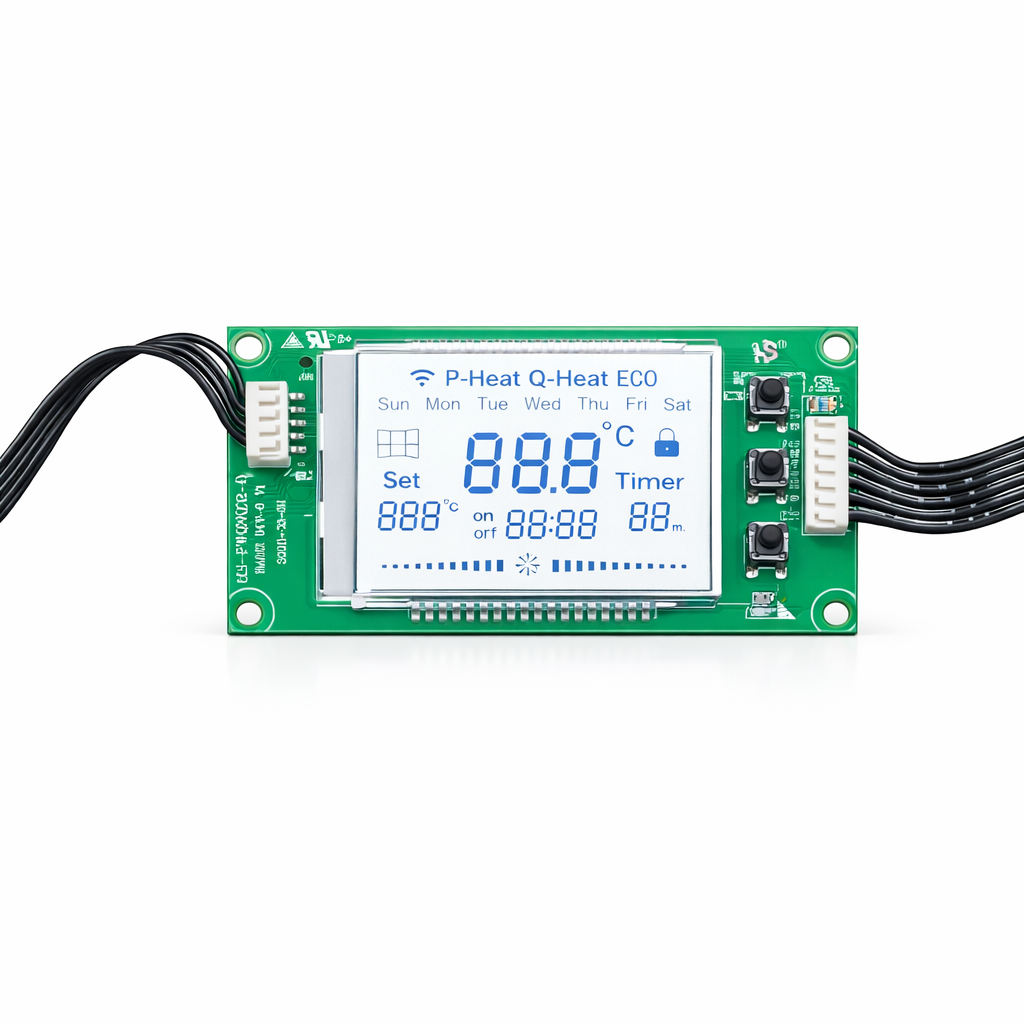
From Mechanical Relays To Intelligent Smart Heater PCBA Architectures
The early days of electric heating relied on basic circuitry where the primary concern was current capacity. However, as the industry matured, the limitations of mechanical switching—such as arcing, wear, and lack of precision—became apparent. The introduction of the smart heater PCBA replaced these mechanical components with solid-state technology. By utilizing triacs and MOSFETs, engineers could achieve silent switching and infinitely variable power output. This allowed for the implementation of proportional-integral-derivative (PID) control, which enables a heater to maintain a rock-steady temperature rather than oscillating between “too hot” and “too cold.”
Beyond thermal precision, the modern smart heater PCBA serves as a data hub. It is equipped with advanced microcontrollers capable of processing inputs from multiple sensors simultaneously. These boards can monitor ambient humidity, air quality, and even the health of the heating element itself. This shift from reactive to proactive control is a hallmark of the modern HVAC era. By embedding Wi-Fi or Bluetooth modules directly onto the electric heater control board, manufacturers allow users to interface with their heating systems through smartphone applications, providing a level of transparency and control that was unimaginable twenty years ago.
The Rise Of The Integrated Heating System Control PCBA Solution
As HVAC systems grew in complexity, a fragmentation problem emerged. Separate boards were often used for the blower motor, the heating element, and the user interface. This led to increased wiring complexity and higher failure rates. The industry’s response was the development of the holistic heating system control PCBA solution. This approach consolidates multiple functions into a single, high-performance motherboard. By integrating the power stage, the logic stage, and the communication interface into one unit, manufacturers have been able to reduce the physical footprint of the electronics while significantly improving reliability.
A modern heating system control PCBA solution is designed to be the “brain” of the entire thermal environment. It manages the ramp-up and ramp-down cycles to prevent thermal shock to the components, thereby extending the lifespan of the equipment. Furthermore, these integrated solutions often feature “over-the-air” (OTA) update capabilities. This means that if a more efficient heating algorithm is developed, it can be pushed to thousands of devices simultaneously without requiring a technician to visit the site. This level of adaptability ensures that the hardware remains relevant even as software standards continue to evolve.
Collaboration And Innovation In Heater Control Board OEM ODM Services
The complexity of modern electronics has made it difficult for traditional HVAC companies to keep all their engineering in-house. This has led to a strategic reliance on heater control board oem odm partners. Original Equipment Manufacturing (OEM) and Original Design Manufacturing (ODM) services allow HVAC brands to leverage the specialized expertise of electronics firms. An ODM partner doesn’t just manufacture the board; they actively participate in the R&D process, suggesting improvements in component selection, thermal management, and cost-optimization.
In the world of heater control board oem odm, customization is the key to market success. A brand might require a specific form factor to fit a sleek new radiator design, or they might need a board capable of handling high-voltage industrial loads. ODM providers offer a library of proven circuit designs that can be rapidly modified to meet these unique requirements. This collaborative model has accelerated the pace of innovation, allowing new technologies—such as touch-sensitive glass interfaces and voice-control integration—to move from concept to consumer in record time.
Quality Benchmarks For The Custom Electric Heater PCBA Manufacturer
With the high voltages and heat levels involved in electric heating, safety is the ultimate priority. Choosing a reputable custom electric heater PCBA manufacturer is a decision that impacts the legal and financial standing of an HVAC brand. A high-quality manufacturer must adhere to rigorous international standards, including UL, CE, and RoHS. The manufacturing environment must be strictly controlled to prevent electrostatic discharge (ESD) and contamination, both of which can lead to latent defects that manifest only after the product has been installed in a customer’s home.
A leading custom electric heater PCBA manufacturer also invests heavily in testing infrastructure. Every electric heater control board must undergo functional testing, where its logic is verified, and “burn-in” testing, where it is subjected to high loads to ensure it can handle the thermal stress of real-world use. Furthermore, advanced manufacturers use Automated Optical Inspection (AOI) and X-ray technology to verify the integrity of solder joints that are invisible to the naked eye. This obsession with quality is what ensures that a smart heater remains safe and functional for its intended ten-to-fifteen-year lifespan.