
The landscape of industrial thermal management is currently witnessing a paradigm shift driven by the demand for extreme power density and pinpoint accuracy. As manufacturing processes in sectors like metallurgy, chemical synthesis, and heavy-duty plastic extrusion become more demanding, the hardware responsible for regulating energy must evolve. Central to this technological surge is the 5t high-power heater control board, a specialized class of controller designed to handle massive electrical throughput while maintaining a compact physical footprint. Unlike standard controllers, these high-tonnage or high-capacity units are engineered to bridge the gap between heavy electrical engineering and micro-electronic precision, ensuring that the transition from raw electricity to controlled thermal energy is both efficient and safe.
Developing a robust high-power electric heater control board requires an multidisciplinary approach that goes beyond basic circuit design. In high-output environments, the primary adversary is heat—not just the heat intended for the process, but the parasitic heat generated within the control electronics themselves. Managing this internal energy requires advanced material science, including high-conductivity substrates and innovative cooling geometries. When a facility integrates an industrial heater main control board of this caliber, it is not merely installing a switch; it is implementing a sophisticated power-modulation engine that dictates the productivity and energy footprint of the entire operation.
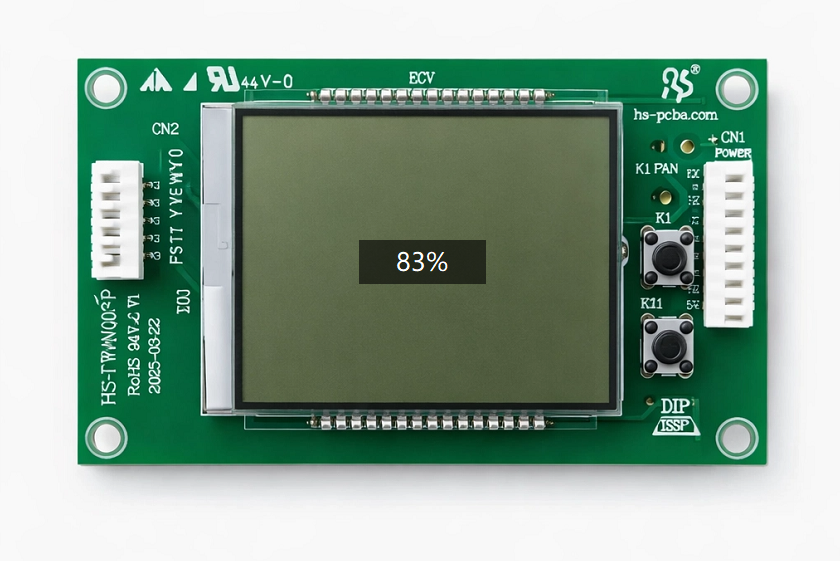
Superior Load Management In The 5t High-Power Heater Control Board
The core competency of a 5t high-power heater control board lies in its ability to manage immense current surges without degrading the integrity of the PCB traces. In high-power applications, traditional copper weights are insufficient. Engineers must utilize heavy-duty busbars integrated directly into the industrial electric heater PCBA to facilitate the movement of electrons with minimal resistance. This architecture is vital for preventing “hot spots” on the board, which are the leading cause of premature component failure in industrial settings. By optimizing the path of current, these boards achieve a level of stability that allows for continuous operation at peak capacity, a requirement for 24/7 manufacturing cycles.
Beyond physical current handling, the 5t high-power heater control board utilizes sophisticated phase-angle firing and zero-crossing technologies. These methods allow the controller to “slice” the electrical sine wave in a way that provides a smooth ramp-up of power, preventing the massive inrush currents that can trip circuit breakers or damage heating elements. This level of granular control is a hallmark of a high-end heating system control PCBA solution, providing the mechanical systems with a gentle yet powerful energy supply that extends the operational lifespan of the entire heating assembly.
Material Innovation For The Industrial Electric Heater PCBA
In the realm of the industrial electric heater PCBA, the choice of substrate is a critical design decision. Standard FR-4 fiberglass often fails under the localized thermal stress of high-power switching. Consequently, the industry has turned toward metal-clad PCBs or ceramic-filled laminates. These materials offer superior thermal conductivity, allowing the high-power electric heater control board to “wick” heat away from the semiconductors and into external heat sinks or liquid cooling loops. This thermal transparency is what enables the high power-to-size ratio found in modern industrial controllers.
Furthermore, the components mounted on an industrial electric heater PCBA must be selected for their extreme durability. This involves the use of high-temperature electrolytic capacitors, military-grade logic chips, and specialized soldering alloys that resist “creep” and cracking over thousands of thermal cycles. When an industrial heater main control board is manufactured with these premium materials, it becomes an asset capable of withstanding the vibration, dust, and chemical exposure typical of a factory floor, ensuring that the control logic remains uncompromised regardless of the external environment.
Intelligence And Connectivity In The Industrial Heater Main Control Board
Modern industrial facilities no longer operate in isolation, and the industrial heater main control board has adapted to this interconnected reality. Today’s high-power solutions are equipped with high-speed microprocessors that allow for real-time data logging and diagnostic reporting. By integrating an intelligent heating system control PCBA solution, plant managers can monitor real-time energy consumption and heater health through centralized SCADA systems. This connectivity is essential for predictive maintenance; the board can detect subtle changes in the resistance of the heating elements, alerting staff to a potential failure before it results in unplanned downtime.
The software architecture within the 5t high-power heater control board also features advanced PID (Proportional-Integral-Derivative) algorithms. These mathematical models are tuned to handle the thermal inertia associated with large-scale industrial loads. Whether the process requires a rapid heat burst or a slow, steady soak, the industrial electric heater PCBA calculates the optimal power output in milliseconds, preventing temperature overshoot and ensuring that the final product meets strict quality tolerances. This marriage of “brawn” (power handling) and “brain” (software logic) is what defines the technical edge of modern thermal solutions.
Comprehensive Safety Protocols In Heating System Control PCBA Solution
Safety is the paramount concern whenever high-voltage electricity is involved. A professional heating system control PCBA solution incorporates multiple layers of hardware and software-based protection. The 5t high-power heater control board is designed with galvanic isolation to separate the low-voltage control logic from the high-voltage power stage. This protects both the human operators and the sensitive digital components from catastrophic failure. Additionally, rapid-response fuses and electronic crowbar circuits are integrated to shut down the system in the event of a short circuit or ground fault.
Moreover, the high-power electric heater control board includes secondary safety inputs for external sensors, such as over-temperature limit switches and airflow detectors. The logic on the industrial heater main control board is programmed to prioritize these safety interrupts above all other commands. In the event of a cooling system failure or a blocked duct, the board will instantly throttle or cut power to the elements. This rigorous approach to safety engineering is what allows high-power heaters to be deployed in sensitive environments, such as pharmaceutical cleanrooms or volatile chemical plants, with total confidence in their operational security.