
The global shift toward energy-efficient heating solutions has placed infrared technology at the forefront of thermal engineering. Unlike traditional convection systems that warm the air, infrared heating mimics the sun by transferring energy directly to objects and people via electromagnetic radiation. This fundamental difference in heat transfer requires a highly specialized management system, known as the infrared heater control board. The sophistication of this technology is what allows modern heaters to operate with surgical precision, ensuring that energy is not wasted on unoccupied spaces or ambient air. As industries and homeowners seek to lower their carbon footprints, the role of advanced control electronics has transitioned from a basic utility to a critical driver of thermodynamic performance.
At the heart of an infrared system is the ability to modulate wavelength and intensity. Achieving this requires a sophisticated heating element control board that can manage rapid cycling and high-wattage throughput without degrading the structural integrity of the heating filaments. Because infrared elements reach peak temperatures much faster than oil-filled or ceramic alternatives, the control logic must be significantly more responsive. This agility is what makes infrared technology ideal for large, drafty environments where traditional heating fails, but it also necessitates a level of electronic robustness that only professional-grade circuit design can provide.
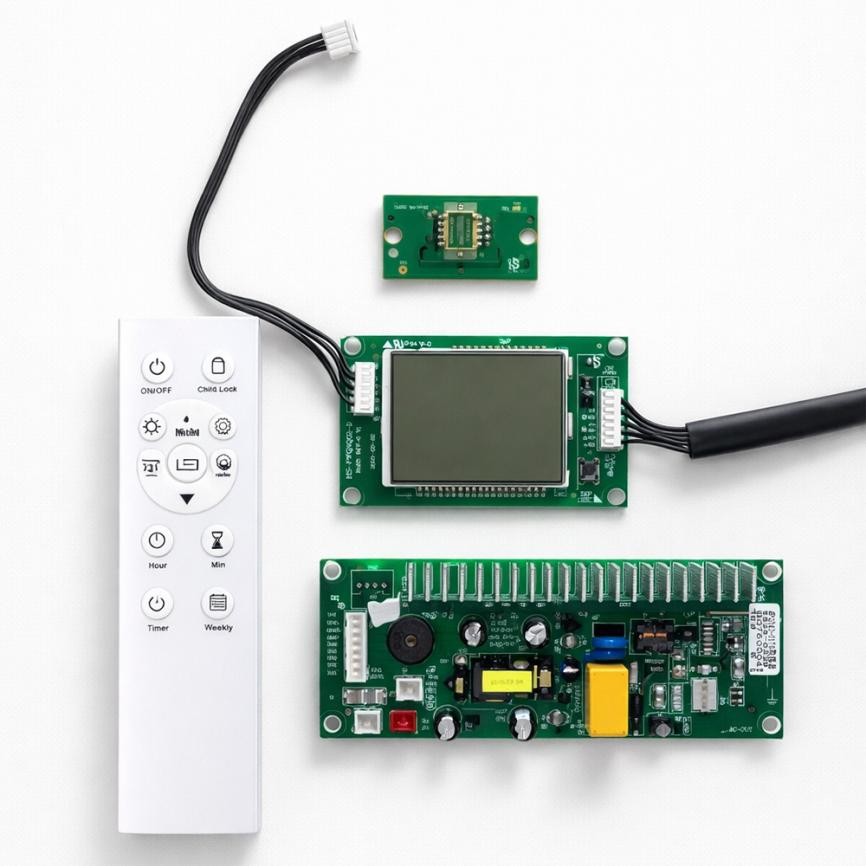
The Architecture Of A High-Performance Infrared Heater Control Board
Engineering an infrared heater control board involves a complex balancing act between power handling and signal integrity. Because infrared heaters often operate at high voltages to produce the necessary radiant intensity, the PCB (Printed Circuit Board) must be designed with adequate creepage and clearance distances to prevent electrical arcing. Furthermore, the board must handle significant electromagnetic interference (EMI) generated by high-frequency switching. A well-designed control board utilizes multi-layer shielding and strategic component placement to ensure that the microprocessors governing the temperature logic remain undisturbed by the massive currents flowing nearby.
In addition to electrical management, the infrared heater control board must be thermally resilient. Since these boards are often housed within the heater’s chassis, they are exposed to the very radiant heat they generate. Engineers utilize high-Tg (glass transition temperature) laminates and heavy copper traces to facilitate heat dissipation. By integrating thermal vias and dedicated heat sinks, the control board can maintain its operational efficiency even during extended periods of high-intensity output. This thermal management is crucial; if the board overheats, the timing of the power cycles can drift, leading to uneven heating and wasted electricity.
Ruggedized Design For The Infrared Garage Heater PCBA
Garages and workshops present some of the most challenging environments for electronic components. These spaces are often uninsulated, prone to dust accumulation, and subject to extreme temperature swings. A specialized infrared garage heater PCBA is engineered specifically to survive these conditions. Unlike standard indoor electronics, a garage-rated board is typically treated with a conformal coating—a thin chemical film that protects the circuitry from moisture, sawdust, and automotive vapors. This protection is vital for preventing dendritic growth and corrosion, which are the leading causes of short circuits in outdoor or semi-outdoor applications.
The infrared garage heater PCBA also incorporates “soft-start” technology. In a cold garage, turning on a high-power infrared heater can create a massive inrush current that stresses the local electrical grid and the heater’s own components. The control board mitigates this by gradually ramping up the voltage to the infrared lamps. This not only prevents circuit breakers from tripping but also extends the life of the heating elements by reducing thermal shock. For the user, this means a more reliable heating experience and significantly lower maintenance costs over the lifetime of the unit.
Precision Modulation Via The Infrared Heating Element Control Board
The true efficiency of radiant heating is unlocked through the infrared heating element control board. Traditional heaters often rely on a simple on-off thermostat, which leads to large temperature swings and inefficient energy use. In contrast, modern infrared systems utilize Pulse Width Modulation (PWM) or phase-angle firing to provide a continuous, steady stream of radiant energy. By “slicing” the electrical sine wave, the infrared heating element control board can adjust the heater’s output to within one percent of the desired level. This allows the system to maintain a “perceived” temperature that is perfectly stable, even as the external environment changes.
This level of precision is especially important for short-wave infrared heaters, which produce intense, immediate heat. Without a sophisticated heating element control board, these units would be too intense for close-range use. The ability to dim the lamps and modulate the heat flux allows for diverse applications, from localized paint drying in industrial settings to providing comfortable warmth on a backyard patio. By ensuring that the heater only consumes the exact amount of power required to maintain the set point, these control boards maximize the “coefficient of performance” for the entire heating system.
The Core Functions Of The Universal Electric Heater Control Board
While infrared technology is specialized, it often exists within a broader ecosystem of thermal management. The electric heater control board serves as the primary interface between the user and the mechanical components of the system. In 2026, this means more than just a dial; it involves integrating Wi-Fi connectivity, voice control, and smart home protocols. A high-quality electric heater control board allows the system to communicate with occupancy sensors, ensuring that the infrared rays are only active when someone is actually in the room. This “zone-based” heating strategy is perhaps the single most effective way to optimize energy efficiency in large buildings.
Furthermore, the electric heater control board is responsible for safety monitoring. It constantly polls data from tilt sensors, overheat thermistors, and current-sensing resistors. If a garage heater is knocked over or if a component begins to draw an irregular amount of power, the board will instantly cut the circuit. This proactive safety logic is what allows infrared heaters to be used in high-traffic commercial areas with confidence. The marriage of safety, connectivity, and power management within the circuit board is what has elevated electric heating to a viable primary heat source for the modern era.