
In the rapidly evolving world of consumer electronics and industrial thermal management, the core of every successful product is its internal intelligence. For brands specializing in climate control, the journey from a conceptual sketch to a market-ready appliance hinges on the quality of the electronic components. Selecting the right custom electric heater PCBA manufacturer is perhaps the most critical decision a product manager or brand owner will face. This choice dictates not only the performance and safety of the heating unit but also the brand’s reputation for reliability and innovation. As heating technology transitions from simple analog resistance to sophisticated digital regulation, the need for a manufacturing partner who understands the nuance of thermal dynamics and electronic integrity has never been more pressing.
A professional custom electric heater PCBA manufacturer serves as more than just a vendor; they are a strategic extension of your engineering team. The complexities of managing high-current loads while maintaining delicate logic circuits require a specialized skill set that generalist electronics factories often lack. When vetting a potential partner, a brand must look beyond basic assembly capabilities and scrutinize the manufacturer’s history with thermal applications. The ideal partner understands how heat dissipation from the heating element affects the longevity of onboard capacitors and how to design traces that can handle significant wattage without degradation. In this high-stakes environment, the difference between a market leader and a failed product often lies in the precision of the printed circuit board assembly.
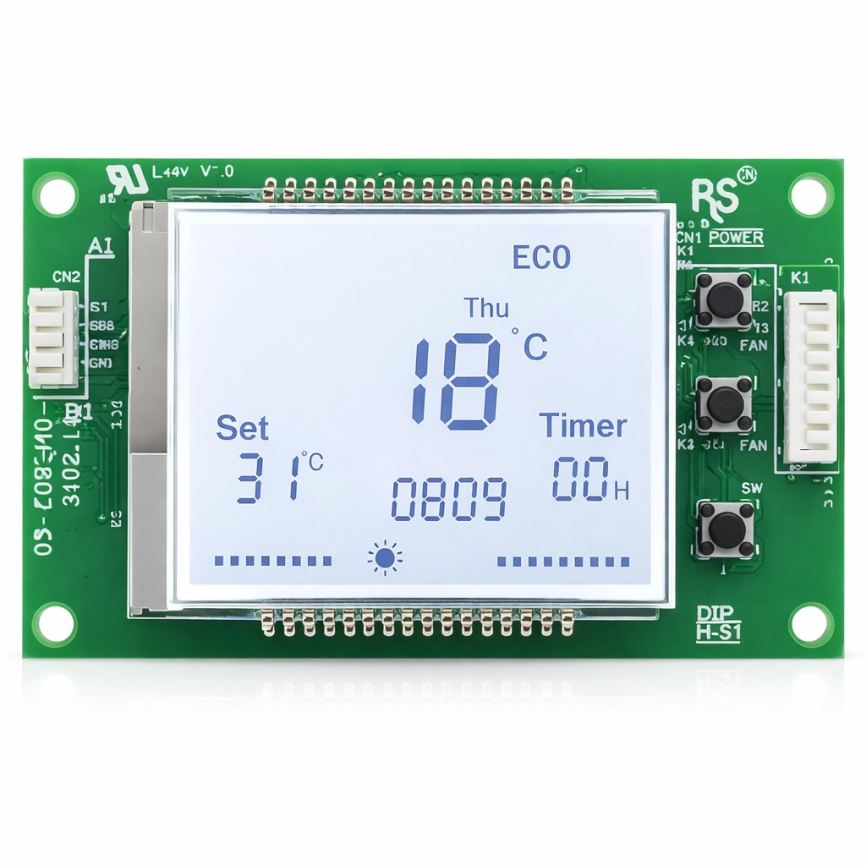
Evaluating Expertise In Heater Control Board OEM ODM Services
The decision to develop a new heating product usually falls into two categories: creating a completely unique design from scratch or adapting an existing platform to fit a specific brand identity. This is where the distinction between heater control board oem odm capabilities becomes vital. An Original Equipment Manufacturer (OEM) approach is ideal for brands that have their own engineering teams and require a factory to execute their proprietary designs with surgical precision. Conversely, an Original Design Manufacturer (ODM) partner offers a wealth of pre-existing intellectual property, allowing brands to white-label high-quality heating solutions with minimal R&D investment.
Choosing a partner with robust heater control board oem odm experience provides a safety net for your brand. Such manufacturers have already solved the common pitfalls of heating electronics, such as electromagnetic interference (EMI) caused by high-frequency switching or the mechanical stress caused by repeated thermal expansion and contraction. When a manufacturer offers both services, it indicates a high level of versatility and a deep understanding of the product lifecycle. They can provide valuable feedback during the Design for Manufacturing (DFM) phase, suggesting component swaps that improve lead times or layout changes that enhance the safety profile of the heater. This collaborative spirit is what transforms a standard contract into a long-term partnership.
The Integration Of Technology In Smart Heater PCBA Development
We are currently witnessing a paradigm shift where “dumb” heaters are being replaced by intelligent, connected environments. The modern consumer expects to control their thermal comfort via smartphone apps, voice commands, and automated schedules. Therefore, your chosen manufacturer must be an expert in smart heater PCBA integration. This requires a sophisticated understanding of wireless protocols such as Wi-Fi, Bluetooth, and Matter, as well as the ability to develop secure firmware that protects user data. A smart heater PCBA is not just about connectivity; it is about the “edge intelligence” that allows the heater to sense ambient conditions and adjust its output for maximum energy efficiency.
The challenges of producing a smart heater PCBA are significant. Integrating sensitive wireless antennas near high-power heating components requires expert shielding and layout strategies to prevent signal dropouts or interference. Furthermore, the manufacturer must have the software infrastructure to support cloud integration and over-the-air (OTA) updates. By selecting a manufacturer that stays at the forefront of IoT trends, a brand ensures that its products remain relevant in a tech-savvy market. The ability to offer a “smart” version of a traditional heater can significantly increase the average selling price and strengthen the brand’s position as an innovator in the home automation space.
Reliability Standards At An Industrial Heater Control Board Factory
While consumer-grade heaters prioritize aesthetics and user interface, industrial heating applications demand a completely different level of ruggedness. An industrial heater control board factory operates under much stricter quality controls and utilizes components rated for extreme environments. In industrial settings, heaters are often required to run 24/7 in conditions involving high humidity, chemical exposure, or intense vibration. A factory specializing in these applications will employ advanced manufacturing techniques such as conformal coating—a protective chemical film that shields the PCBA from moisture and contaminants—and rigorous stress testing protocols.
When auditing an industrial heater control board factory, it is essential to look for certifications such as ISO 9001 and industry-specific safety standards like UL, CE, or RoHS. The testing equipment on the factory floor tells a story of its commitment to quality. High-end facilities will utilize Automated Optical Inspection (AOI), X-ray testing for multi-layer boards, and In-Circuit Testing (ICT) to ensure that every single board that leaves the line is defect-free. For a brand, the peace of mind that comes from industrial-grade reliability is priceless, as it minimizes the risk of costly recalls and protects the end-user from potential hazards in demanding work environments.
Designing For The Future With A Heating System Control PCBA Solution
Beyond the individual board, a brand must consider the holistic heating system control PCBA solution. Modern heating systems are often modular, involving a main control unit that communicates with various sensors, displays, and remote modules. A manufacturer that can provide a comprehensive “system-level” solution offers a much more streamlined path to market. This involves designing the communication architecture between different boards, ensuring that the entire ecosystem works in harmony. A complete heating system control PCBA solution might include the power supply module, the user interface board, and the sensor array, all optimized to work together seamlessly.
A comprehensive solution provider also assists with the regulatory approval process. Obtaining safety certifications for a complex heating system is an arduous task. A manufacturer with a proven heating system control PCBA solution will have a history of successful certifications, providing pre-tested designs that meet the stringent requirements of international safety bodies. This accelerates the “time-to-market,” allowing the brand to capitalize on seasonal demand without being bogged down by unexpected compliance hurdles. In the end, the best manufacturer is the one who sees the big picture, ensuring that every trace on the board and every line of code in the firmware is dedicated to providing a safe, efficient, and luxurious heating experience.