
The evolution of home comfort technology has shifted significantly from traditional dry-heat electric blankets to the more sophisticated and health-conscious hydronic heating systems. At the heart of this transition lies the complex electronic architecture managed by a professional custom water circulation heated blanket pcba manufacturer. These specialized manufacturers are the architects of modern sleep environments, creating the invisible intelligence that balances thermal precision with user safety. As consumer demand for “smart” and “silent” heating solutions grows, the role of high-end circuit design has become the defining factor for brands looking to lead the market in the competitive home bedding sector.
The Engineering Philosophy of a Custom Water Circulation Heated Blanket PCBA Manufacturer
Deep within the laboratory of a top-tier custom water circulation heated blanket pcba manufacturer, the design process begins not with wires, but with the human experience. Unlike traditional electric blankets that rely on resistance wires embedded in fabric, a water circulation system requires a controller that can manage a multi-layered ecosystem involving water pumps, heaters, and thermal sensors. The manufacturer must ensure that the PCBA can handle the fluctuating demands of a fluid-based system while maintaining a footprint small enough to be integrated into a sleek bedside unit.
The primary challenge for any water circulation heated blanket pcba is the management of the start-up phase. When a user first activates their blanket, the control board must orchestrate a rapid pre-heating cycle while simultaneously monitoring the flow rate of the water. If the water remains stagnant, the heating element could overheat in seconds. Therefore, the circuit must incorporate real-time feedback loops that verify pump operation before the high-wattage heating sequence begins. This level of integrated logic is what separates a generic circuit board from a high-quality solution provided by an industry-leading manufacturer.
Enhancing Product Versatility with Hydronic Heated Blanket Control Board ODM Services
For many brands, the path to market is paved through a hydronic heated blanket control board odm partnership. Original Design Manufacturing (ODM) allows companies to leverage the existing research and development expertise of the manufacturer to create a product that is uniquely tailored to their brand identity. This process often involves the integration of advanced features such as smartphone connectivity via Bluetooth or Wi-Fi, allowing users to pre-heat their beds from the living room or set a specific sleep schedule that mirrors their natural circadian rhythm.
An experienced hydronic heated blanket control board odm provider understands that the modern consumer expects more than just warmth. They desire “adaptive heating” that can adjust based on the ambient room temperature. To achieve this, the PCBA must be equipped with ultra-sensitive NTC thermistors and a microprocessor capable of executing complex thermal algorithms. By selecting an ODM partner with a deep library of existing code and hardware prototypes, brands can significantly reduce their time-to-market while ensuring their product features the latest in sleep-tech innovation.
Meeting Global Market Standards with OEM Water Heating Blanket Control Board Solutions
While ODM focuses on design innovation, the oem water heating blanket control board model is centered on precision manufacturing to exact client specifications. In this relationship, the brand provides the technical blueprints and functional requirements, and the manufacturer focuses on the industrialization of the product. This requires a facility with advanced SMT (Surface Mount Technology) lines and rigorous quality control protocols. An oem water heating blanket control board must be built to withstand the rigors of long-term household use, which includes handling voltage fluctuations and the occasional humidity found in bedroom environments.
A crucial aspect of OEM production is the implementation of global safety standards. Whether it is UL, CE, or RoHS compliance, the manufacturer must ensure that every capacitor, resistor, and semiconductor meets international quality benchmarks. This is particularly important for water-based heating systems, where the “wet-dry” interface poses unique electrical insulation challenges. The OEM partner must implement redundant fail-safe mechanisms—such as automatic shut-off triggers if the water reservoir is empty or if a tilt sensor detects the unit has been knocked over—to guarantee the safety of the end-user.
Technical Superiority within the Electric Heated Mattress Pad PCBA Factory
The production floor of a modern electric heated mattress pad pcba factory is a marvel of automated efficiency. Here, the focus extends beyond blankets to the broader category of hydronic mattress toppers, which require even more robust control logic. Because a mattress pad supports the full weight of a person, the PCBA must be programmed to handle “localized heat dissipation” issues. The factory must utilize high-quality substrates and heavy copper traces to manage the sustained current required for full-night operation without generating heat on the board itself.
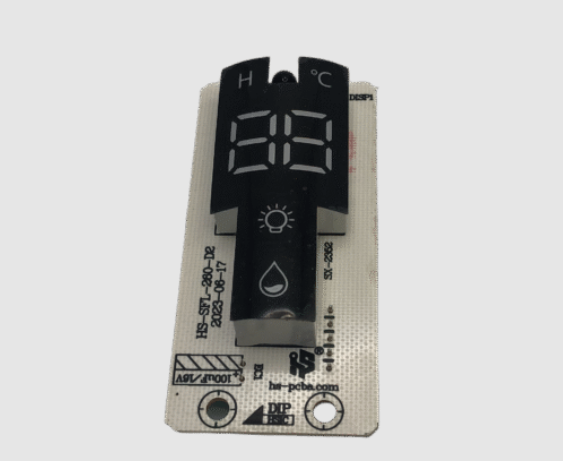
Furthermore, a leading electric heated mattress pad pcba factory prioritizes the user interface experience. Whether the brand prefers a traditional physical button layout or a modern touch-sensitive LED display, the PCBA must provide tactile and visual feedback that feels premium. This involves the integration of high-resolution display drivers and touch-control ICs that are resistant to electromagnetic interference from the high-power heating components. The goal of the factory is to create a seamless bridge between the user’s hand and the blanket’s warmth, ensuring that every interaction feels deliberate and high-tech.
Innovations in Safety and Longevity for Water Circulation Heated Blanket PCBA
Durability is the cornerstone of any water circulation heated blanket pcba. Unlike standard consumer electronics that might be replaced every two years, a hydronic heating system is expected to last for a decade. A professional manufacturer addresses this longevity through the use of conformal coating, which protects the delicate circuitry from moisture and dust. This is especially vital in the bedside units of hydronic blankets, as the proximity to a water tank increases the risk of condensation forming inside the controller housing.
Beyond physical protection, the firmware of a water circulation heated blanket pcba must include “maintenance alerts.” For example, the board can be programmed to track the hours of pump usage and alert the user when it is time to descale the system with a vinegar-water solution. This proactive approach to maintenance, hard-coded into the PCBA logic, ensures that the brand’s reputation remains high because the product continues to function efficiently long after the warranty period has expired. This level of thoughtful engineering is what a brand pays for when they partner with an elite manufacturer.