APPLICATIONS & SOLUTIONS / SMART HOME IOT
Smart Home IoT Solutions for Connected Products
Turn a home appliance into a dependable connected product by coordinating sensing, embedded control, wireless communication, user interfaces and the product update path within one practical control architecture.
- Local device control
- WiFi and Bluetooth BLE
- App and cloud interfaces
- OTA update planning
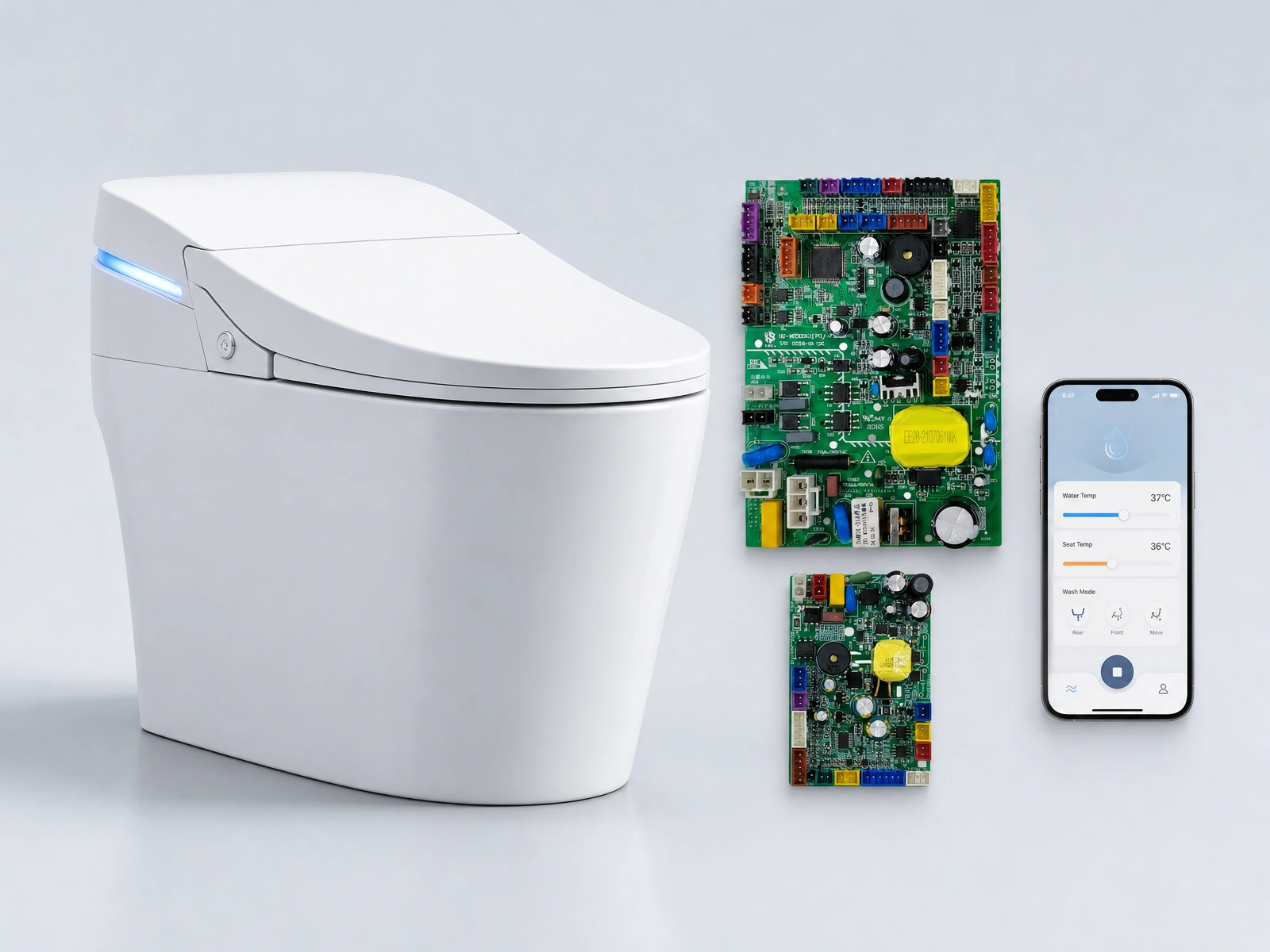
CONNECTED PRODUCT DECISIONS
Connectivity starts with product behavior
A useful IoT feature must fit the appliance, its user and its service model. We define what stays local, what travels over the network and how the product behaves when connectivity is unavailable.
Product behavior
Identify the sensing, control, safety and user-interface functions the appliance must perform on its own.
Connection path
Select WiFi, Bluetooth BLE or another interface according to range, onboarding, latency and power needs.
Data and ownership
Define which device states, commands and diagnostics are exposed to an app, gateway or cloud service.
Updates and service
Plan firmware recovery, OTA eligibility, version control and production programming before launch.
SMART HOME IOT ARCHITECTURE
From physical input to useful connected action
The architecture separates essential appliance control from connected services. This keeps core product behavior close to the device while giving the app or cloud the information and commands it needs.
Sensors & Inputs
Temperature, humidity, motion, current, switches and other product-specific inputs.
MCU & Edge Control
Local logic, timing, motor or power control, protection and user-interface management.
Wireless Link
WiFi, Bluetooth BLE, 2.4G RF or a suitable module selected for the product requirement.
App & Service Layer
Setup, status, remote commands, alerts, diagnostics and update workflows.
CORE SOLUTION LAYERS
One product experience, coordinated across six layers
The result depends on more than adding a radio module. Control firmware, communication, interfaces and lifecycle planning need to work as a single system.
Device control
MCU logic coordinates inputs, actuators, timers, operating modes and protection behavior.
Wireless communication
Protocol, module, antenna location and enclosure conditions are reviewed together.
App and cloud interface
Commands, device status and data fields are mapped around the actual user journey.
OTA lifecycle
Update eligibility, rollback or recovery expectations and version tracking are defined early.
Security and recovery
Provisioning, credentials, reset paths and failure states are considered at system level.
User interaction
Buttons, indicators, displays, pairing feedback and app states remain consistent.
CONNECTIVITY OPTIONS
Choose the connection around the use case
The correct interface depends on how the product is commissioned, controlled and serviced. One product may use more than one connection when each has a clear job.
WiFi
Suitable for direct internet access, remote control and cloud-connected device services where local network availability is expected.
Bluetooth BLE
Useful for onboarding, nearby control, commissioning and low-energy communication with a phone or gateway.
2.4G RF
A possible route for proprietary remotes or dedicated low-latency links when an internet connection is unnecessary.
ESP32 & Modules
Integrated wireless MCU platforms or certified modules can be evaluated against cost, interfaces, firmware scope and certification needs.
APPLICATION EXPERIENCE
Connected control for real home appliances
These examples show where the solution architecture can be applied. Specific boards, platforms and finished product programs belong in the relevant product pages.
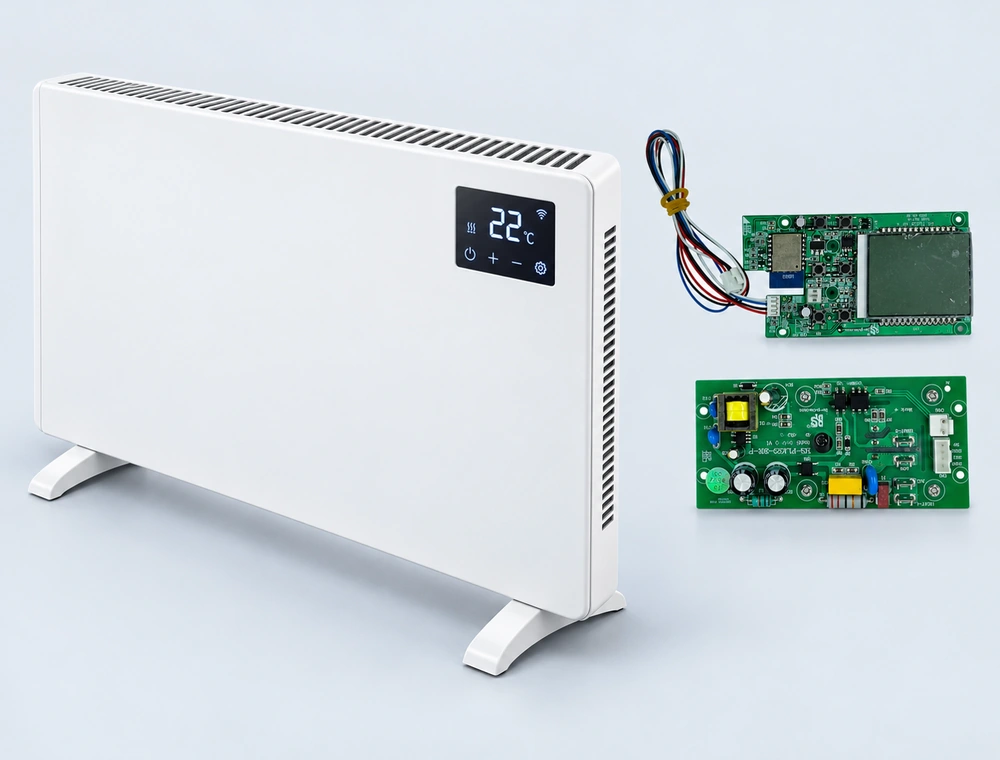
Climate & Comfort Devices
Coordinate local sensing, operating modes, schedules and optional remote control.
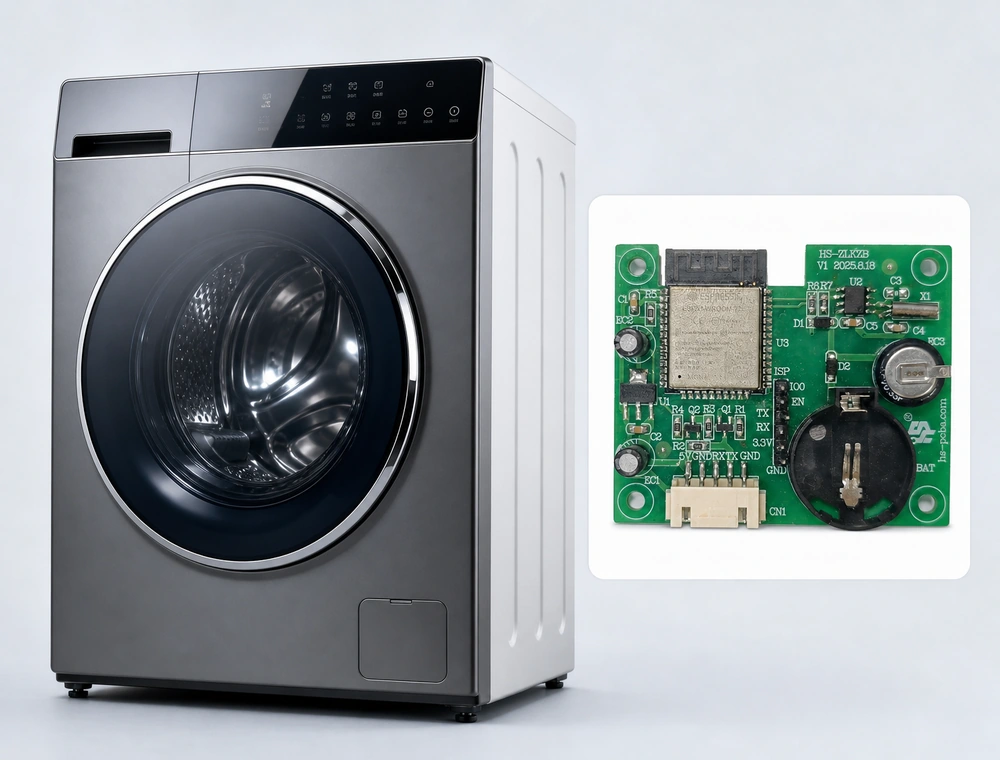
Cleaning & Laundry
Link appliance status, programs, alerts and service information to the selected user interface.
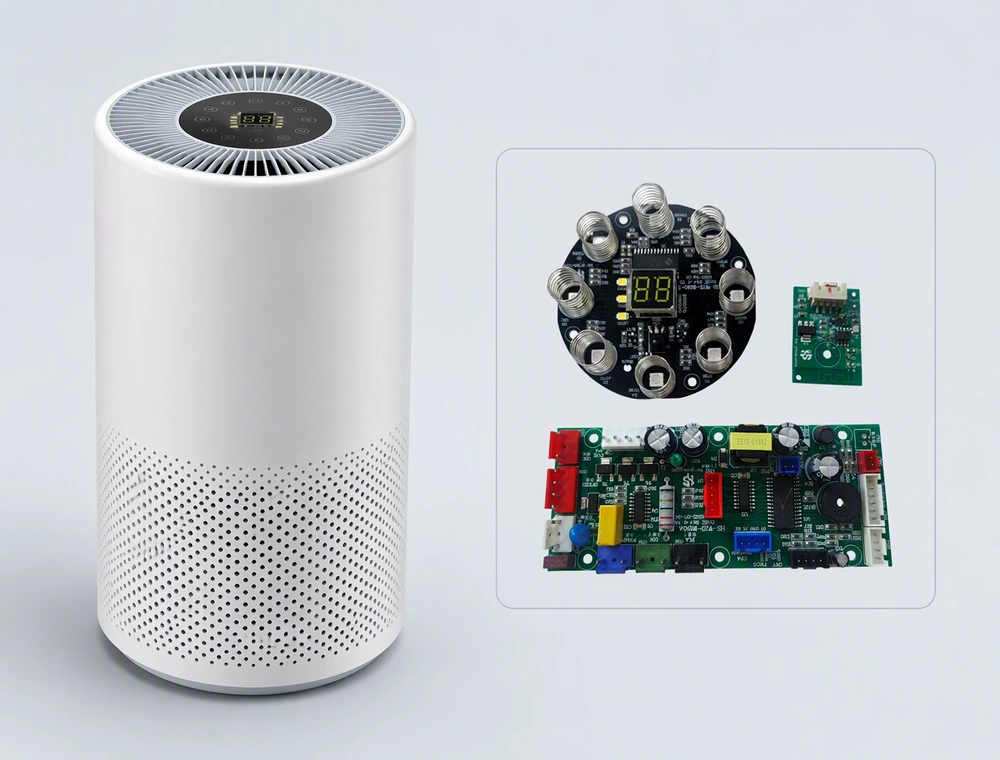
Air & Environment
Combine sensor inputs, local responses, indicators and connected monitoring.
ENGINEERING TO PRODUCTION
Move the connected product from architecture to repeatable production
Wireless behavior is validated alongside the control board, firmware, interfaces and production test needs. Each stage should reduce uncertainty before the next commitment.
Engineering Review
Confirm product functions, I/O, control boundaries, connection path and target constraints.
Connected Prototype
Bring up local control and communication paths, then verify key device and user workflows.
NPI & Validation
Refine design details, programming, functional checks and pilot-build readiness.
Mass Production
Transfer the approved build and test process into controlled, repeatable PCBA production.
FAQ
Smart Home IoT Solution FAQs
Early answers help define the right boundary between the appliance, wireless connection and external service.
What is a smart home IoT solution?
A smart home IoT solution connects an appliance's sensing and control functions with a suitable wireless interface, app, gateway or cloud service. The architecture defines which functions remain local and which connected functions improve control, monitoring or service.
Can an existing appliance be upgraded with WiFi or Bluetooth?
Often it can, but the existing controller, available interfaces, power supply, enclosure, antenna location and firmware ownership must first be reviewed. The result may use an added communication module or a redesigned control board.
How do you choose WiFi, Bluetooth BLE or 2.4G?
The choice depends on range, internet access, onboarding, power, latency, data flow and the intended user experience. WiFi commonly supports cloud access, Bluetooth BLE supports nearby setup or control, and 2.4G RF can support a dedicated remote link.
Do connected products continue working without internet access?
They can when essential appliance functions are implemented locally. Offline behavior should be defined during architecture planning so core control does not depend on a cloud connection unless the product requirement specifically calls for it.
Can OTA firmware updates be included?
OTA updates can be planned when the selected MCU, memory, communication path and firmware architecture support them. Update authentication, failure recovery, version tracking and production provisioning should be considered before implementation.
What information is needed to start a connected product project?
Useful inputs include the appliance functions, sensors and loads, user journey, target connectivity, app or cloud expectations, existing drawings or prototypes, compliance markets, target volume and desired production schedule.
Define the right connected architecture before committing to hardware
Share the appliance functions, control requirements and intended user journey. HS-PCBA can review the device, wireless and production path as one connected product system.