
The architectural world has long sought a way to capture the primal allure of a flickering hearth without the inherent dangers of open combustion, carbon emissions, or restrictive ventilation requirements. This quest has led to the development of the ultrasonic vapor fireplace controller pcba, a sophisticated electronic system that utilizes water and light to create a stunningly lifelike fire. Unlike traditional gas or wood-burning units, this technology relies on high-frequency vibrations to atomize water into a fine mist, which is then illuminated by strategically placed LED arrays. The result is a cool-to-the-touch, three-dimensional flame that mimics the fluid movement and ethereal glow of real fire. For modern interior designers and homeowners, this represents a major breakthrough in home ambiance, offering a safe, eco-friendly, and versatile alternative that can be installed in virtually any indoor environment.
At the core of this innovation is a centralized processing unit that manages the complex interplay between fluid dynamics and optical physics. The ultrasonic vapor fireplace controller pcba is tasked with more than just powering a light; it must precisely time the oscillation of piezoelectric transducers to create a mist of specific density. If the mist is too heavy, it falls; if it is too light, it dissipates too quickly. By employing advanced pulse-width modulation and real-time sensor feedback, the controller maintains a stable “flame” height and intensity, ensuring that the visual effect remains captivating and consistent throughout its operation. This electronic “brain” allows the fireplace to function as a high-end decorative piece while also acting as a gentle humidifier for dry indoor air.
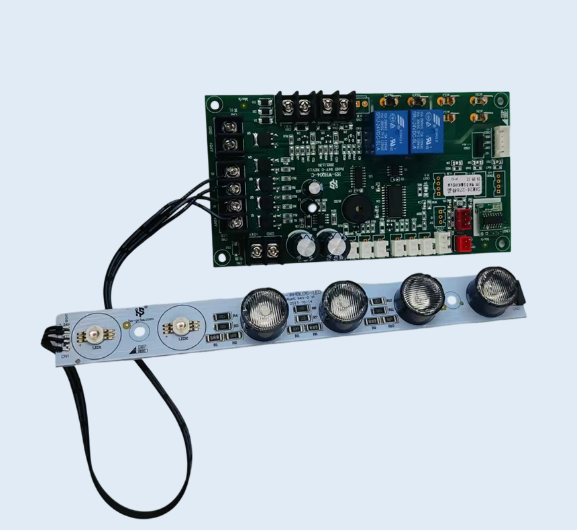
Achieving The Perfect Visuals With A Realistic Steam Flame Effect Control Board
The magic of a water-based fireplace lies in its ability to deceive the eye, a feat achieved primarily through the realistic steam flame effect control board. To create the illusion of depth and movement, the board must synchronize the airflow from ultra-quiet fans with the upward projection of light. The mist is funneled through a specialized vent where it catches the light at varying angles, creating the appearance of licking flames and rising smoke. A high-quality realistic steam flame effect control board uses color-mixing algorithms to transition between deep oranges, vibrant yellows, and even cool blues, allowing the user to customize the “temperature” of the visual display to match the mood of the room.
Furthermore, the realistic steam flame effect control board is engineered to handle the “flicker” logic that defines real fire. Real flames do not move at a constant rate; they react to invisible air currents and the combustion process. To replicate this, the PCBA introduces subtle variations in the fan speed and light intensity, creating a chaotic yet soothing rhythm that is indistinguishable from a chemical flame. This attention to detail is what separates a premium 3D fireplace from a simple water mister. By focusing on the organic nature of fire, the control board provides a centerpiece that draws people in, creating a focal point for relaxation and social gathering in luxury hotels, restaurants, and modern residences.
The Intelligence Of The Smart Steam Flame Fireplace Controller Board
In the era of the connected home, a fireplace is no longer a standalone appliance but a node in a broader smart ecosystem. The smart steam flame fireplace controller board facilitates this connectivity by integrating Wi-Fi and Bluetooth modules directly into the circuit architecture. This allows users to control their fireplace via smartphone applications, setting schedules, adjusting flame heights, or changing color profiles from across the room or across the globe. A truly smart steam flame fireplace controller board can even be integrated with home automation hubs like Alexa or Google Home, enabling voice-activated ambiance that responds to commands like “set the fireplace to evening glow.”
Beyond user convenience, the “smart” designation refers to the board’s internal diagnostic capabilities. The smart steam flame fireplace controller board monitors the health of the ultrasonic transducers and the water level in the reservoir. If it detects mineral buildup or a low-water state, it can send a notification to the user’s phone, preventing damage to the components before a failure occurs. This proactive maintenance capability significantly extends the lifespan of the unit and ensures that the fireplace is always ready to perform. By bridging the gap between traditional home decor and modern IoT technology, the smart controller provides a seamless, high-tech experience that appeals to the tech-savvy consumer.
Precision Atomization Through Ultrasonic Flame Simulation Control PCBA
The physical creation of the mist is a high-frequency endeavor managed by the ultrasonic flame simulation control pcba. This board is responsible for driving the piezoelectric ceramic disks at frequencies typically ranging from 1.7 to 2.4 MHz. At these speeds, the disks create high-pressure waves within the water, causing it to “cavitate” and release micro-droplets of vapor. The ultrasonic flame simulation control pcba must manage significant electrical current to drive these disks while maintaining high efficiency to prevent heat buildup within the electronic enclosure.
Quality control at the PCBA level is essential for ensuring the consistency of the flame. If the voltage sent to the transducers fluctuates, the “fire” will appear to stutter or fade. A professional ultrasonic flame simulation control pcba includes sophisticated voltage regulation and filtering to ensure a smooth, continuous stream of vapor. Additionally, the board is often treated with a hydrophobic conformal coating to protect the surface-mount components from the high-humidity environment inherent in a water-vapor system. This ensures that the electronics remain durable and reliable, even when located just inches away from the mist-generation chamber.
Environmental Benefits Of The Water Vapor Flame Simulation PCBA
As global focus shifts toward sustainability, the water vapor flame simulation pcba offers a compelling argument for eco-friendly luxury. Traditional fireplaces contribute to indoor air pollution and require significant energy to vent smoke and gases safely out of the home. In contrast, a fireplace powered by a water vapor flame simulation pcba consumes roughly the same amount of electricity as a standard LED light bulb and uses plain tap water as its “fuel.” There are no harmful emissions, no soot, and no carbon footprint associated with its operation.
Furthermore, the water vapor flame simulation pcba helps to improve indoor air quality rather than detract from it. During the winter months, heated indoor air often becomes uncomfortably dry, leading to skin irritation and respiratory issues. The fine mist produced by the flame simulation serves as a built-in humidifier, adding a gentle amount of moisture back into the environment. This dual-purpose functionality—providing both visual beauty and physical comfort—makes the water vapor fireplace a smart choice for health-conscious individuals. By choosing a system rooted in this advanced PCBA technology, homeowners are investing in a future where luxury and environmental responsibility go hand in hand.