
The modern home is undergoing a quiet revolution, one driven by the fusion of sensory design and smart automation. For decades, the traditional fireplace stood as a monolithic center of warmth, constrained by the realities of soot, ventilation, and structural boundaries. When electric alternatives first entered the market, they were celebrated primarily for their convenience. However, early iterations often lacked the organic soul of a real fire—the unpredictable dance of the flames, the gentle crackle of burning oak, and the seamless integration into a household’s digital ecosystem.
Today, the standard for interior comfort has shifted dramatically. Consumers no longer view heating appliances as mere functional utilities; they demand immersive experiences. Achieving this level of atmospheric realism requires a sophisticated backbone hidden beneath the sleek exterior of the appliance. At the heart of this transformation is the advanced electronic circuitry that orchestrates light, sound, and connectivity into a singular, harmonious experience.
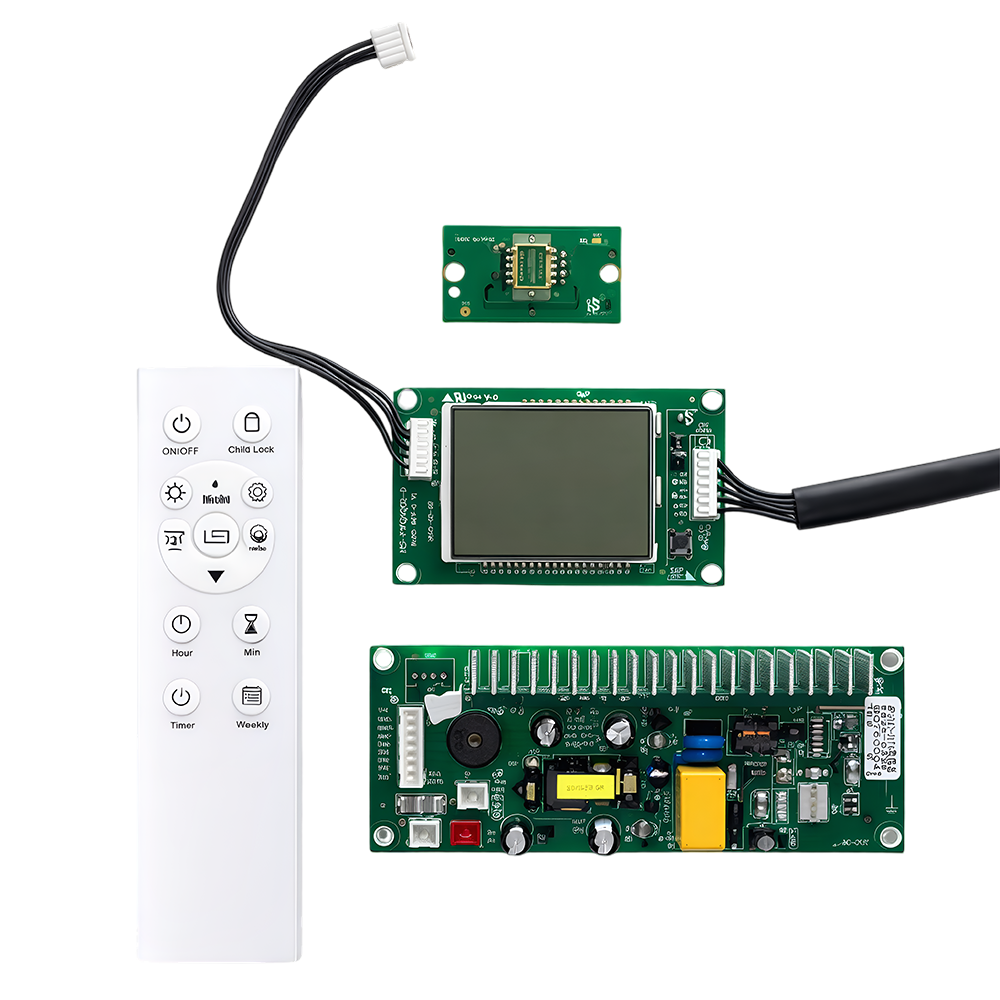
Engineering the Ultimate Atmosphere with an Electric Fireplace Sound Control Board
To appreciate the leap in modern hearth technology, one must look closely at how auditory feedback influences human relaxation. A visual flame without a matching acoustic profile creates a psychological disconnect for the user. By integrating a dedicated electric fireplace sound control board, manufacturers are bridging this sensory gap. This specialized printed circuit board assembly manages high-fidelity audio playback that syncs directly with the visual intensity of the simulated fire.
Rather than looping a low-quality, repetitive audio file that quickly becomes irritating, contemporary sound boards utilize sophisticated digital signal processing. They modulate the frequencies of crackling logs and whispering winds based on the user’s selected heat setting and flame speed. The engineering challenge lies in isolating the audio signals from the electromagnetic interference generated by the heating elements and fan motors. A well-designed board ensures crystal-clear sound reproduction, transforming a static room into a deeply comforting sanctuary.
Wireless Symphony via the Bluetooth Audio Fireplace Control Board
As homes become smarter, the expectation for wireless control has extended to every appliance. The inclusion of a bluetooth audio fireplace control board elevates the traditional hearth from a localized heater to a centralized entertainment hub. This innovation allows the fireplace to serve a dual purpose. When the heating element is idle during warmer months, the appliance transitions effortlessly into a premium ambient speaker system.
From an engineering perspective, blending wireless audio streaming with appliance control requires robust architecture. The board must manage dual-stream data pathways: one handling the operational commands from a smartphone application or remote control, and the other streaming high-bandwidth audio data. This ensures that when a user streams their favorite relaxing playlist or an audiobook, the audio remains perfectly synced, free from stuttering or dropouts, even when the fireplace is simultaneously cycling its heating coils on and off.
Architectural Mastery Inside the Fireplace PCBA with Bluetooth Module
The physical manifestation of this technological leap resides in the layout of the fireplace pcba with bluetooth module. Space inside a sleek, wall-mounted or recessed electric fireplace is premium real estate. Designers must optimize the component footprint to prevent overheating while maintaining a high signal-to-noise ratio for the wireless components.
Thermal management is the most critical factor when designing this specific printed circuit board assembly. Because the board sits in close proximity to a heating element that can reach high temperatures, the selection of substrates, solder points, and capacitors must withstand prolonged thermal stress. Advanced layout techniques involve separating the high-power traces that drive the heating elements from the low-power digital traces that feed the wireless module and audio processors. This strict isolation prevents electrical noise from degrading the Bluetooth performance, guaranteeing a steady connection that underpins the user’s multi-sensory experience.
Visual Poetry Driven by the Multi-Color Flame Fireplace Control Board
While sound and connectivity provide depth, the visual illusion remains the primary anchor of the electric hearth. The transition from simple amber bulbs to intricate light shows is governed by the multi-color flame fireplace control board. Modern consumers want the freedom to match their fireplace optics with their mood, interior decor, or even the season.
This specific control unit utilizes a matrix of pulse-width modulation channels to drive arrays of multi-colored light-emitting diodes. By micro-managing the voltage sent to individual color clusters, the board can recreate the deep crimson of dying embers, the bright orange of a raging bonfire, or even avant-garde shades of sapphire blue and emerald green for ultra-modern living spaces. The software embedded within the microcontroller calculates complex algorithms to mimic the chaotic, fluid motion of real fire, ensuring that the light transitions feel natural, randomized, and thoroughly mesmerizing to the human eye.
Unifying Smart Operations via the Comprehensive Electric Fireplace Control Board
Behind every successful user interaction is a master coordinator. The overarching electric fireplace control board acts as the central nervous system of the entire unit. It gathers input from thermal sensors, processes commands from user interfaces, monitors safety cut-offs, and distributes power to the various sub-systems like the flame drivers and audio modules.
Safety and efficiency are the twin pillars of modern master board design. If an airflow blockage occurs, the control board must instantly detect the rapid temperature spike and cut power to the heating elements before a hazard arises. Simultaneously, it must optimize energy consumption, utilizing eco-modes that balance the power distribution between the visual effects and the heating components. By unifying these diverse operations onto a highly reliable, intelligent circuit pattern, manufacturers can deliver an appliance that is not only beautiful and immersive but also inherently safe and exceptionally durable.