
The global landscape of domestic consumer products is currently undergoing an unprecedented structural shift. Traditional machinery, which once relied entirely on mechanical relays and basic, disconnected microcontrollers, is rapidly evolving into a massive web of intelligent, communicative assets. This massive technological leap demands internal electronic architectures that are not only deeply resilient but also capable of managing massive operational workloads in real time. For global manufacturing brands and hardware engineering teams, staying competitive requires abandoning generic, off-the-shelf control options. Instead, the industry is swiftly moving toward highly optimized, application-specific processing units that seamlessly fuse complex processing logic with native, multi-protocol wireless radios directly on a single substrate.
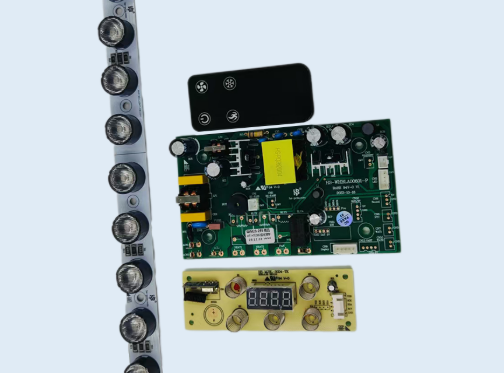
The Strategic Engineering Behind a Custom ESP32 Control Board
Developing a truly modern appliance ecosystem requires a departure from standard, one-size-fits-all hardware designs. Utilizing a custom esp32 control board gives engineers the freedom to design the exact physical dimensions, trace distributions, and power regulation circuits required for a specific product enclosure. This tailored engineering approach ensures that no physical space inside the product chassis is wasted, allowing for sleek product profiles while optimizing the distance that signals must travel across the printed circuit board layers.
Beyond physical space optimization, creating a bespoke hardware layout allows for deep control over electromagnetic isolation. When an electronic control system must operate in close proximity to major noise sources, such as high-voltage induction coils, large electric motors, or variable-speed compressors, signal degradation becomes a critical risk. A custom hardware configuration allows designers to embed dedicated shielding layers and isolate high-frequency radio frequency paths away from low-voltage analog-to-digital converters, ensuring flawless sensor telemetry and eliminating the risk of unexpected software resets caused by external electrical interference.
Accelerating Time to Market via an ESP32 Control Board ODM Partnership
For major manufacturing corporations, building a specialized wireless electronic platform from the ground up can present immense financial and operational bottlenecks. Partnering with an experienced esp32 control board odm allows companies to leverage existing, field-tested core designs while adapting the outer physical layouts and peripheral connections to match their unique product specifications. This collaborative manufacturing model dramatically shortens the development cycle, shifting the focus from foundational research to application-specific optimization and immediate deployment.
An original design manufacturer brings deep expertise in navigating the complex world of global regulatory compliance and wireless certifications. Because the underlying silicon and radio frequency layouts are already deeply understood and optimized by the manufacturing partner, the resulting custom assembly can pass stringent international safety and emissions testing with far fewer design iterations. This collaborative approach allows appliance brands to focus their resources on outer aesthetics, user interface software, and cloud application ecosystems, confident that the core computing engine beneath the surface is built on a reliable, stable foundation.
Enhancing Thermal Resilience and Durability with an ESP32 Appliance Control PCBA
Integrating highly sensitive digital processing cores into heavy-duty mechanical hardware introduces severe environmental challenges that standard consumer electronics never face. An esp32 appliance control pcba must be designed to withstand decades of constant mechanical vibration, extreme localized temperature fluctuations, and continuous exposure to airborne contaminants. Inside a modern automated kitchen tool or a heavy-duty laundry system, a standard circuit board would fail quickly due to micro-fractures in solder joints or localized corrosion on component pins.
To ensure long-term reliability under these punishing operational conditions, specialized industrial assembly practices must be applied. High-grade glass-reinforced epoxy laminates form the foundation of the board, while thicker copper tracking layers are utilized to prevent overheating when switching heavy electrical currents. Furthermore, the completed assembly is typically sealed with an advanced conformal coating—a microscopic, protective polymer layer that insulates the entire circuit board from moisture, kitchen grease, and chemical detergents. This ensures that the delicate processing silicon remains perfectly protected, preventing short circuits and maximizing the lifespan of the appliance.
Decentralized Edge Computation via the ESP32 IoT Control Board
The true revolution in modern appliance automation lies in the transition from passive execution to active, localized intelligence. Deploying an esp32 iot control board provides household machinery with a dual-core processing environment that changes how devices process information. Rather than acting as a simple terminal that relies on a constant internet connection to receive commands from a distant cloud server, the board is fully capable of processing complex sensor feedback right at the edge of the network.
This edge computing capability ensures that the device remains entirely safe and functional even during severe network outages. One processing core can be fully dedicated to handling continuous wireless networking tasks, encryption, and data serialization, while the second, parallel core runs deterministic control loops that manage safety thresholds, fluid pressures, and emergency thermal cutoffs. If a sensor detects an internal anomaly, the local processing core can execute an instantaneous safety shutdown sequence in milliseconds, completely independent of any cloud authorization or active network link.
Seamless Proactive Machine Management Powered by the ESP32-Based IoT Appliance PCBA
As artificial intelligence and machine learning models continue to move closer to localized hardware components, the role of embedded systems is expanding into the realm of predictive diagnostics. Incorporating an esp32-based iot appliance pcba into modern home machinery allows the device to actively monitor its own health and tracking its performance degradation over time. By observing subtle shifts in electrical current draw, unexpected vibrational frequencies, or minor changes in thermal efficiency, the board can identify underlying mechanical wear long before a total breakdown occurs.
This proactive data processing capability completely transforms how appliance brands handle customer service and product lifecycles. Instead of waiting for a machine to break down and cause a major disruption for the user, the internal control assembly can identify the specific failing component early, automatically logging a diagnostic report and notifying the user that a preventive service check is recommended. This high level of self-awareness fundamentally changes the consumer relationship with technology, turning ordinary household tools into highly reliable, self-preserving systems that pave the way for a more sustainable and intelligent living environment.