
The industrial landscape is undergoing a massive shift toward automation and precision, and at the core of this movement is the reliability of thermal management systems. The industrial heater main control board serves as the central nervous system for high-capacity heating units used in plastic extrusion, chemical processing, and food manufacturing. Unlike consumer-grade electronics, these control systems must withstand extreme temperatures, electrical noise, and continuous operation. Standardizing quality in this niche is not merely a manufacturing preference; it is a critical requirement for ensuring operational safety and preventing catastrophic equipment failure in heavy industry.
Quality begins at the schematic level. An effective industrial heater main control board must be engineered to handle high-voltage switching while maintaining sensitive digital logic for PID temperature control. This duality requires a deep understanding of electromagnetic compatibility and thermal isolation. When a board fails in an industrial setting, the downtime can cost a facility thousands of dollars per hour. Therefore, the production process must be rooted in rigorous testing protocols that simulate the harsh realities of a factory floor, ensuring that every capacitor and resistor can go the distance.
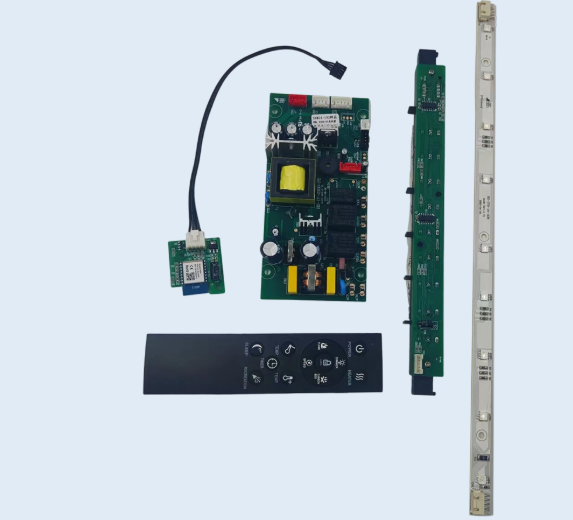
Strategic Advantages Of Partnering With An Industrial Heater Control Board Factory
Selecting a specialized industrial heater control board factory is a strategic decision that impacts the entire lifecycle of a product. A dedicated facility brings a level of expertise that generalist electronics manufacturers often lack. These factories are equipped with advanced surface mount technology lines that are specifically calibrated for thick-copper PCBs, which are necessary to carry the high currents typical of industrial heating elements. Furthermore, a specialized factory understands the importance of component sourcing, ensuring that every part used on the board is rated for industrial temperature ranges rather than standard commercial limits.
Beyond the hardware, an industrial heater control board factory offers specialized testing environments, such as burn-in chambers and vibration tables. These facilities allow engineers to stress-test the boards under conditions that mimic the high-heat, high-vibration environment of a real-world industrial heater. By weeding out “infant mortality” failures at the factory level, the end-user receives a product that is ready for years of uninterrupted service. This focus on reliability builds a foundation of trust between the manufacturer and the industrial operator, which is the most valuable currency in the B2B marketplace.
Engineering Resilience Into Industrial Electric Heater PCBA
The architecture of an industrial electric heater PCBA must prioritize resilience above all else. In a typical industrial setting, power quality can be inconsistent, with surges and spikes being a common occurrence. To combat this, engineers incorporate robust surge protection circuits and galvanic isolation between the high-power AC side and the low-voltage DC control side. This prevents a malfunction in the heating element from feeding back into the microprocessor and destroying the entire control system.
Furthermore, the physical design of an industrial electric heater PCBA often involves the use of high-TG (glass transition temperature) substrates. These materials maintain their structural integrity even when exposed to ambient heat from nearby machinery. Thick traces and specialized solder alloys are used to prevent joints from becoming brittle over time due to thermal expansion and contraction. The goal is to create a board that is not just functional, but virtually indestructible within its intended operating parameters. This engineering philosophy is what separates a standard circuit board from a true industrial-grade component.
Enhancing Control Precision With A Modern Heater Main Control Board
Precision is the hallmark of modern industrial heating. Whether it is maintaining a specific viscosity in a chemical vat or ensuring even heat distribution in a drying oven, the heater main control board must execute complex algorithms with millisecond accuracy. Modern boards have moved beyond simple on-off logic to sophisticated proportional-integral-derivative control. This allows the system to predict temperature changes and adjust the power output smoothly, preventing the “overshoot” that can ruin sensitive materials.
The integration of advanced microcontrollers on the heater main control board also enables sophisticated diagnostic capabilities. Many modern systems can now detect a failing heating element before it actually breaks, based on changes in current draw or heat-up times. This “predictive maintenance” capability is a game-changer for industrial managers, allowing them to schedule repairs during planned downtime rather than reacting to an emergency. The intelligence embedded in the control board effectively transforms a dumb heating element into a smart, data-driven industrial asset.
Flexible Solutions Through Heater Control Board OEM ODM Services
In an era of rapid technological change, flexibility is a competitive necessity. Many industrial equipment manufacturers rely on heater control board OEM ODM services to keep their product lines at the cutting edge. Original Equipment Manufacturing (OEM) allows brands to leverage proven, high-quality designs while focusing their own resources on final assembly and marketing. On the other hand, Original Design Manufacturing (ODM) provides a path for companies to develop entirely new heating solutions from the ground up, guided by the expertise of the board manufacturer.
Utilizing heater control board OEM ODM partnerships allows for rapid prototyping and iteration. If a specific industrial application requires a unique sensor input or a specialized communication protocol like Modbus or EtherCAT, an ODM partner can integrate these features into the existing architecture with minimal delay. This collaborative approach ensures that the final product is perfectly tailored to the specific needs of the industry, whether it’s for a high-speed packaging line or a precision laboratory furnace. By outsourcing the complexity of the control electronics to experts, industrial brands can stay agile and responsive to the needs of a changing global market.
Long-Term Reliability And The Future Of Industrial Control
As we look toward the future, the role of the control board will only expand. We are seeing a move toward decentralized control, where multiple heater units are networked together to provide uniform heat across large-scale industrial processes. This requires the industrial heater main control board to possess significant networking capabilities, allowing it to communicate with centralized factory management systems. The shift toward Industry 4.0 means that every board will eventually be a node in a massive, interconnected data network.
Ultimately, the goal of standardizing quality in production is to create a seamless interface between human intent and physical heat. When an operator sets a temperature, they are trusting the integrity of the industrial electric heater PCBA to maintain that setting without fail. By focusing on robust engineering, specialized manufacturing, and flexible design partnerships, the industry ensures that this trust is well-placed. The future of industrial heating is not just about more power, but about smarter, more reliable control, anchored by a commitment to excellence in every solder joint and every line of code.