
As smart home technology continues to expand, the modern control board for electric fireplace is becoming increasingly connected. Consumers now expect heating appliances to support wireless communication, remote operation, and integration with broader home automation systems.
Advanced control boards often include Wi-Fi or Bluetooth communication modules that allow users to control fireplace functions through mobile applications or voice assistants. Remote access enables convenient temperature adjustment, operating mode selection, and timer configuration from virtually anywhere within the home.
The integration of smart connectivity also improves diagnostic capabilities. Intelligent electric fireplace circuit board systems can monitor operational performance continuously and identify abnormal conditions before major failures occur. Some systems are capable of transmitting maintenance alerts or fault information directly to users or service platforms.
Software-based functionality updates represent another growing trend within the electric fireplace industry. Advanced electric fireplace pcba architecture allows manufacturers to improve operational features or optimize performance through firmware upgrades without requiring hardware replacement.
This transition toward connected heating systems is reshaping the overall role of the control board, turning it into a central communication and automation hub rather than simply an electrical management component.
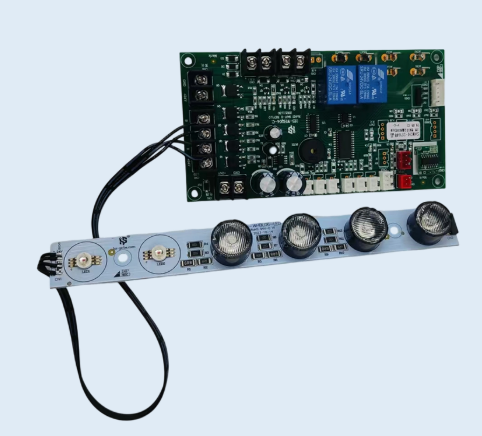
Thermal Stability And Heat Resistance In Electric Fireplace PCBA Engineering
Thermal resistance is a fundamental consideration in electric fireplace pcba design because the control board operates in close proximity to heating elements and elevated internal temperatures. Without proper thermal management, excessive heat exposure can reduce component lifespan and compromise operational stability.
Engineers use several advanced design strategies to improve thermal durability. High-temperature PCB materials, optimized component spacing, heat-resistant coatings, and efficient airflow planning all contribute to better thermal performance.
Careful placement of sensitive electronic components helps reduce exposure to concentrated heat zones. In many advanced systems, thermal isolation barriers separate high-temperature heating circuits from microcontrollers and communication modules. This structural separation improves long-term reliability while maintaining stable control system performance.
The integration of temperature monitoring sensors within the electric fireplace heater control board further strengthens thermal stability. Real-time thermal feedback allows the system to regulate heating intensity dynamically and prevent dangerous temperature conditions before they escalate.
Improved thermal management also supports quieter operation. Efficient heat dissipation reduces the need for excessive cooling fan activity, helping create a more comfortable user experience.
Manufacturing Precision In Electric Fireplace Power Control Board Production
The production quality of an electric fireplace power control board significantly influences final product reliability and long-term performance. Modern manufacturing processes rely heavily on automated assembly systems, precision soldering technology, and rigorous inspection procedures to ensure consistent PCB quality.
Surface-mount technology, automated optical inspection, and functional testing systems help manufacturers maintain strict quality standards throughout production. Precision assembly improves electrical reliability while reducing the likelihood of soldering defects or component instability.
Material selection also plays an important role in product durability. High-quality capacitors, relays, connectors, and power management components improve resistance to thermal stress and long-duration operation.
A reliable electric fireplace circuit board manufacturer typically conducts extensive operational testing under simulated real-world conditions before shipment. These tests help verify heating performance, communication stability, protection functionality, and long-term operational reliability.
As electric fireplaces continue evolving toward more intelligent and feature-rich systems, manufacturing precision becomes increasingly important for supporting advanced control functions and maintaining consistent product quality.
Future Trends In Electric Fireplace Heater Control Board Technology
The future of electric fireplace heater control board development will likely focus on greater intelligence, higher energy efficiency, and deeper smart home integration. Consumers are increasingly seeking heating solutions that combine comfort, aesthetics, convenience, and environmental responsibility.
Artificial intelligence and adaptive control algorithms may eventually allow fireplaces to learn user preferences and optimize heating performance automatically. Predictive energy management systems could adjust operation based on occupancy patterns, environmental conditions, and energy consumption trends.
The integration of renewable energy compatibility may also influence future electric fireplace pcba development. Smart power management systems capable of interacting with residential energy storage or solar power infrastructure could become increasingly valuable in environmentally conscious households.
Miniaturization and high-density PCB technologies will likely enable more compact control architectures with expanded functionality. Advanced materials and improved thermal management strategies will continue improving durability and operational efficiency.
As the market for intelligent home heating systems expands globally, the importance of sophisticated control board for electric fireplace technology will continue growing across both residential and commercial applications.
Conclusion
The modern electric fireplace power control board serves as the foundation of intelligent heating performance, energy management, and operational safety within today’s electric fireplace systems. Advanced control logic allows modern fireplaces to deliver stable thermal regulation, efficient power distribution, intelligent connectivity, and enhanced user convenience.
From adaptive temperature algorithms to integrated safety mechanisms, the evolution of electric fireplace heater control board technology has transformed traditional heating appliances into sophisticated smart home devices. High-quality electric fireplace circuit board architecture now plays a critical role in ensuring reliable operation, efficient energy use, and long-term product durability.
As smart heating technology continues advancing, innovative electric fireplace pcba solutions will remain essential for supporting the next generation of intelligent, connected, and energy-efficient electric fireplace systems.