
Thermal safety is one of the most critical aspects of heated blanket engineering because the product operates in close contact with users for extended periods. The rotary encoder heated blanket pcba integrates multiple safety protection systems designed to prevent overheating, electrical instability, and abnormal operational conditions.
Modern control boards continuously monitor internal temperatures throughout the heating cycle. If the system detects abnormal heat accumulation or unstable operating conditions, protective algorithms can reduce heating output or initiate automatic shutdown procedures immediately.
The intelligent protection functions integrated into the oem water heating blanket control board help minimize safety risks while maintaining comfortable operation. Overcurrent monitoring, short-circuit protection, dry-burn prevention, and thermal cutoff systems are commonly embedded within advanced PCBA architecture.
Water circulation systems also benefit from additional safety advantages compared to traditional resistance-wire blankets. Because heat transfer occurs through controlled water movement, localized overheating is reduced significantly. This contributes to more stable surface temperatures and improved user safety.
Advanced sensor integration further strengthens protection capabilities. Modern systems can evaluate water flow conditions, heating module status, and environmental temperature simultaneously to ensure safe operational balance throughout the entire heating process.
As safety standards for household heating products continue evolving globally, manufacturers increasingly prioritize intelligent protection architecture within every water heating blanket control board design.
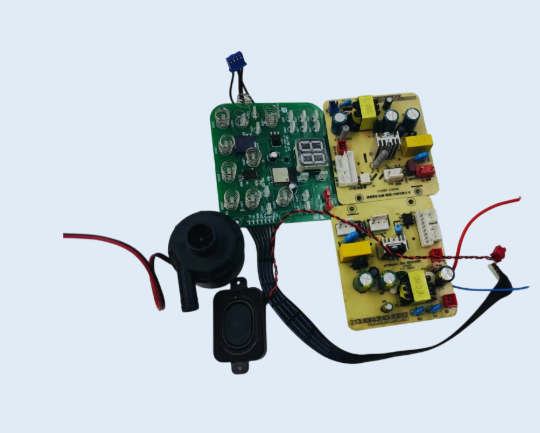
Intelligent Temperature Management In Water Heating Blanket Control Board Systems
One of the defining features of modern water heating blanket control board technology is intelligent temperature management. Consumers increasingly expect personalized comfort settings and stable sleeping environments that adapt automatically throughout the night.
Advanced PCB systems allow precise thermal regulation based on continuously monitored environmental data. Instead of maintaining constant fixed-output heating, the control board dynamically adjusts temperature levels according to room conditions, user settings, and operational timing.
Many modern systems integrate programmable sleep modes that gradually reduce heating intensity during overnight operation. This approach improves sleeping comfort while reducing unnecessary energy usage and minimizing excessive thermal exposure.
The advanced energy-saving water circulation heated blanket pcba also supports multi-stage heating control, enabling smoother temperature transitions and more refined comfort adjustment. Adaptive algorithms help maintain consistent warmth without noticeable temperature fluctuations that could disturb sleep quality.
Some intelligent heating systems further incorporate memory functions capable of storing user preferences for future operation. This level of automation enhances convenience while contributing to a more personalized heating experience.
As smart household technologies continue expanding, advanced thermal management capabilities are becoming increasingly important competitive advantages within the heated blanket industry.
Manufacturing Precision In OEM Water Heating Blanket Control Board Production
The production quality of an oem water heating blanket control board directly influences product reliability, safety, and operational consistency. Modern manufacturing processes emphasize precision assembly, stable component integration, and rigorous quality inspection throughout every production stage.
Advanced PCB production facilities use automated surface-mount technology, precision soldering systems, and optical inspection equipment to ensure stable electronic performance. High manufacturing consistency helps reduce assembly defects and improve long-term product reliability.
Material selection is equally important in heated blanket applications because the control board must operate under varying thermal conditions over extended periods. Industrial-grade electronic components improve resistance to thermal stress, moisture exposure, and continuous operation.
The rotary encoder heating controller pcb requires particularly precise assembly because encoder responsiveness directly affects user interaction quality. Smooth rotational feedback, accurate signal processing, and stable communication between interface components are essential for maintaining premium operational performance.
Manufacturers also conduct extensive functional testing under simulated real-world conditions to verify heating stability, safety response, thermal regulation accuracy, and communication reliability before final product release.
As consumer expectations for product durability and intelligent functionality continue increasing, manufacturing precision remains a key factor influencing the competitiveness of advanced heated blanket systems.
Smart Home Integration And Future Rotary Encoder Heated Blanket PCBA Development
The future development of rotary encoder heated blanket pcba technology is closely connected to the broader growth of smart home ecosystems. Consumers increasingly expect household comfort products to integrate seamlessly with connected environments and digital control platforms.
Modern heated blanket systems are beginning to support wireless communication technologies such as Bluetooth and Wi-Fi, enabling remote temperature control through mobile applications and smart home assistants. This connectivity improves convenience while providing additional opportunities for intelligent energy management.
Future advanced energy-saving water circulation heated blanket pcba systems may incorporate artificial intelligence capable of learning user behavior patterns and automatically optimizing heating schedules according to individual preferences.
Enhanced environmental monitoring may also improve adaptive thermal management capabilities. Intelligent systems could eventually adjust heating performance automatically based on weather conditions, occupancy patterns, or sleep cycle analysis.
Miniaturization and high-efficiency PCB architecture will likely continue improving product compactness while supporting more advanced functions within smaller control systems. Improved energy optimization technologies will further reduce electricity consumption while maintaining high comfort standards.
As intelligent personal comfort technologies continue evolving, advanced PCB innovation will remain central to the future growth of the heated blanket industry.
The Expanding Market Demand For Smart Water Heating Blanket Control Board Solutions
Global demand for intelligent heating comfort products continues increasing as consumers seek safer, quieter, and more energy-efficient household solutions. The combination of advanced electronics and water circulation heating technology has positioned the water heating blanket control board as a critical component within this growing market.
Consumers are placing greater emphasis on personalized comfort, environmentally friendly operation, and intelligent automation. As a result, manufacturers are investing heavily in advanced PCB research and product innovation to differentiate their heating systems through superior performance and smarter functionality.
The integration of rotary encoder interfaces, adaptive energy management, and intelligent thermal protection is helping modern heated blankets compete successfully within the broader smart home appliance market. Premium electronic architecture now serves as both a technical requirement and a major product marketing advantage.
As global energy efficiency standards continue strengthening, the importance of intelligent advanced energy-saving water circulation heated blanket pcba technology will likely expand even further across residential comfort applications.