
The global landscape of home appliances has transitioned from purely mechanical utility to a sophisticated ecosystem of interconnected intelligence. At the epicenter of this technological shift lies the Printed Circuit Board Assembly (PCBA), which acts as the neurological center for every modern device. Specifically, the integration of the esp32 iot control board has emerged as the definitive solution for manufacturers seeking to balance high-performance processing with low-power wireless communication. As we move through 2026, the demand for appliances that are not only “connected” but also “perceptive” has reached an all-time high. Understanding the structural and functional advantages of a high-end esp32 wi-fi ble 5.0 control board is essential for any enterprise aiming to secure a dominant position in the international smart home market.
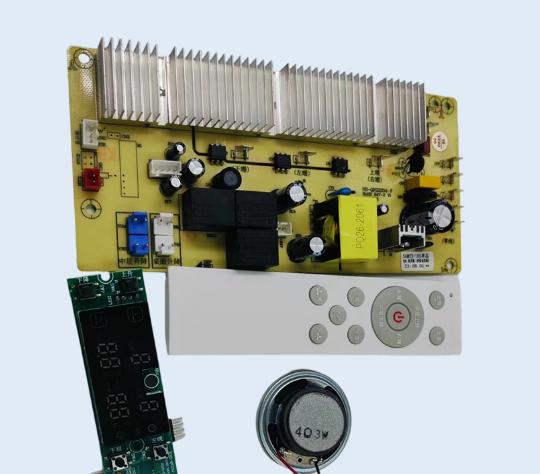
The Versatile Architecture of the ESP32 IoT Control Board
The primary reason for the widespread adoption of the esp32 iot control board across diverse industrial sectors is its unique dual-core architecture. Unlike traditional microcontrollers that struggle to maintain a stable internet connection while simultaneously managing high-torque motors or complex sensor arrays, the ESP32 divides these tasks with surgical precision. One core is typically dedicated to the “logic” of the appliance—processing user inputs, managing thermal safety protocols, and executing operational cycles. The second core focuses entirely on the “communication” layer, ensuring that the device remains reachable via the cloud even during periods of heavy local processing.
This division of labor is what allows a smart washing machine to provide real-time vibration analysis or a smart oven to execute precise temperature ramping without ever dropping its connection to the home router. For a developer, the esp32 iot control board provides a stable, scalable platform that reduces the complexity of firmware development, allowing for faster time-to-market and lower research and development costs. By utilizing this robust hardware foundation, appliance brands can ensure that their products deliver a responsive and reliable user experience that builds long-term brand loyalty.
Advancing Connectivity with the ESP32 Wi-Fi BLE 5.0 Control Board
As home networks become increasingly crowded with dozens of connected devices, the efficiency of wireless communication has become a critical performance metric. The introduction of the esp32 wi-fi ble 5.0 control board represents a significant leap forward in network management. While Wi-Fi remains the primary channel for high-bandwidth data transfers—such as downloading firmware updates or uploading energy usage statistics to a remote server—the inclusion of Bluetooth Low Energy (BLE) 5.0 introduces a new layer of localized efficiency.
BLE 5.0 offers twice the speed and four times the range of previous versions, making it the ideal protocol for “provisioning” or setting up a new appliance. Instead of requiring the user to manually enter complex Wi-Fi passwords on a tiny screen, the esp32 wi-fi ble 5.0 control board allows the appliance to “talk” directly to the user’s smartphone the moment it is plugged in. Furthermore, BLE 5.0 enables the appliance to serve as a local bridge for smaller battery-powered sensors, such as humidity probes or door contacts, creating a cohesive IoT environment within the home. This hybrid approach to connectivity ensures that the appliance is always accessible, easy to configure, and capable of interacting with a wide variety of peripheral devices.
Thermal Management and Durability in the ESP32 Appliance Control PCBA
Designing an esp32 appliance control pcba requires more than just high-speed electronics; it requires a deep understanding of the harsh environments found inside domestic machines. Whether it is the high humidity of a dishwasher or the intense heat generated by a convection oven, the PCBA must be engineered to withstand constant thermal stress. Leading manufacturers of the esp32 appliance control pcba utilize high-TG (glass transition temperature) substrates and advanced conformal coatings to protect sensitive traces from moisture and chemical corrosion.
Thermal dissipation is another critical factor. The ESP32 chip, while efficient, can generate localized heat during periods of intense wireless activity. Professional-grade esp32 appliance control pcba designs incorporate specialized “thermal vias” and copper heat sinks to pull warmth away from the processor and toward the edges of the board. This ensures that the system remains stable even during long-duration operations, such as a self-cleaning cycle in an oven or a heavy-duty drying cycle in a laundry unit. By prioritizing these structural enhancements, manufacturers can guarantee a product lifespan that exceeds a decade, reducing the frequency of hardware failures and enhancing the overall integrity of the appliance brand.
Security Protocols and the Future of the ESP32 IoT PCBA
In an era where data privacy is a top priority for consumers, the security features of the esp32 iot pcba have become a major selling point. Every modern esp32 iot pcba includes hardware-accelerated encryption engines that support AES, SHA-2, and RSA protocols. This ensures that the data being transmitted from the appliance to the cloud is shielded from unauthorized access. Features such as “Secure Boot” and “Flash Encryption” prevent malicious actors from uploading unauthorized firmware to the machine, protecting the appliance from becoming a gateway for network-wide cyberattacks.
Furthermore, the scalability of the esp32 iot pcba allows for “Edge AI” capabilities. This means that the appliance can process data locally rather than sending every piece of information to the cloud. For example, a smart refrigerator could use local sound recognition to detect a failing compressor or an ice maker blockage, alerting the user immediately without ever needing to transmit audio data over the internet. This move toward localized intelligence not only enhances privacy but also reduces latency, making the appliance feel more intuitive and responsive to the user’s needs.
Global Integration and the IoT Appliance Control PCBA Supply Chain
The success of a smart appliance line depends heavily on the reliability of its manufacturing partner. Sourcing a high-quality iot appliance control pcba is a strategic decision that involves evaluating the supplier’s commitment to international standards and their ability to provide personalized customized services. A reputable PCBA manufacturer acts as a bridge between the digital world of software and the physical world of industrial hardware. They provide the technical expertise required to translate a complex IoT vision into a durable, mass-producible circuit board.
As the industry moves toward more sustainable manufacturing practices, the iot appliance control pcba sector is also evolving. Leading suppliers are now utilizing lead-free soldering processes and recyclable substrates to meet the growing demand for “green” electronics. By maintaining a solid and stable market relationship with these forward-thinking manufacturers, appliance brands can ensure that their products are not only smart and reliable but also environmentally responsible. This unremitting pursuit of excellence in both technology and ethics is what defines the leaders of the 2026 appliance market.