
The rapid proliferation of the Internet of Things (IoT) has fundamentally altered the trajectory of the global home appliance market. No longer are household devices defined solely by their mechanical functions; instead, they are evaluated based on their intelligence, connectivity, and ability to integrate into a broader digital ecosystem. At the epicenter of this technological shift is the iot appliance control pcba, a sophisticated electronic assembly that serves as the bridge between traditional hardware and cloud-based intelligence. By replacing standard microcontrollers with high-performance wireless modules, manufacturers can now offer appliances that are not only more efficient but also capable of learning user habits and providing real-time diagnostics. This evolution is driven by the need for seamless, low-latency communication, which is increasingly being anchored by specialized hardware solutions.
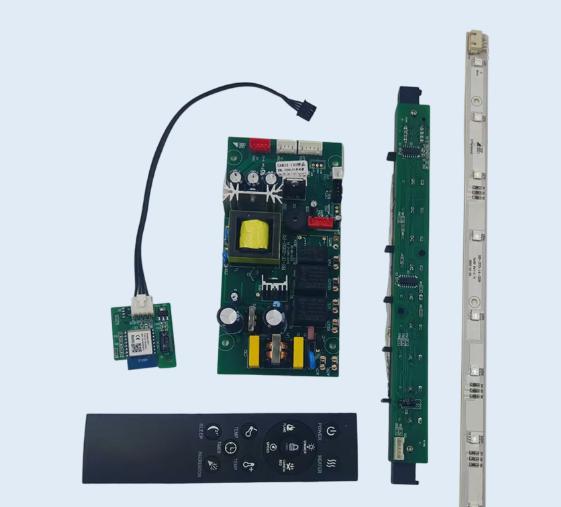
The Architectural Dominance of the ESP32 Wireless Control Board for IoT Devices
When designing a modern smart appliance, the choice of the core communication module is the most critical decision an engineer can make. The esp32 wireless control board for iot devices has emerged as the industry standard due to its unique combination of dual-mode Wi-Fi and Bluetooth connectivity, low power consumption, and robust processing power. Unlike its predecessors, which often required separate chips for logic and communication, the ESP32 integrates a dual-core processor that can handle complex sensor data while simultaneously maintaining a secure connection to the home network.
The integration of an esp32 wireless control board for iot devices allows for a “multi-layered” control strategy. For instance, in a smart refrigerator or washing machine, the board can use Bluetooth Low Energy (BLE) for easy initial setup via a smartphone, and then switch to Wi-Fi for long-range data transmission and cloud synchronization. This versatility ensures that the appliance remains accessible even in environments with varying signal strengths. Furthermore, the rich peripheral set of the ESP32, including capacitive touch sensors and hardware encryption accelerators, makes it the ideal platform for building secure, user-friendly interfaces that meet the rigorous demands of the 2026 consumer market.
Engineering Resilience in the ESP32 Appliance Control PCBA
Manufacturing a high-reliability esp32 appliance control pcba requires more than just soldering a chip onto a board. Appliances operate in diverse and often harsh environments, ranging from the high-humidity atmosphere of a kitchen to the high-vibration conditions of a laundry room. Consequently, the PCBA must be engineered with advanced thermal management and electromagnetic interference (EMI) shielding. A professional-grade esp32 appliance control pcba utilizes multi-layer PCB designs to isolate sensitive radio frequency (RF) signals from the high-voltage power lines that drive motors and heating elements.
Moreover, the power management unit (PMU) on an esp32 appliance control pcba must be exceptionally stable. IoT devices are expected to be “always on,” yet they must comply with strict global energy-efficiency regulations. By utilizing the deep-sleep modes of the ESP32, the control board can reduce power consumption to a few microamps when the appliance is idle, while still being able to “wake up” instantly upon receiving a command from a mobile app or a voice assistant. This balance between responsiveness and energy conservation is what defines a top-tier smart appliance in the modern era.
The Strategic Versatility of the ESP32 IoT Control Board
From a B2B perspective, the esp32 iot control board offers a modular solution that significantly reduces time-to-market. Instead of designing a unique controller for every product in a lineup, manufacturers can utilize a standardized ESP32 platform across multiple SKUs. Whether it is a smart air purifier, an automated coffee machine, or a connected oven, the core esp32 iot control board remains the same, with only the peripheral sensors and software firmware being customized. This scalability allows brands to maintain a consistent user experience across their entire product ecosystem.
The software flexibility of the esp32 iot control board is equally impressive. Supporting a wide range of frameworks, such as ESP-IDF, Arduino, and MicroPython, it allows developers to implement sophisticated features like “Over-the-Air” (OTA) updates. This means that if a new security vulnerability is discovered or a new feature is requested by users, the manufacturer can push a software update directly to the appliance without requiring a physical service visit. This “living hardware” approach ensures that the appliance continues to improve and remain secure throughout its entire lifecycle, enhancing brand loyalty and reducing long-term maintenance costs.
Advanced Integration Features of the ESP32 Control Board PCBA
The final frontier of the smart home is the seamless interaction between different devices. An esp32 control board pcba is designed to support modern communication protocols such as Matter and Thread, which allow appliances from different manufacturers to “talk” to one another. For example, a smart dishwasher equipped with an esp32 control board pcba can communicate with a smart water heater to ensure it only runs when the water temperature is optimal, or it can alert a smart lighting system to flash a specific color when the cycle is complete.
This level of integration is supported by the ESP32’s ability to handle mesh networking. In large homes where Wi-Fi coverage might be spotty, the esp32 control board pcba in one appliance can act as a bridge for another, extending the reach of the smart home network. This self-healing architecture ensures that the “smart” features remain functional even if one node in the network goes offline. For the consumer, this translates to a reliable, frustration-free experience where the technology works silently in the background to enhance their daily lives.