
The paradigm of domestic life and industrial operation has shifted irrevocably toward a state of constant connectivity. As the physical world merges with digital infrastructure, the hardware responsible for this union has become increasingly sophisticated. At the heart of this transition is the ESP32 appliance control board, a masterpiece of semiconductor engineering that has redefined how we interact with everyday machines. By integrating a dual-core processor with native wireless protocols, this platform allows manufacturers to transition from “dumb” mechanical devices to intelligent, responsive assets. The development of a high-performance iot appliance control pcba is no longer just an optional upgrade for premium brands; it is the fundamental requirement for staying relevant in a marketplace where the “Internet of Things” is the baseline for consumer expectations.
Engineering a smart device requires more than simply adding a Wi-Fi module to an existing circuit. It involves a holistic reimagining of the device’s “brain.” A professional esp32 control board pcba acts as the central command center, managing the high-voltage power requirements of an appliance while simultaneously handling the delicate, high-speed data packets of a wireless network. This dual nature—managing raw electrical force and subtle digital logic—is what makes the design of these boards so technically demanding and strategically significant for the modern appliance industry.
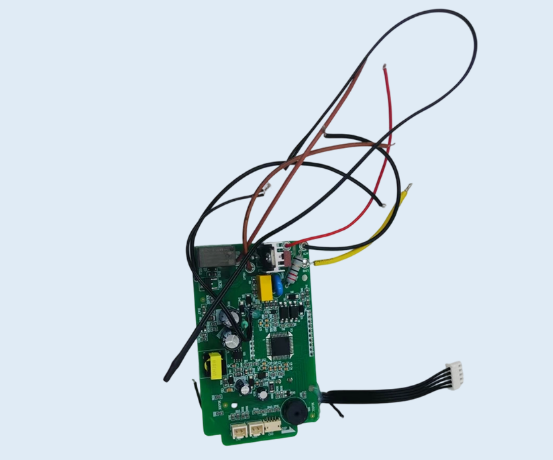
Technical Foundations Of The ESP32 Appliance Control Board
The primary reason for the dominance of the esp32 appliance control board in the global market is its integrated architecture. Unlike previous generations of microcontrollers that required external peripherals for communication, the ESP32 houses everything on a single silicon die. This integration reduces the overall complexity of the esp32 control board pcba, leading to a more compact design and a significantly lower risk of component failure. For an appliance manufacturer, this means that the “brain” of a washing machine or refrigerator can be smaller and more reliable, allowing for sleeker product designs without sacrificing processing power.
Furthermore, the dual-core capability of the ESP32 provides a level of operational safety that is critical for home appliances. One core can be dedicated entirely to the mission-critical tasks of the appliance—such as monitoring temperature sensors in an oven or controlling the water valves in a dishwasher—while the second core handles the high-level tasks of Wi-Fi encryption and cloud communication. This separation ensures that even if the wireless network experiences a lag or a security handshake takes longer than expected, the primary functions of the appliance remain unperturbed. This “segregated logic” is the hallmark of a well-designed iot appliance control pcba, providing a seamless user experience where safety and connectivity coexist.
Precision Engineering In The ESP32 Wireless Control Board For IoT Devices
When designing an esp32 wireless control board for iot devices, engineers must confront the unique challenges of the radio frequency (RF) environment. Appliances are often made of metal and are surrounded by other electronic devices, all of which can interfere with wireless signals. To overcome this, the esp32 wireless control board for iot devices must utilize advanced antenna design and impedance matching. A professionally manufactured board will often feature a 4-layer or even a 6-layer PCB stack-up, allowing for dedicated ground planes that shield sensitive analog signals from the electromagnetic noise generated by the onboard Wi-Fi radio.
The manufacturing process itself is also a critical factor in the success of the esp32 wireless control board for iot devices. Because these boards are often installed in environments subject to high humidity and temperature fluctuations, they require specialized protective measures. Automated Optical Inspection (AOI) and X-ray testing are used during the assembly phase to ensure that every solder joint is perfect, as even a microscopic fracture could lead to a catastrophic failure under the thermal stress of a heating element. By treating the esp32 wireless control board for iot devices with conformal coatings—a thin, protective chemical film—manufacturers can ensure that the electronics remain functional even in the steam-filled environment of a kitchen or the damp surroundings of a laundry room.
Scaling Intelligence With The ESP32 IoT Control Board
The true value of the esp32 iot control board lies in its ability to turn data into actionable insights. In a modern “smart” ecosystem, the control board does more than just follow a schedule; it learns. By utilizing the built-in hall sensors, capacitive touch interfaces, and high-speed analog-to-digital converters, the esp32 iot control board can monitor the health of the appliance in real-time. For instance, it can detect subtle changes in the vibration of a motor or a slight drift in the power consumption of a compressor. This data can then be transmitted through the esp32 wireless control board for iot devices to a cloud server for predictive maintenance analysis.
This shift from reactive to proactive maintenance is a game-changer for both the consumer and the manufacturer. Instead of a customer waking up to a broken air conditioner, the esp32 iot control board can alert the service center weeks in advance that a specific component is nearing the end of its lifecycle. This connectivity is managed through secure protocols like MQTT or HTTPS, which the esp32 control board pcba handles natively. By providing a bridge between the physical mechanical world and the digital analytical world, the esp32 iot control board transforms a static piece of hardware into a dynamic, service-oriented asset.
Security Protocols In The IoT Appliance Control PCBA Design
As our homes become more connected, the importance of cybersecurity at the board level cannot be overstated. A modern iot appliance control pcba is a potential entry point for unauthorized access to a home network if not properly secured. The ESP32 addresses this by offering hardware-accelerated encryption engines for AES, SHA, and RSA. During the manufacturing of the iot appliance control pcba, unique cryptographic keys are injected into the chip’s secure storage area. This ensures that only authorized firmware can run on the device and that all data transmitted over the air is encrypted to the highest standards.
Furthermore, the iot appliance control pcba supports secure boot and flash encryption. This means that even if a malicious actor gained physical access to the circuit board, they would be unable to extract the proprietary code or manipulate the device’s behavior. This level of hardware-level security is what allows major global brands to deploy millions of esp32 appliance control board units with confidence. By building security into the very silicon and the assembly process of the esp32 control board pcba, the industry is creating a foundation of trust that is essential for the long-term adoption of smart home technology.