
The landscape of personal climate control has undergone a significant transformation as consumers prioritize wellness, safety, and tactile luxury in their home environments. Traditional electric blankets, once the standard for winter warmth, are increasingly being replaced by hydronic systems that circulate warm water through soft conduits. At the heart of this technological shift is the hydronic heating blanket pcba, a complex motherboard that manages the delicate balance between fluid dynamics and electronic precision. As the market matures, the demand for more intuitive interfaces and tighter thermal regulation has led to the integration of advanced mechanical components like rotary encoders and sophisticated artificial intelligence algorithms for temperature management.
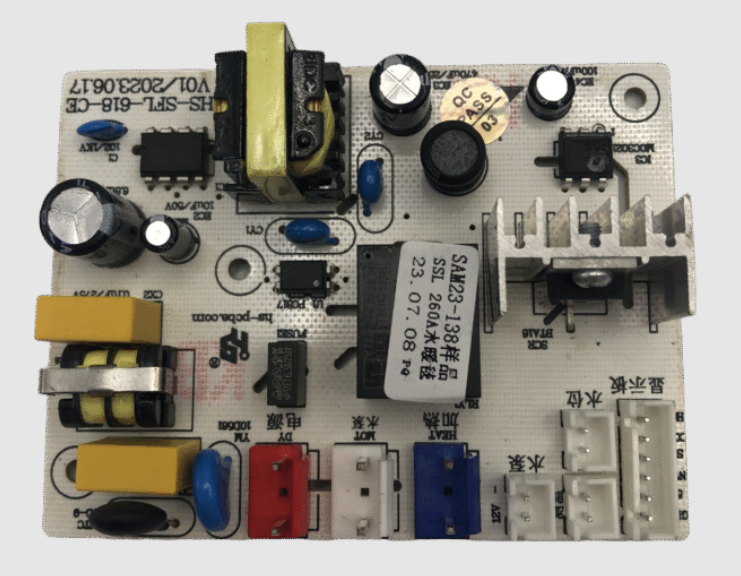
The Engineering Excellence of the Hydronic Heating Blanket PCBA
The architecture of a modern hydronic heating blanket pcba is a masterclass in high-efficiency circuit design. Unlike standard heating pads that simply modulate voltage to a resistive wire, a hydronic controller must orchestrate a symphony of hardware components, including a silent water pump, a high-density heating element, and a series of safety sensors. The printed circuit board serves as the nervous system, ensuring that power is distributed safely while maintaining a footprint small enough to fit within a sleek, decorative bedside unit.
A primary challenge in the development of the hydronic heating blanket pcba is the mitigation of electromagnetic interference. Because these units sit on nightstands close to the user’s head, the board must be designed with superior shielding to prevent radio frequency noise from affecting sleep quality or interfering with other bedside electronics like smartphones or smart speakers. High-quality manufacturers utilize multi-layer PCB layouts to separate high-current heating traces from sensitive logic signals, ensuring a stable and whisper-quiet operation that is essential for a restorative sleep environment.
Tactile Precision with the Rotary Encoder Water Heating Blanket Control Board
One of the most significant upgrades in contemporary user interface design is the move toward the rotary encoder water heating blanket control board. While digital push-buttons were the industry standard for years, they often lack the “premium” feel and rapid adjustability that a mechanical dial provides. A rotary encoder allows the user to spin through temperature settings with a satisfying tactile click, providing a sense of analog control over a purely digital system. This mechanical feedback is not just an aesthetic choice; it improves accessibility, allowing users to adjust their heat levels in a dark room by touch and sound rather than by hunting for a specific flat button.
The technical implementation of a rotary encoder water heating blanket control board involves sophisticated interrupt-driven software logic. As the user turns the dial, the PCBA must accurately count the pulses to update the target temperature in real-time. This requires a high-performance microcontroller capable of debouncing the mechanical signal to prevent “skipping” or erratic temperature jumps. The result is a seamless, fluid interaction that bridges the gap between traditional mechanical stove-top dials and modern digital precision, offering a luxury experience that resonates with high-end consumers.
Achieving Thermal Perfection with Smart Temperature Control Water Heating Blanket PCBA
Beyond the user interface, the true intelligence of the system lies in the smart temperature control water heating blanket pcba. Traditional heaters often suffer from wide temperature swings, getting uncomfortably hot before shutting off and then cooling down too much before restarting. A “smart” system utilizes Proportional-Integral-Derivative (PID) algorithms to provide a constant, unwavering warmth. By calculating the rate of heat loss and the thermal mass of the water in the blanket, the PCBA can adjust the power output in tiny increments, maintaining the set temperature within a fraction of a degree.
The integration of AI-driven logic into a smart temperature control water heating blanket pcba also allows for “environmental adaptation.” For example, the system can monitor the ambient room temperature and automatically adjust the water temperature to compensate for a sudden drop in the house’s heating during the night. This proactive adjustment ensures that the user never wakes up feeling a chill, providing a consistent thermal cocoon that mimics the body’s natural temperature fluctuations during various stages of sleep.
Safety and Reliability of the Temperature-Controlled Heated Blanket PCBA
Safety remains the paramount concern for any appliance designed for use during sleep. The temperature-controlled heated blanket pcba is equipped with multiple layers of hardware and software fail-safes. These include “dry-burn” protection, which uses sensors to detect if the water reservoir is empty, immediately cutting power to the heating element to prevent damage or fire hazards. Furthermore, the board includes a tilt-sensor that deactivates the system if the bedside unit is accidentally knocked over by a pet or a restless sleeper.
A high-quality temperature-controlled heated blanket pcba also features an “over-temperature” watchdog circuit that operates independently of the main microcontroller. If the software were to ever hang or crash, this secondary physical circuit would detect an unsafe heat rise and physically break the power connection. This redundant safety architecture is what gives consumers peace of mind, allowing them to enjoy the soothing warmth of hydronic technology without the anxieties traditionally associated with vintage electric bedding.
Mastering Interaction with the Rotary Encoder Heated Blanket PCBA
The final touch in premium product design is the synergy between visual feedback and mechanical input found in a rotary encoder heated blanket pcba. Often, these dials are paired with circular LED displays or OLED screens that glow softly to show the current status. The PCBA must manage the high-speed communication between the encoder’s pulses and the display’s pixels, ensuring there is no “lag” between the user’s movement and the visual update. This responsiveness is a key indicator of the quality of the underlying firmware and hardware design.
Furthermore, a rotary encoder heated blanket pcba often supports “multi-function” inputs. For instance, a quick press of the dial might toggle between the temperature setting and the timer setting, while a long press might engage a “Turbo-Heat” mode for rapid pre-warming. This allows for a minimalist industrial design with a single control point that manages all the blanket’s complex features. Manufacturers who specialize in this type of interface prioritize the durability of the encoder itself, selecting components rated for tens of thousands of rotations to ensure the bedside unit remains a reliable companion for many winters to come.
In conclusion, the evolution of hydronic warmth is a journey of both “brains” and “beauty.” Through the sophisticated engineering of the hydronic heating blanket pcba, brands can offer a product that is inherently safer and more efficient than its predecessors. By incorporating the tactile luxury of a rotary encoder water heating blanket control board and the clinical precision of a smart temperature control water heating blanket pcba, the modern bedroom is transformed into a sanctuary of perfectly tempered comfort. As we look toward the future, the marriage of mechanical elegance and digital intelligence will continue to define the gold standard for personal wellness and home relaxation.