
The intersection of atmospheric moisture control and thermal engineering represents one of the most delicate balances in modern home appliance design. In the quest for optimal indoor air quality, particularly during the dry winter months, warm mist systems have emerged as a preferred solution for their ability to provide sterile, soothing humidity. However, the operational integrity of these devices rests entirely upon the humidifying heater control board. This specialized electronic component must manage the high-energy demands of boiling water while maintaining precise safety protocols within a moisture-rich environment. As consumers demand quieter, smarter, and more durable appliances, the engineering of the underlying PCBA has evolved from basic power switching to a sophisticated management system that ensures both performance and longevity.
Warm mist humidifiers operate by heating water to its boiling point to create steam, which is then cooled slightly and released into the room. This process requires an intense burst of energy followed by a sustained, controlled output. Unlike standard space heaters, a warm mist humidifier heater PCBA must contend with the unique challenges of mineral buildup (scaling), water level fluctuations, and high internal humidity. Designing a board that can survive these conditions while providing a user-friendly interface is a feat of modern industrial design that requires deep expertise in both power electronics and environmental ruggedization.
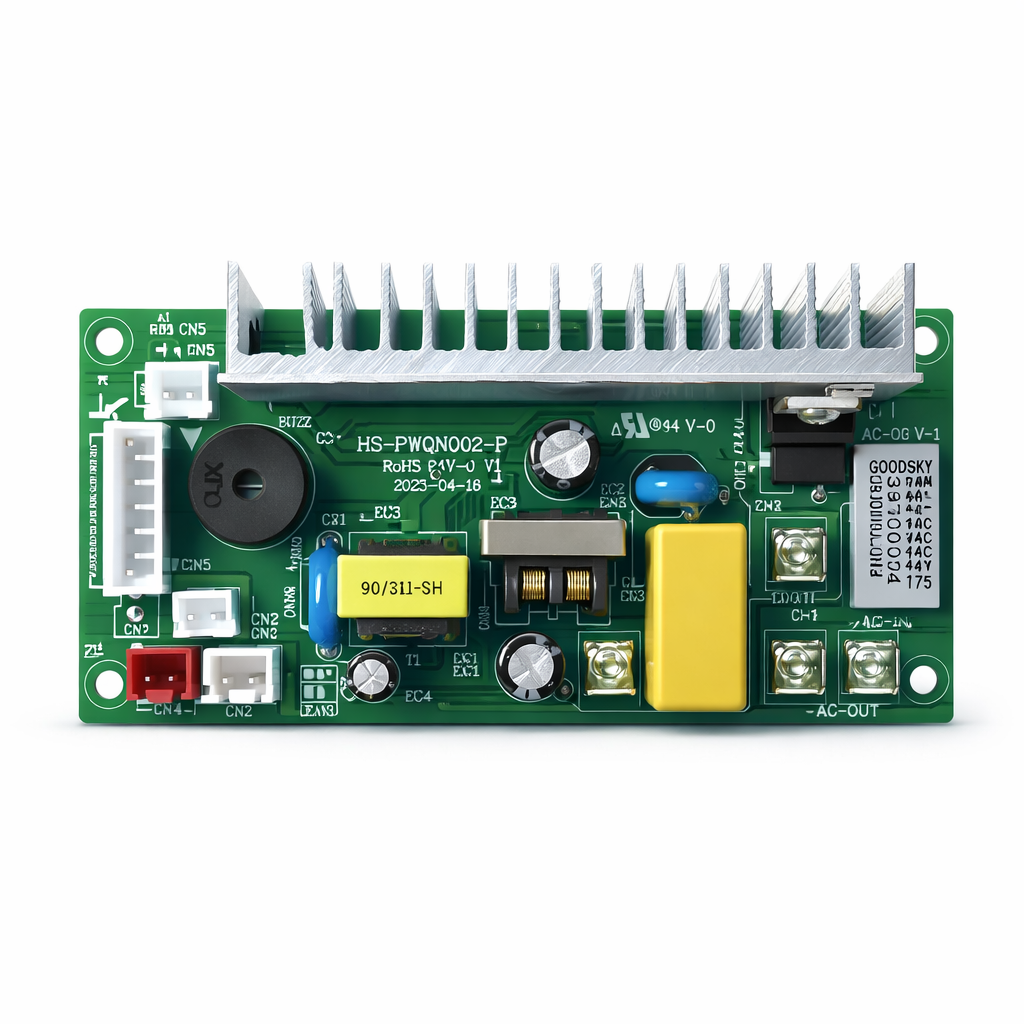
Technical Complexity Of The Humidifying Heater Control Board
The primary architectural challenge for a humidifying heater control board is the isolation of high-voltage heating circuits from sensitive digital control logic. Because these systems involve liquid, the risk of electrical leakage is significantly higher than in dry heating applications. Engineers utilize advanced optoisolators and reinforced trace clearances to ensure that the user-facing controls remain safe and responsive. The board serves as the “brain” that monitors the heating element’s temperature in real-time, adjusting the power flow to prevent the water from boiling too violently or causing the tank to overheat.
Furthermore, a reliable humidifying heater control board must incorporate a sophisticated feedback loop. By utilizing high-precision thermistors and current-sensing resistors, the board can detect when the heating element is becoming insulated by mineral deposits. In such cases, the software can adjust the power output to maintain steam production or alert the user that a cleaning cycle is required. This proactive management is what separates a premium humidifying system from basic models, as it prevents the hardware from burning out prematurely due to the insulating effects of calcium and lime.
Engineering The Warm Mist Humidifier Heater PCBA For Safety
Safety is the non-negotiable cornerstone of the warm mist humidifier heater PCBA. Since these devices are often used in bedrooms and nurseries, the control board must be equipped with multiple layers of redundancy. The most critical feature is the “dry-boil” protection. When the water reservoir is depleted, the heating element’s temperature will spike almost instantaneously. The electric heater control board must detect this thermal surge in milliseconds and cut power to the element to prevent a fire hazard or the melting of the plastic housing.
In addition to dry-boil protection, the warm mist humidifier heater PCBA often includes a tilt-sensor and an over-current fuse integrated directly into the circuit design. Modern boards are also treated with a hydrophobic conformal coating. This specialized chemical layer prevents the high-humidity environment inside the appliance from causing “dendritic growth” on the circuit board—microscopic metallic bridges that can cause short circuits. By isolating the copper traces from the moist air, the coating ensures that the electronics remain functional even after years of nightly use in a steam-filled casing.
Versatility Of The Mist Heater Control PCBA In Hybrid Systems
In the evolving market of 2026, many appliances are becoming multimodal, combining ultrasonic cool mist technology with warm mist heating. This requires a highly versatile mist heater control PCBA that can manage different types of transducers and heating coils simultaneously. The board must be able to switch between a high-frequency ultrasonic vibration mode and a high-current thermal mode, often requiring complex multi-channel power management. This integration allows for a “tepid mist” setting, which provides the safety of cool mist with the germ-killing benefits of heated water.
The mist heater control PCBA also manages the user interface, which may include touch-capacitive buttons and LED displays. These components must be shielded from the electromagnetic interference (EMI) generated by the high-current heating circuit. Effective PCB layout is essential here; designers must separate the “noisy” power paths from the “quiet” signal paths to prevent ghost touches or flickering displays. This level of design sophistication ensures that the appliance feels premium and responsive to the end-user, regardless of which mist mode is currently active.
Durability Standards Of The Evaporative Humidifier Heater Control Board
While warm mist systems boil water, evaporative systems often use a smaller heating element to warm the air or the wicking filter to increase the rate of natural evaporation. The evaporative humidifier heater control board is designed for this sustained, lower-intensity thermal output. Reliability in this context means maintaining a constant temperature over many hours without fluctuation. This requires a stable voltage regulation stage on the PCBA, ensuring that the heating element doesn’t undergo unnecessary thermal stress, which can lead to fatigue in the metal coils.
The evaporative humidifier heater control board must also interface with a humidistat—a sensor that measures the moisture level in the room. The board uses this data to decide when to engage the heater and when to run only the fan. This “intelligent evaporation” prevents the room from becoming oversaturated, which can lead to mold growth. By balancing the fan speed and the heater output, the control board optimizes energy consumption, making the appliance a cost-effective solution for whole-house climate management.
Quality Assurance And The Electric Heater Control Board Legacy
Ultimately, any humidifying system is only as reliable as its electric heater control board. The legacy of electric heating electronics is built on a foundation of rigorous testing and material science. Manufacturers of these boards must adhere to international safety standards such as UL 991 and UL 1998, which specifically cover the safety of solid-state integration in appliances. Every PCBA undergoes functional “burn-in” testing, where it is subjected to maximum loads in a controlled environment to weed out any components that might fail early in their lifecycle.
The future of these systems lies in increased connectivity and environmental sensing. Future versions of the humidifying heater control board will likely incorporate AI-driven algorithms that can predict when a filter needs changing based on the mineral content of the water used. They may also connect to local weather stations to adjust indoor humidity levels automatically as the outdoor temperature drops. Through this constant innovation in circuit design and software logic, the industry is ensuring that warm mist systems remain a safe, effective, and indispensable part of the modern healthy home. Through the combined power of the warm mist humidifier heater PCBA and intelligent sensing, the goal of perfect indoor air is closer than ever before.