
The global landscape of domestic and industrial technology is currently undergoing a seismic shift toward total integration. As the Internet of Things (IoT) matures from a luxury feature into a fundamental expectation, the hardware sitting at the core of these devices must evolve to handle increasing computational demands and complex networking protocols. At the forefront of this revolution is a specialized category of hardware: the smart appliance control board with esp32. By combining a powerful dual-core processor with native wireless capabilities, this specific PCBA (Printed Circuit Board Assembly) has become the gold standard for developers seeking to bridge the gap between traditional mechanical appliances and the digital cloud. Understanding the strategic advantages of this architecture is essential for manufacturers aiming to lead the next generation of home and industrial automation.
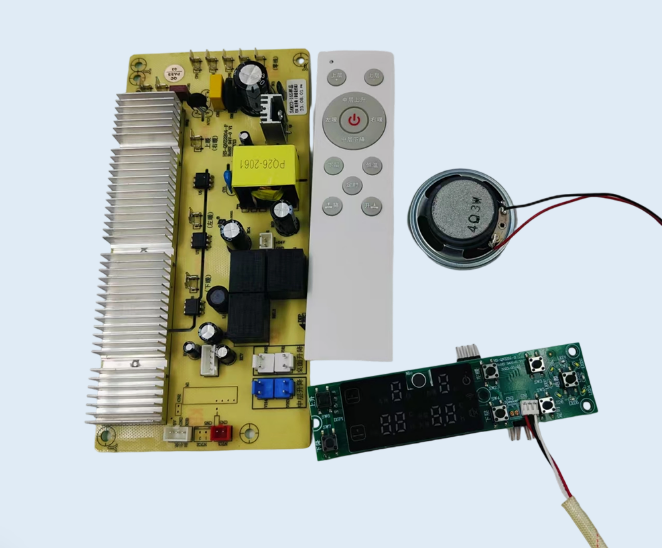
The Dual-Core Advantage of the Smart Appliance Control Board with ESP32
The heart of a modern connected device is no longer a simple microcontroller but a sophisticated System-on-Chip (SoC). The primary reason engineers favor a smart appliance control board with esp32 is the chip’s unique ability to manage high-speed communication and real-time hardware control simultaneously. Unlike older single-core processors that might struggle to maintain a Wi-Fi connection while precisely controlling a high-torque motor or a sensitive thermal sensor, the ESP32 architecture utilizes two independently controllable cores.
One core can be dedicated entirely to the “housekeeping” of the IoT ecosystem—managing security handshakes, maintaining the MQTT connection to a cloud server, and processing Over-the-Air (OTA) firmware updates. Meanwhile, the second core remains unburdened, focusing solely on the appliance’s primary functions, such as monitoring fluid levels in a smart washing machine or adjusting the compressor timing in an energy-efficient refrigerator. This separation of concerns ensures that the appliance remains responsive to the user even during heavy network traffic, providing a seamless experience that reinforces the brand’s reputation for reliability and technological sophistication.
Seamless Hybrid Connectivity with the ESP32 Wi-Fi Bluetooth Control Board
In the diverse world of smart home ecosystems, flexibility is the key to market penetration. A device that only supports a single communication protocol often finds itself isolated from other hardware. The esp32 wi-fi bluetooth control board solves this problem by offering a hybrid connectivity model that caters to different stages of the user experience. Wi-Fi remains the primary gateway for long-range communication, allowing the appliance to be controlled from across the globe via a smartphone app. It enables the device to send telemetry data to the manufacturer for predictive maintenance and to download new features that enhance the appliance’s value over time.
However, the “Bluetooth” component of the esp32 wi-fi bluetooth control board is equally critical, particularly during the initial setup or “provisioning” phase. Bluetooth Low Energy (BLE) allows a user to simply bring their phone near a new appliance and have it automatically recognized and configured for the local Wi-Fi network without the need for complex passwords or manual SSID selection. Furthermore, BLE allows the appliance to act as a local hub for smaller, battery-powered sensors—such as door contacts or temperature probes—that do not have the power capacity for a full Wi-Fi connection. This multi-layered connectivity ensures that the appliance remains at the center of a cohesive and user-friendly IoT environment.
Precision Engineering of the ESP32 Wireless Control Board for IoT Devices
Designing a PCBA that can operate reliably in the proximity of high-voltage appliance components requires a deep understanding of electromagnetic interference (EMI) and thermal management. An esp32 wireless control board for iot devices is not just a carrier for a chip; it is a carefully tuned electronic environment. The wireless radio requires a clean, stable power supply to maintain signal integrity, yet it often sits inches away from noisy components like induction coils or high-current relays.
Leading manufacturers of the esp32 wireless control board for iot devices utilize multi-layer PCB designs to isolate sensitive data lines from power traces. Advanced ground plane techniques are employed to act as a shield against interference, ensuring that the Wi-Fi signal remains strong even inside a metal appliance chassis. Additionally, the integration of specialized external antennas or sophisticated on-board PCB antennas allows for a reliable connection through walls and across large homes. This unremitting pursuit of signal stability is what separates a professional-grade IoT controller from a hobbyist module, ensuring that the “smart” functionality of the appliance is always available when the user needs it.
Security and Scalability in ESP32 IoT PCBA Development
As appliances become more autonomous, the security of the data they handle has become a paramount concern for both consumers and regulators. A modern esp32 iot pcba includes hardware-accelerated encryption, providing a robust defense against unauthorized access and data breaches. Because the ESP32 supports advanced features like secure boot and flash encryption, the manufacturer can be certain that the code running on the machine has not been tampered with.
Furthermore, the scalability of the esp32 iot pcba allows manufacturers to deploy the same core hardware across a wide range of products. From a simple smart toaster to a complex multi-zone air conditioning system, the underlying firmware and hardware architecture can remain consistent. This standardization significantly reduces R&D costs and shortens the time-to-market for new product lines. By maintaining a solid and stable market relationship with a PCBA manufacturer that understands the nuances of IoT security, appliance brands can ensure that their products are not only smart and convenient but also resilient against the evolving threats of the digital world.
The Future of Living: Integrating the IoT Appliance Control PCBA
The ultimate goal of the iot appliance control pcba is to fade into the background, making the appliance feel intuitive rather than complex. Future iterations of this technology are moving toward “Edge AI,” where the ESP32 does not just send data to the cloud but actually processes it locally. For example, an iot appliance control pcba in a smart oven could use a local neural network to recognize the type of food being cooked via a simple camera sensor and automatically adjust the temperature and timing.
This move toward local intelligence reduces latency and enhances privacy, as sensitive data does not always need to leave the home. As a market-oriented enterprise, staying at the cutting edge of these developments is vital. By providing personalized customized services and high-quality hardware, PCBA manufacturers act as the bridge between imaginative software and tangible, durable hardware. The unremitting pursuit of excellence in this field ensures that the homes of the future are not just “connected,” but truly intelligent, responsive, and efficient.