
The evolution of the modern electric fireplace has moved beyond mere thermal output to focus heavily on the sensory and tactile relationship between the user and the appliance. In the current luxury appliance market, the physical buttons and mechanical switches of the past are rapidly being replaced by sleek, seamless interfaces that prioritize both aesthetics and ease of use. At the center of this interface revolution is the capacitive touch fireplace pcba, a sophisticated electronic component that allows for glass-top or plastic-surface control without the need for moving parts. This transition to touch-sensitive technology represents a significant leap in industrial design, offering a streamlined look that aligns with the minimalist trends of contemporary interior architecture. By eliminating mechanical fatigue and potential points of moisture ingress, this technology ensures that the fireplace remains as durable as it is beautiful.
Implementing a capacitive touch fireplace pcba involves a deep understanding of human-machine interaction and the physics of electrical capacitance. When a user’s finger approaches the control surface, it causes a measurable change in the local electrostatic field, which the onboard microcontrollers interpret as a command. This interaction must be fine-tuned to ensure that the system is responsive enough to register a light touch while remaining stable enough to ignore environmental noise or accidental proximity. For a manufacturer, the challenge lies in balancing this sensitivity within a high-heat environment, ensuring that the touch sensors remain accurate even as the fireplace reaches its maximum operating temperature.
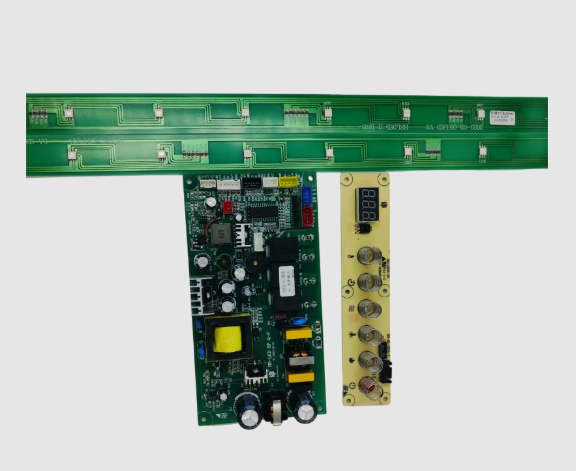
The Seamless Integration Of The Touch Control Fireplace Control Board
The primary advantage of a touch control fireplace control board is the ability to create a completely flat and sealed user interface. Traditional buttons require holes to be drilled into the chassis, which can break the visual continuity of the design and create gaps where dust or household cleaning agents can accumulate. By utilizing a touch-sensitive solution, designers can hide the controls behind a single sheet of tempered glass or a high-quality acrylic panel, which only illuminates when the unit is active. This “hidden-until-lit” aesthetic is a hallmark of modern luxury, allowing the fireplace to serve as a clean, decorative element when not in use while providing a high-tech command center at a moment’s notice.
Beyond the visual appeal, the touch control fireplace control board offers significant mechanical advantages over traditional switches. Because there are no springs, actuators, or physical contacts to wear out, the lifespan of the interface is significantly extended. This is particularly important for heating appliances that are subject to repeated use over many years. The electronic nature of the touch interface also allows for more sophisticated feedback mechanisms, such as haptic vibrations or soft acoustic tones, which confirm to the user that their command has been received. This multi-sensory feedback loop enhances the overall user experience, making the act of adjusting the flame height or the heat level feel deliberate and premium.
Architectural Sophistication In The Fireplace User Interface Control Board
At the heart of the user experience is the fireplace user interface control board, which acts as the primary bridge between the consumer and the complex internal logic of the heater. This board is responsible for more than just registering touches; it must manage the visual feedback system, such as LED status indicators and digital displays that show temperature settings or timer durations. A well-designed user interface board ensures that the information is presented clearly and intuitively, reducing the need for the user to consult a manual for basic operations. The layout of the circuitry on this board must be carefully optimized to minimize latency, ensuring that the flame color changes or the blower activates the instant the surface is touched.
A professional fireplace user interface control board is also engineered with advanced safety logic. For instance, many modern systems include a “child lock” feature that can be activated by holding a specific touch area for several seconds, preventing accidental operation by children or pets. The board also manages the dimming logic of the interface itself, ensuring that the control lights fade out after a period of inactivity so as not to distract from the ambiance of the flames. This level of thoughtful automation is what defines a high-quality electronic system, transforming a simple heater into a smart home asset that respects the comfort and lifestyle of the occupants.
Simplicity And Precision: The 4-Button Fireplace Controller Board
While many systems move toward complex touchscreens, there is a significant market for the refined simplicity offered by a 4-button fireplace controller board. This configuration typically manages the four essential functions of the appliance: power, heat level, flame intensity, and timer settings. By focusing on these core pillars, the 4-button fireplace controller board provides a highly intuitive experience that requires zero learning curve for the user. In a capacitive touch format, these four “buttons” are usually represented by back-lit icons that glow through the front panel, providing a minimalist and balanced look that fits perfectly with smaller or more budget-conscious electric fireplace models.
The engineering behind a 4-button fireplace controller board focuses on maximizing reliability and ease of manufacturing. Because the number of touch zones is limited, the control logic can be extremely robust, with high resistance to electromagnetic interference from the surrounding heating coils. This makes the 4-button layout an ideal choice for high-volume OEM projects where consistency and long-term performance are the primary goals. For the end-user, this layout offers a “no-nonsense” approach to home comfort, allowing them to adjust their environment with a few quick taps while enjoying the sleek, modern aesthetic of a touch-sensitive interface.
The Future Of Thermal Management And The Electric Fireplace PCBA
As we look toward the future of the industry, the role of the electric fireplace pcba will continue to expand as it incorporates more advanced sensors and connectivity features. The transition to capacitive touch is just the beginning of a larger movement toward intelligent, responsive heating solutions. Future iterations of these boards may include proximity sensors that wake the interface as the user approaches, or integrated ambient light sensors that automatically adjust the brightness of the controls to match the lighting in the room. The goal is to create a heating system that is not only functional but also deeply attuned to the environment and the needs of the household.