
The landscape of home automation and industrial machinery is undergoing a profound paradigm shift. Traditional electronic frameworks, which once relied on isolated microcontrollers and static logic, are rapidly being replaced by highly integrated, communicative networks. At the forefront of this evolution is the demand for hardware that combines high-performance processing with native wireless capabilities. As consumers expect deeper interaction with their everyday machinery, engineering teams are tasked with creating internal control architectures that are both incredibly compact and robust enough to handle continuous data streams. This shift toward total connectivity requires a complete reimagining of the core circuit boards powering modern infrastructure.
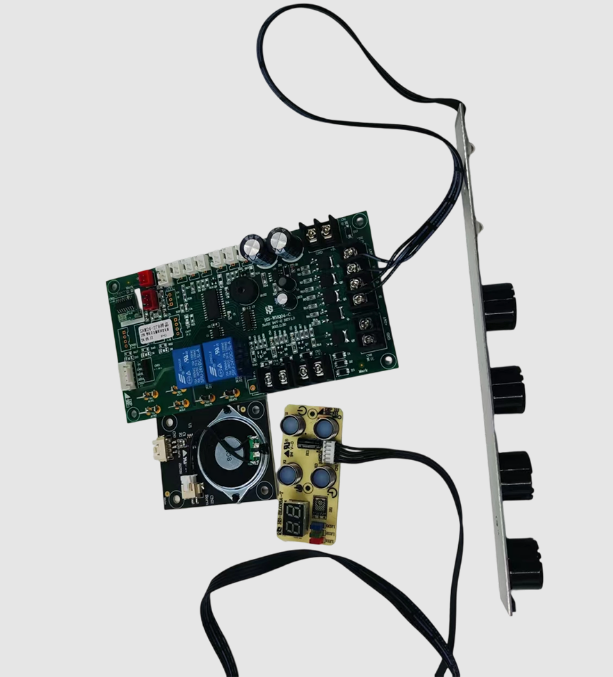
The Architectural Superiority of the ESP32 Wireless Control Board for IoT Devices
When designing a modern ecosystem, the primary challenge lies in establishing a stable, continuous link between physical hardware and cloud architecture. Implementing an esp32 wireless control board for iot devices solves this dilemma by offering a highly integrated silicon solution that manages both processing tasks and dual-band radio frequencies simultaneously. Unlike older configurations that required separate modules for computation and wireless transmission, this unified board design dramatically shortens signal paths, reduces latency, and minimizes the risk of signal degradation over long periods of continuous operation.
The physical design of this layout focuses intensely on optimizing electromagnetic compatibility. In a busy environment filled with multiple wireless networks, smart devices must be capable of filtering out ambient noise to maintain an uninterrupted data stream. The advanced layout of these specialized wireless control boards routes high-frequency transmission traces away from sensitive analog sensor inputs. This strategic isolation prevents internal cross-talk, ensuring that data regarding power consumption, fluid dynamics, or thermal levels remains perfectly accurate as it travels from the physical sensors to the main processor.
Maximizing Operational Efficiency with a Custom ESP32 Control Board
Standard off-the-shelf microcontrollers often come with unnecessary features that increase energy consumption, or they lack the exact pin configurations required for specific industrial tasks. Engineering a custom esp32 control board allows manufacturing firms to tailor the physical shape, power distribution layers, and peripheral interfaces to the exact requirements of a specific product line. This bespoke approach to hardware development eliminates unnecessary components, directly lowering production costs while maximizing energy efficiency during periods of prolonged idle operation.
Furthermore, a customized board architecture allows for superior power state management. Many modern applications require devices to remain in a low-power “sleep” mode for extended intervals, waking up only to report data or respond to an external trigger. A custom-tailored circuit configuration can isolate the primary processing cores from power during these dormant phases while keeping low-power sensor loops active. When an action is detected, the board transitions to full operational capacity within milliseconds, executing complex calculations and transmitting data before immediately returning to a power-saving state.
Overcoming Thermal and Mechanical Stress with the ESP32 Appliance Control PCBA
Deploying sensitive processing units into high-power household devices exposes the electronics to extreme environmental stress. An esp32 appliance control pcba must be engineered to survive in close proximity to major heat sources, high-voltage switches, and continuous mechanical vibration. For instance, inside a modern washing machine or an automated cooking appliance, the circuit board is subjected to rapid thermal cycles and physical shaking that can easily fracture weak solder joints over time.
To ensure long-term reliability under these punishing conditions, specialized manufacturing standards are applied to the printed circuit board assembly. Thicker copper layers are utilized to handle high currents without overheating, and advanced thermal vias are drilled beneath power-switching components to conduct excess heat away from the core processing silicon. Additionally, the entire assembly is often treated with a specialized conformal coating—a microscopic protective layer that seals the components away from airborne moisture, grease, and dust, preventing short circuits and corrosion throughout the operational lifespan of the machine.
Seamless Software and Hardware Synergy in the ESP32 IoT Control Board
The true potential of an advanced processing board is unlocked through the perfect alignment of physical hardware and embedded software. Utilizing an esp32 iot control board provides developers with a dual-core processing environment where tasks can be clearly divided to prevent system lag. One core can be completely dedicated to handling the complex overhead of wireless communication protocols, encryption, and cloud handshakes, while the second core focuses entirely on real-time sensor monitoring and mechanical relay switching.
This separation of duties ensures that critical safety protocols are never delayed by network latency or slow server responses. If an appliance detects a critical error—such as an internal temperature spike or a fluid leak—the localized control core can instantly cut power to the dangerous component without waiting for authorization from a cloud network. This edge-computing capability makes the system inherently safer and more reliable than systems that rely entirely on external internet connectivity to make operational decisions.
The Next Generation of Machinery Powered by the ESP32-Based IoT Appliance PCBA
As technology continues to advance, the role of embedded electronics is shifting from passive execution to active environmental analysis. The implementation of an esp32-based iot appliance pcba enables machines to gather and analyze localized data patterns over time. By observing how a machine operates daily, the embedded system can identify minor deviations in power consumption or motor resistance that suggest a specific mechanical part is beginning to wear out.
This capacity for predictive diagnosis changes how manufacturers handle customer service and product maintenance. Instead of waiting for an appliance to break down completely, the internal control board can flag the anomaly early, notifying the user or the manufacturer that a service check is required. This proactive approach to machine management significantly extends the operating life of expensive household infrastructure, minimizes unexpected downtime, and marks a major step forward in the creation of truly intelligent, self-sustaining living environments.