
The search for the perfect night of rest has driven significant innovation in residential thermal technology. While traditional bedding relied heavily on direct resistive heating elements, contemporary consumer preferences lean toward systems that offer a gentler, more uniform distribution of warmth. Hydronic heating systems, which circulate warmed fluid through a network of flexible, hidden tubes embedded within a fabric mattress topper, have emerged as a premium solution. This approach mitigates the discomforts of localized hot spots, excessive skin dryness, and the constant exposure to electromagnetic fields that often characterize older consumer appliances.
Developing these advanced comfort products requires an intricate marriage of fluid dynamics, thermal engineering, and complex hardware design. Unlike basic heating pads, a fluid-based thermal system introduces multi-variable challenges, such as mechanical fluid movement, real-time temperature tracking, and comprehensive electrical safety parameters. At the center of this technological matrix sits the electronic controller—a specialized printed circuit board assembly that serves as the command center for the entire appliance, translating user commands into precise mechanical actions and safe thermal profiles.
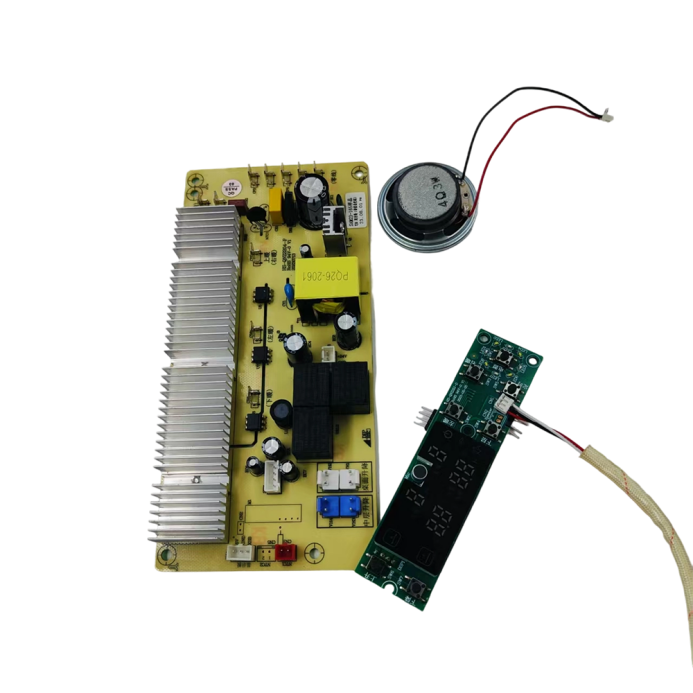
The Art of Minimalist UI with a Single-Color Display Water Heating Blanket PCBA
In modern electronic product design, user interface complexity does not always equate to a superior user experience, especially within the context of a peaceful bedroom environment. Integrating a single-color display water heating blanket pcba allows manufacturers to prioritize absolute clarity, structural simplicity, and minimal visual disruption. A monochrome light-emitting diode or liquid-crystal display provides clean, high-contrast readability in the dark without casting an intense, sleep-disrupting glow across a darkened bedroom.
From a structural engineering standpoint, choosing a monochrome display reduces the circuit complexity on the control board. Multi-colored screens require advanced graphical drivers, larger memory allocations, and high-frequency data buses that can introduce electromagnetic interference into nearby circuits. By utilizing a single-color system, the layout designers can implement low-frequency shift registers to manage the screen, keeping the power rails exceptionally clean. This design choice ensures that the analog-to-digital converters handling the sensitive temperature sensor readings remain free from electrical noise, resulting in highly stable and reliable operation over years of continuous use.
Enhancing Tactile Interaction via the Knob Controlled Heated Blanket PCBA
While capacitive touch surfaces have become common across many household appliances, physical, tactile controls offer substantial advantages in scenarios where ergonomics and blind operation are crucial. Employing a knob controlled heated blanket pcba creates a highly intuitive interaction model for consumers who may want to modify their thermal settings in the middle of the night without looking directly at a screen or opening a mobile application. A physical rotary mechanism provides immediate physical confirmation, allowing for natural, fluid adjustments through muscle memory alone.
Integrating a mechanical rotary dial into a modern digital circuit requires careful attention to electrical debouncing and mechanical durability. The control board must convert the physical rotation of a potentiometer or incremental rotary encoder into clean, distinct digital logic pulses. To ensure longevity, the circuit must incorporate hardware-based filtering networks, utilizing capacitors and resistors to smooth out the microscopic electrical arcs that occur within mechanical switches. This engineering detail ensures that every single click of the knob corresponds perfectly to a specific adjustment in the heating algorithm, preventing erratic value jumps and offering a highly satisfying, premium feel to the end user.
Dynamic Adaptation via the Smart Temperature Control Water Heating Blanket PCBA
Human body temperature naturally drops and fluctuates throughout the distinct phases of the sleep cycle, meaning that a static heat output can easily lead to nighttime overheating, sweating, and disrupted rest. A smart temperature control water heating blanket pcba addresses this physiological reality by implementing adaptive thermal management rather than maintaining an unyielding, fixed power delivery. By analyzing real-time data from various environmental inputs, the control unit constantly recalibrates its performance to maintain an unvaried microclimate around the body.
The firmware embedded within these advanced microcontrollers utilizes a predictive closed-loop calculation system. Instead of waiting for the mattress pad to become noticeably cold or uncomfortably hot, the processor continuously calculates the rate of thermal loss from the circulating water. If a room’s ambient temperature drops sharply during the early morning hours, the smart board intercepts this trend early, increasing the power to the heating element in tiny, imperceptible increments. This proactive adjustment prevents the user from experiencing a sudden chill, maintaining a state of thermal equilibrium that supports deep, restorative sleep.
Total System Supervision with a High-Integrity Water Heating Blanket Control Board
Operating an appliance that combines electrical currents, high thermal outputs, and liquid circulation requires an uncompromised commitment to active safety protocols. The primary water heating blanket control board acts as a central supervisor, constantly run-checking a web of safety interlocks to prevent mechanical damage or electrical hazards. Because the internal fluid pump and the heating core run concurrently, the control layout must balance high-power distribution with ultra-sensitive safety monitoring circuits.
One of the most critical safety routines managed by the central board involves monitoring water levels and system orientation. If the water reservoir drops below a safe operational threshold, or if the base unit is accidentally tilted or knocked over by a pet, the control architecture must respond instantaneously. Designers achieve this by wiring low-latency hardware interrupts directly from optical fluid level indicators and solid-state accelerometers to the main processor. In the event of an anomaly, the circuit completely severs power to the heating element within a fraction of a second via solid-state relays, mitigating the risks of dry-firing, component melting, or structural damage before a hazard can develop.
Executing Precise Thermal Regulation via the Temperature-Controlled Heated Blanket PCBA
The ultimate efficacy of a hydronic mattress pad rests on its ability to maintain a consistent temperature within a fraction of a degree. This precision is made possible by a specialized temperature-controlled heated blanket pcba that bridges high-current components with delicate microvolt sensing architecture. The board must successfully drive low-noise brushless direct-current water pumps and high-output heating elements while simultaneously capturing pristine data from multiple temperature tracking points.
To achieve surgical thermal accuracy, the board layout separates the high-power switching transistors from the low-power analog inputs using dedicated physical isolation barriers and split ground planes. Negative temperature coefficient thermistors are placed strategically at both the heating chamber entrance and exit to measure fluid temperature in real time. The circuit conditions these raw analog signals through a series of operational amplifiers and low-pass filters, removing high-frequency background hums. This pristine data stream allows the system to fine-tune the power cycle of the heating element with extreme granularity, ensuring the water never overshoots the user’s targeted preference and delivering a perfectly stable wave of comfort throughout the night.