
The fireplace has long served as the heart of the home, but its soul is undergoing a digital revolution. In the current landscape of home appliances, the interaction between the user and the heat source is as critical as the warmth itself. This transition is driven by the development of the 4-button fireplace fireplace control board, a specialized hardware component that prioritizes simplicity and tactile feedback. As manufacturers move away from cumbersome mechanical dials, the focus has shifted toward creating a sleek, intuitive interface that complements the aesthetic of modern interior design while maintaining rigorous technical standards.
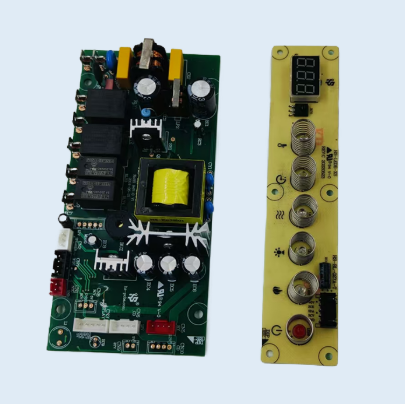
The Engineering Philosophy Behind The 4-Button Fireplace Fireplace Control Board
Designing a control system for a high-heat environment requires a delicate balance of thermal resilience and electronic sensitivity. The 4-button fireplace fireplace control board is engineered to provide a streamlined user journey, typically focusing on the four essential pillars of hearth operation: power, flame intensity, heat output, and timer settings. By restricting the physical interface to four primary inputs, designers reduce cognitive load for the consumer, ensuring that even the most advanced features remain accessible without the need for a thick instruction manual.
Underneath the surface of the control panel, the circuitry must manage high-voltage components while processing low-voltage signals from the user interface. This necessitates a robust architecture where the logic layer is thermally isolated from the power relays. Modern boards utilize high-grade fiberglass substrates that resist warping under the cyclic heating and cooling common in electric and gas fireplaces. This structural integrity ensures that the buttons remain responsive and the connection points remain secure over years of daily operation.
Integrating Tactile Precision With The Fireplace PCBA With Capacitive Touch
As consumer expectations for luxury and high-tech aesthetics grow, many high-end fireplace models are moving beyond physical click-buttons. The adoption of a fireplace pcba with capacitive touch represents a significant leap in both durability and style. Unlike mechanical switches that can wear out or trap dust and debris, a capacitive touch interface sits behind a seamless sheet of tempered glass or high-quality plastic. This design not only creates a “flush” look that is highly sought after in minimalist architecture but also protects the underlying electronic components from the environment.
The logic required to manage capacitive sensors is more complex than traditional switching. The board must be calibrated to distinguish between a deliberate human touch and accidental proximity or environmental moisture. Sophisticated microcontrollers on the board analyze changes in electrical capacitance in real-time, providing near-instantaneous feedback through subtle LED illumination or haptic signals. This creates a premium feel that reinforces the quality of the appliance, making the simple act of adjusting the flame height feel like a modern, high-tech experience.
Aesthetic Versatility In The Smart Fireplace Control Board
The role of a smart fireplace control board extends beyond simple functionality; it is a key component in the overall industrial design of the product. Today’s manufacturers require boards that can be integrated into various form factors, from wide linear fireplaces to traditional square inserts. This versatility is achieved through modular PCBA design, where the interface logic can be separated from the main power board. This allows for a uniform user experience across an entire product line while the internal power management adapts to different heating capacities.
A smart control system also allows for the integration of secondary visual feedback. Many boards now support multi-color LED drivers that synchronize the button backlighting with the color of the fireplace’s ember bed. This creates a cohesive visual language where the control board feels like an organic extension of the fire itself rather than a separate, bolted-on accessory. By focusing on these small but impactful design details, brands can differentiate themselves in a crowded marketplace, offering a product that appeals to the senses as much as it does to the need for physical comfort.
Maximizing Reliability In The 4-Button Fireplace Control Board
In the world of B2B manufacturing and international trade, reliability is the most valuable currency. A 4-button fireplace control board must be tested to withstand thousands of cycles and extreme temperature fluctuations. To achieve this, engineers implement redundant safety circuits and use automotive-grade components that are rated for high-stress environments. This focus on “over-engineering” the basics ensures that the core functionality—turning on the heat and adjusting the flame—never fails, even if secondary smart features are not being utilized.
Furthermore, the simplicity of a four-button layout simplifies the diagnostic process. In the rare event of a component failure, the board can use the existing interface to communicate error codes through specific blinking patterns of the status LEDs. This allows homeowners to communicate accurately with customer support or technicians, leading to faster resolution times. When a fireplace is integrated with a high-quality PCBA, the longevity of the appliance is significantly extended, reducing the total cost of ownership and enhancing the reputation of the manufacturer.
The Future Of Hearth Interaction: Beyond Traditional Controls
Looking forward, the industry is seeing a convergence of physical and digital controls. While a 4-button fireplace fireplace control board provides the necessary physical touchpoint for immediate adjustments, it often serves as a local hub for broader connectivity. The next generation of boards will likely incorporate even more advanced sensors, such as ambient light detectors that automatically dim the control panel when the room is dark, or occupancy sensors that turn the unit off when no one is present.
The shift toward the fireplace pcba with capacitive touch also opens the door for gesture-based controls and integrated displays. However, regardless of how advanced the technology becomes, the fundamental goal remains the same: to provide a safe, reliable, and beautiful way to enjoy a fire. By focusing on the refined integration of hardware and user interface, manufacturers are ensuring that the modern hearth remains a relevant and beloved feature of the home for decades to come.
The commitment to high-quality PCBA solutions is what separates a standard appliance from a centerpiece of luxury living. As the market for smart home technology continues to mature, the precision and elegance of the fireplace control system will remain a primary factor in consumer satisfaction and brand success. Through thoughtful engineering and a focus on the user journey, the 4-button and capacitive touch systems are defining the new standard for the industry.