
As electric fireplaces continue to gain popularity in residential, commercial, and hospitality applications, the demand for reliable electronic control systems has increased significantly. The control board serves as the central management unit of the fireplace, coordinating flame effects, temperature regulation, safety monitoring, remote communication, and user interface functions. For manufacturers and global brands, selecting a qualified OEM electric fireplace control board supplier is no longer simply a purchasing decision but a critical factor in ensuring product quality, compliance, and long-term market competitiveness.
Industrial standards play a vital role throughout the assembly process. From component sourcing and circuit design to production testing and final inspection, every stage must meet strict requirements to guarantee stable operation and product safety. Understanding these standards helps buyers evaluate suppliers more effectively and establish long-term manufacturing partnerships.
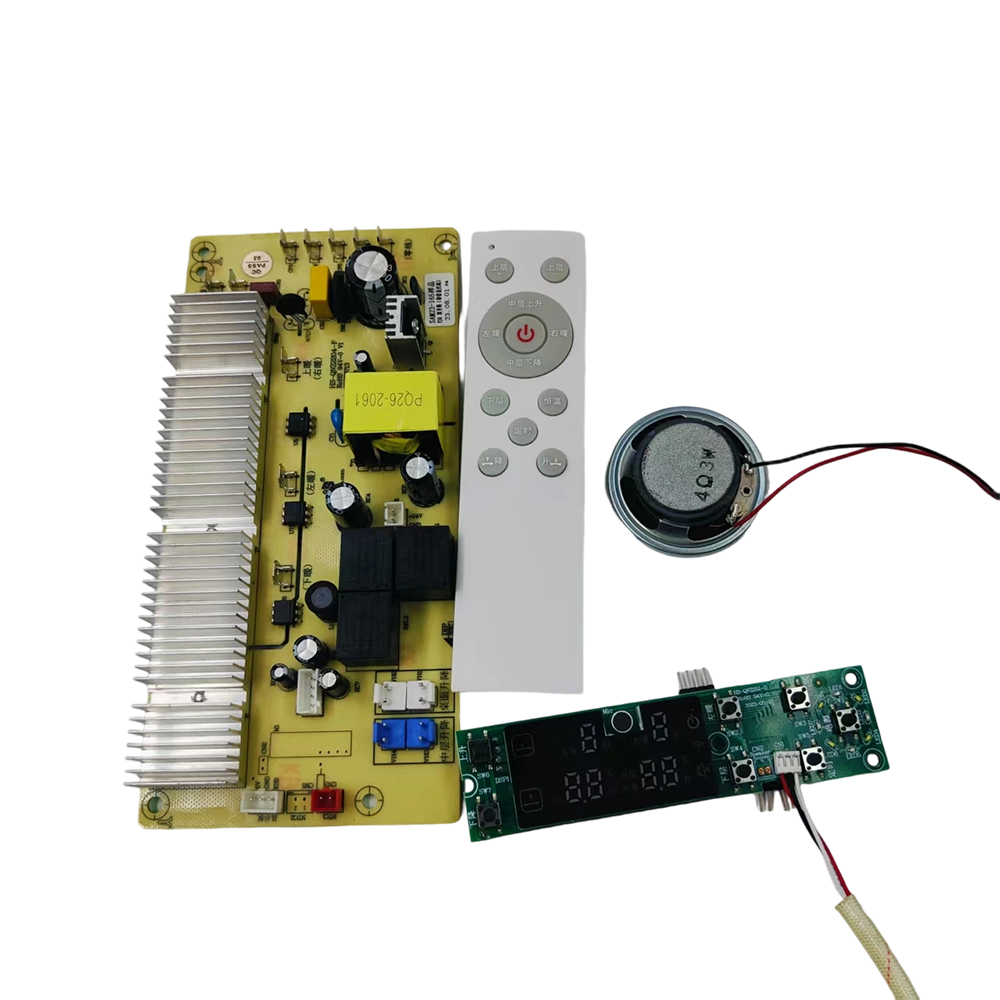
Why OEM Electric Fireplace Control Board Assembly Requires Strict Industry Standards
Modern electric fireplaces integrate various electronic modules into a compact control system. The control board is responsible for managing multiple functions simultaneously while maintaining stable performance under different operating conditions.
A professional OEM electric fireplace control board manufacturer must establish standardized production procedures to ensure consistency across every production batch. Without well-defined assembly standards, even minor deviations in soldering quality, component placement, or programming procedures can lead to operational failures, shortened product lifespan, or customer dissatisfaction.
Industrial standards provide a framework that reduces manufacturing variability and improves overall product reliability. They ensure that every control board performs according to design specifications regardless of production volume or market destination.
Electric Fireplace PCBA Factory Requirements For Component Selection
The quality of a control board begins with the components used during assembly. A reputable electric fireplace PCBA factory follows strict procurement procedures to ensure that all electronic components meet performance and reliability requirements.
Components such as microcontrollers, relays, sensors, capacitors, and communication modules must be sourced from qualified suppliers with proven quality records. Incoming material inspection is an essential step that verifies component authenticity, electrical characteristics, and physical integrity before production begins.
In addition to electrical performance, manufacturers must consider long-term durability. Electric fireplaces often operate continuously during seasonal usage periods, making component stability particularly important. High-quality components contribute to improved thermal management, reduced failure rates, and longer service life.
The selection process also includes evaluating component compatibility with the intended application. Proper matching between hardware design and operating conditions helps prevent unexpected performance issues in the final product.
Manufacturing Standards In Custom Fireplace PCBA Manufacturer Facilities
A professional custom fireplace PCBA manufacturer typically follows standardized production workflows that cover every aspect of board assembly.
Surface mount technology and through-hole assembly processes must be carefully controlled to achieve consistent solder joint quality. Precision equipment is used to place components accurately and minimize production defects. Automated inspection systems further verify assembly quality throughout the manufacturing process.
Environmental control within production facilities is equally important. Temperature, humidity, and electrostatic discharge management all influence assembly quality and product reliability. Manufacturers that maintain controlled production environments can significantly reduce the risk of latent defects that may appear after products enter the market.
Process documentation forms another essential part of industrial standards. Detailed work instructions, quality checkpoints, and traceability records allow manufacturers to maintain consistency while supporting continuous improvement initiatives.
Quality Assurance Standards For Fireplace Control Board OEM Production
Quality assurance extends beyond the assembly stage and covers the entire production lifecycle. In fireplace control board OEM projects, quality management systems help ensure that every unit meets customer specifications and industry requirements.
Inspection procedures are typically implemented at multiple stages of production. Initial inspections verify raw materials, while in-process inspections monitor assembly quality. Final inspections evaluate the completed board before shipment.
Functional testing is particularly important for fireplace control systems. Manufacturers must verify that flame simulation controls, heating functions, safety protection circuits, and communication interfaces operate correctly under various conditions.
Comprehensive testing helps identify potential issues before products reach end users. By implementing rigorous quality assurance protocols, manufacturers reduce warranty claims and strengthen customer confidence in the final product.
Compliance Standards For Electric Fireplace Main Control Board Manufacturing
Regulatory compliance is a key consideration in global fireplace markets. Different regions have specific requirements related to electrical safety, electromagnetic compatibility, environmental protection, and product performance.
An experienced electric fireplace main control board manufacturer understands these requirements and incorporates compliance considerations during both design and production stages. Compliance testing helps verify that products can operate safely without interfering with other electronic devices.
Environmental regulations also influence manufacturing practices. Many customers require suppliers to use materials and processes that align with international environmental standards. Compliance not only facilitates market access but also reflects a manufacturer’s commitment to sustainable production practices.
Manufacturers that integrate compliance management into their production systems can respond more efficiently to changing market regulations and customer requirements.
Process Control Standards That Improve OEM Electric Fireplace Control Board Reliability
Reliability is one of the most important performance indicators for fireplace control boards. Industrial process control standards help manufacturers maintain consistent product quality while minimizing production variability.
Process monitoring systems collect data throughout manufacturing and testing operations. By analyzing production trends, manufacturers can identify potential issues before they affect product performance. This proactive approach supports continuous process optimization and improved manufacturing efficiency.
Traceability systems are also becoming increasingly important. Detailed production records allow manufacturers to track materials, processes, and testing results for each product. This capability enhances quality management and simplifies corrective actions when necessary.
Strong process control standards create a foundation for reliable production while supporting long-term customer satisfaction.
Engineering Collaboration Between Customers And Custom Fireplace PCBA Manufacturer Teams
Successful OEM projects often involve close collaboration between customers and manufacturing partners. Engineering support plays a critical role in transforming product concepts into commercially viable solutions.
A qualified custom fireplace PCBA manufacturer provides assistance during design evaluation, component selection, firmware integration, and manufacturability analysis. Early collaboration helps identify potential challenges before production begins, reducing development costs and project delays.
Engineering teams also contribute to product optimization by recommending design improvements that enhance reliability, simplify manufacturing, or reduce overall production complexity. This collaborative approach enables customers to achieve both technical and commercial objectives more effectively.
Strong communication between customers and manufacturers ultimately leads to better product performance and smoother project execution.