
Real Products.
Real Manufacturing Challenges.
Explore how we help customers solve engineering, manufacturing, supply chain, and product integration challenges.
From Challenge
to Solution
Each project begins with a specific product challenge. Our case studies show how engineering, manufacturing, and supply chain capabilities come together to create practical solutions.
Every story is built around the problem the customer brought us — and the path we took together to turn it into a product that works.
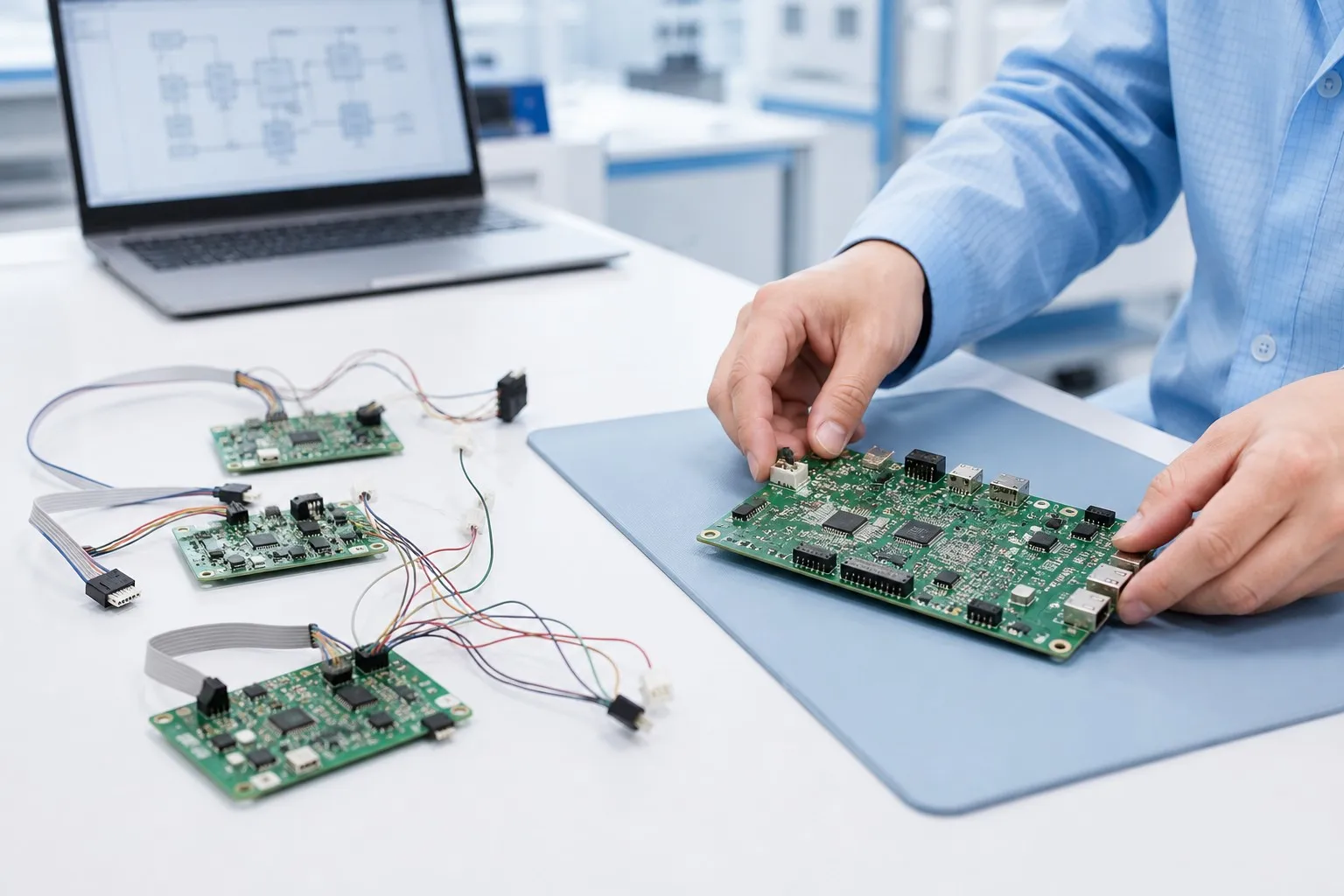
Featured Case Studies
A selection of recent engagements from across industries — more being added.
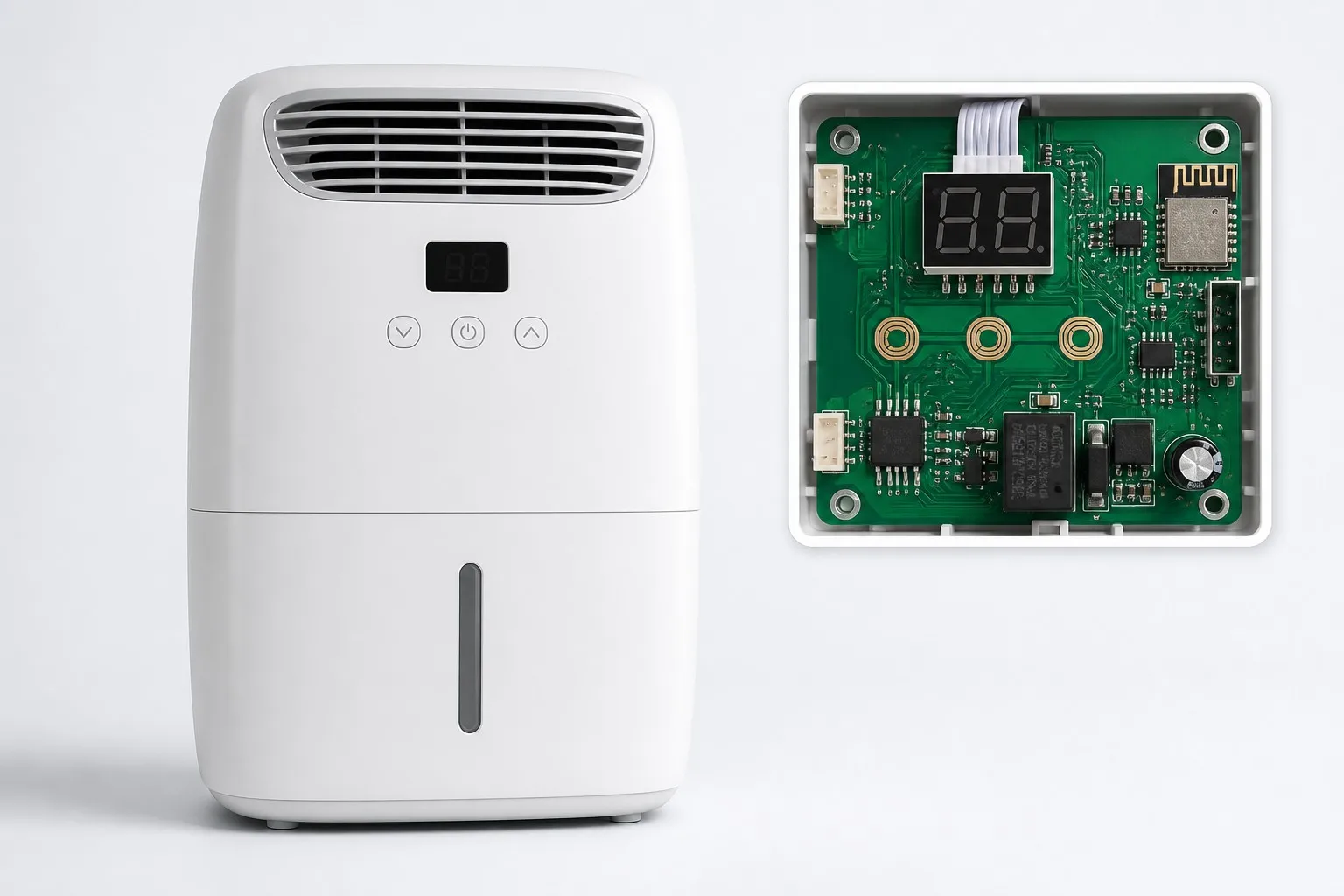
The Product Was Smart. The Electronics Were Holding It Back.
More Features. More Modules. More Problems.
The dehumidifier itself wasn't the problem. Its mechanical design was ready, the functions were defined, and it looked great. But every new feature seemed to bring another electronic module with it — humidity sensing needed one solution, motor control another, and the LED display, touch controls, Wi-Fi, the mobile app, and remote firmware updates kept adding electronics of their own.
Before long, the dehumidifier was running on several independent boards connected by a growing network of wires and connectors. Everything worked. But it was becoming harder to build, harder to service, and harder to upgrade. Could we simplify it?
Instead of treating each function as a separate problem, we looked at the whole dehumidifier as one electronic system. We redesigned the architecture around a single central MCU and brought humidity sensing, motor control, LED display driving, the user interface, power management, and wireless connectivity onto one control platform. Hardware and firmware were developed together, so every function worked as one system — not as a collection of independent modules.
The result was more than a new PCB — it was a simpler product.
- Fewer boards
- Less wiring
- Fewer connectors
- Simpler assembly
- Easier troubleshooting
- A platform ready for future upgrades
The dehumidifier already had every feature customers wanted. We just made the electronics work together. Sometimes the best way to add more features is to remove the complexity.
Read This Case Study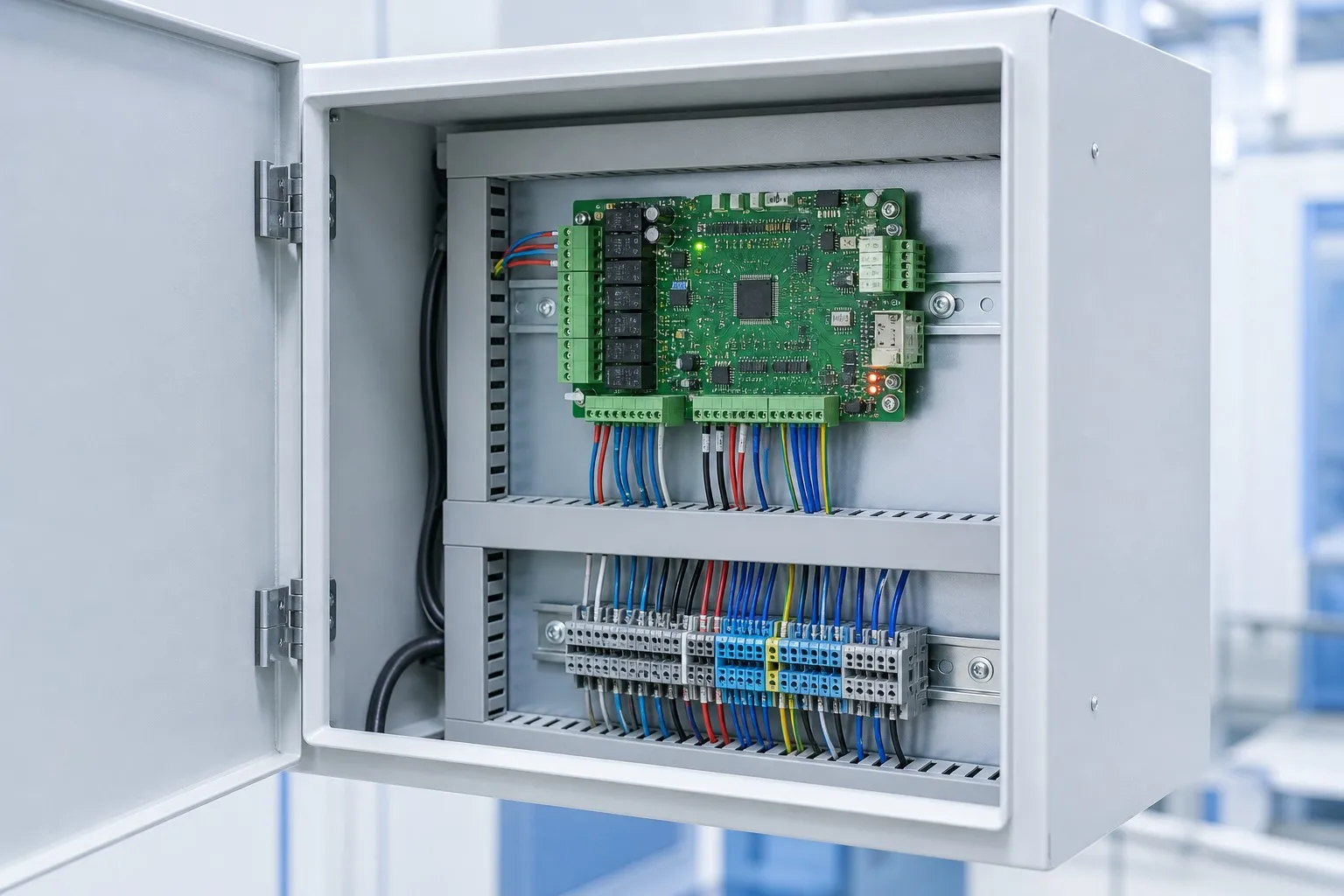
The Machine Was Working. The Problem Was Knowing Why It Stopped.
When it stopped, nobody knew why.
The machine did its job without issue — most of the time, it executed its programmed tasks with precision. The real problem was downtime. When something failed, the machine had almost nothing to say. The cause could be a sensor failure, a stalled motor, a water pump without power, or a temperature reading outside its expected range. For the operators, the outcome was the same: the machine shut down, and finding the cause meant checking components one by one and testing signals — all while the machine sat idle.
That led us to ask a different question: what if the controller could do more than operate the machine — what if it could also monitor it in real time? We developed an industrial control board that gathers operating data across the system through multiple sensor inputs, digital I/O, and analog inputs. It controls motors and pumps, and it also watches voltage, current, and the other parameters that matter.
The firmware monitors the machine continuously and flags anomalies the moment they appear. When a fault does occur, the controller doesn't just shut the system down — it points to the likely cause and guides the troubleshooting process.
The result is more than a control board — it is an integrated monitoring and control system.
- More precise fault detection
- Faster troubleshooting
- Simpler maintenance
- Full visibility into machine status
- Room for future functions and communication upgrades
The machine was already capable of doing its job. We gave it the ability to express itself — an intelligent controller should do more than command. It should also tell you what it knows.
Read This Case Study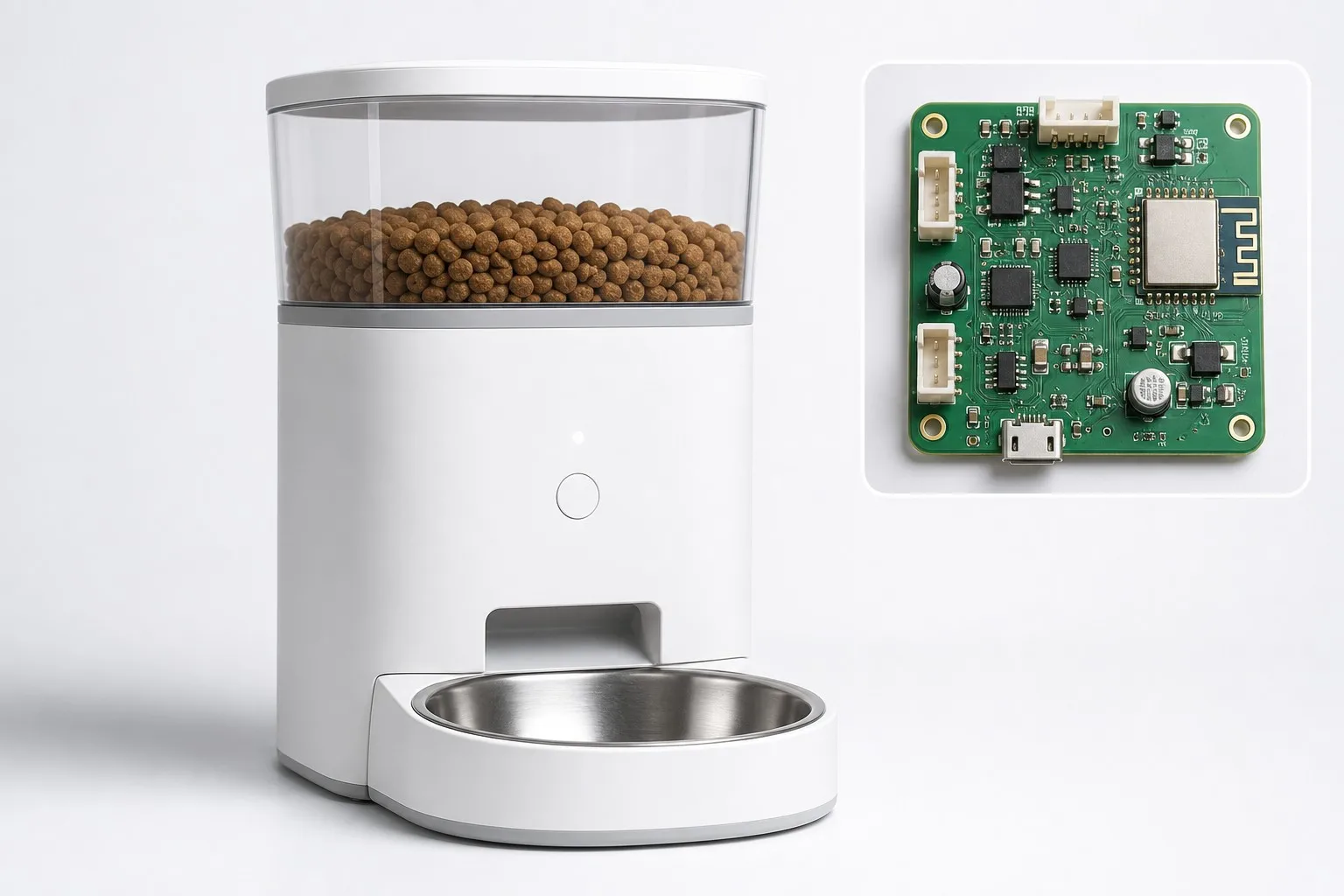
Pets Can't Speak. So the Product Had to Be Smarter.
Feeding on schedule wasn't enough.
The customer keeps several pets at home and, like many pet owners, wants them well cared for even when nobody is around. But the workday gets in the way — once the door closes in the morning, there is no one to refill the food bowl, confirm the food is dispensing correctly, or catch a malfunction. A scheduled feeder helps, but a schedule alone leaves too many questions: What if the food runs out? What if the motor jams? What if the battery drops too low before the next feeding? And most importantly — how does the owner know everything is running smoothly?
We started with a simple question: what if the feeder could handle the daily feeding routine automatically, and free the owner from worry? We designed the control system around the entire feeding experience. The controller manages the feeding schedule and drives the motor to dispense the right amount at the right time. Sensors monitor the food level in real time and check that the dispensing mechanism is working correctly — if the motor jams, the system detects the anomaly and responds appropriately, instead of forcing the motor to keep running.
Battery monitoring tracks power and raises a warning before a low level can affect a feeding. Wi-Fi and Bluetooth keep the feeder connected, so the owner can check and control it remotely from an app. And the interface stays deliberately simple: no complex menus, no superfluous settings, just the essentials. Is the next feeding scheduled? Was the food dispensed? Is there enough food left? Is the unit operating normally?
Beneath that simple experience, the firmware quietly manages feeding schedules, motor operation, sensor feedback, anomaly detection, and app communication.
The result is more than an automatic feeder — it is a routine the owner can trust.
- Meals dispensed on schedule, hands-free
- Food level and jams monitored in real time
- Low-battery warning before it matters
- Remote control and status from the app
- A simple interface — the essentials at a glance
The technology stayed in the background. The pets simply got their meals. And the owner got something just as important — peace of mind.
Read This Case Study
Frequently Asked Questions
Can you make a control board with WiFi/APP control — is software included?
Yes. We have mature cases across multiple product lines. Hardware plus embedded software are fully covered, and the APP can connect to mainstream platforms such as Tuya — you only need to provide the functional specification.
Can you consolidate several small boards into one integrated control platform?
Yes — our industrial control board case shows exactly this: multiple function boards merged into a single integrated platform, keeping the same features with far less complexity.
How did the smart dehumidifier case solve the multi-board problem?
The product was smart, but the electronics were holding it back — we consolidated the control into a single integrated platform, delivering the same features with simpler assembly and better reliability.
Can you add WiFi to an existing product that currently uses button control?
Yes — we evaluate adding Wi-Fi and APP control based on your existing product solution, confirming the current PCBA, communication method, and APP functional requirements first.
How do you waterproof a control board for wet environments?
Conformal coating (acrylic or polyurethane), with moisture-resistant PCB material and component selection — the solution is customized to the required IP rating.
Have a Similar Challenge?
Tell us about your product, its requirements, and where it stands today — we will map an approach with you.
Discuss Your Challenge