
Modern heating systems are no longer defined only by their ability to produce warmth. Today’s commercial, industrial, and residential heating equipment must also deliver intelligent temperature management, operational safety, stable energy performance, and long-term reliability. As electric heating technology continues to evolve, the role of the electric convection heater control board has become increasingly important in ensuring both safety and precision throughout the heating process.
Electric convection heaters are widely used in garages, workshops, offices, warehouses, residential buildings, and industrial facilities because they provide comfortable and consistent air circulation while maintaining relatively quiet operation. However, behind the smooth and stable heating performance lies a highly sophisticated electronic system responsible for monitoring, regulating, and protecting the entire unit. The control board acts as the operational center of the heater, coordinating every major function from temperature sensing to power distribution.
The growing demand for intelligent climate control has pushed manufacturers to develop more advanced electronic management systems. Modern convector heater control PCBA solutions are now designed with enhanced protection mechanisms, adaptive temperature algorithms, and smart communication capabilities that improve both user safety and heating efficiency. These innovations are transforming electric convection heaters into highly responsive systems capable of operating reliably even in demanding environments.
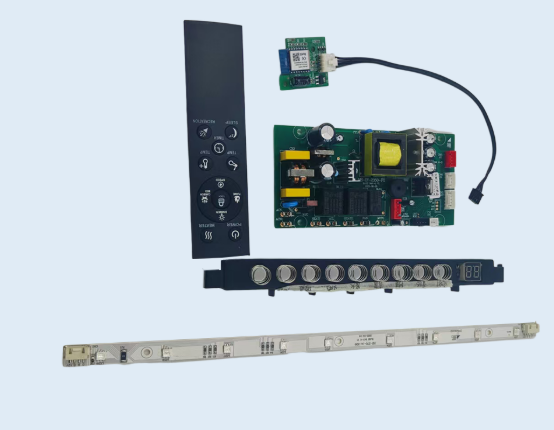
Why Electric Convection Heater Control Board Design Matters
The performance of an electric convection heater depends heavily on the quality of its electronic control system. While heating elements generate thermal energy, the electric convection heater control board determines how effectively and safely that energy is delivered. Without precise electronic management, even high-quality heating components may produce unstable temperatures, inefficient operation, or unsafe conditions.
A well-designed control board continuously processes data from sensors and operational circuits to maintain balanced heating performance. It regulates voltage, adjusts heating intensity, and monitors thermal conditions in real time. This level of control is especially important in larger spaces where temperature consistency can be difficult to maintain.
In modern heating systems, precision is not simply about reaching a target temperature. It also involves maintaining thermal stability while minimizing unnecessary power consumption. An advanced heater main control board ensures that heating cycles remain smooth and responsive rather than fluctuating excessively. Stable operation improves comfort while also reducing stress on internal components.
The importance of intelligent control becomes even more apparent in environments with changing conditions. Garages, industrial facilities, and commercial workshops often experience temperature shifts caused by open doors, ventilation systems, or equipment operation. The control board must respond quickly to these environmental changes without compromising efficiency or safety.
Convector Heater Control PCBA Supports Advanced Temperature Accuracy
Temperature precision has become a key requirement in modern heating technology. Users increasingly expect heating systems to maintain comfortable indoor environments without constant manual adjustment. This level of performance relies heavily on the sophistication of the convector heater control PCBA.
Advanced PCBAs integrate multiple sensing and regulation functions that allow heaters to react dynamically to surrounding conditions. Instead of operating at fixed heating levels, intelligent systems continuously fine-tune energy output according to real-time temperature feedback.
This adaptive control improves both comfort and efficiency. Sudden overheating or excessive cooling can create uncomfortable indoor environments while increasing power consumption. A high-performance heating element control board helps eliminate these issues by ensuring gradual and controlled thermal adjustments.
Precision control is particularly valuable in commercial and industrial applications where environmental stability may influence productivity, equipment operation, or material storage conditions. In workshops or warehouses, uneven heating can affect worker comfort and operational efficiency. Intelligent control boards create more balanced thermal distribution while maintaining stable performance throughout large areas.
Another important aspect of precision design involves airflow coordination. Electric convection heaters rely on natural or assisted air circulation to distribute warmth evenly. The control board often manages fan operation alongside heating intensity, ensuring that warm air moves consistently without causing unnecessary energy waste or excessive noise.
As heating systems become more advanced, manufacturers continue improving the responsiveness and accuracy of electric convection heater control board technology to meet growing expectations for thermal stability and user comfort.
Safety Features Integrated Into Heater Main Control Board Systems
Safety remains one of the most critical aspects of electric heating equipment. Heating systems operate under high electrical loads and elevated temperatures, making reliable protective mechanisms essential for preventing accidents and ensuring long-term durability.
The modern heater main control board incorporates multiple layers of safety management designed to monitor system conditions continuously. These protective functions help reduce risks associated with overheating, electrical instability, component failure, and abnormal operating conditions.
Thermal monitoring is one of the most important safety features in convection heater systems. Temperature sensors communicate directly with the control board, allowing it to detect abnormal heat buildup before dangerous conditions develop. If temperatures exceed safe operating limits, the system can automatically reduce power output or shut down entirely.
Electrical protection is equally important. Industrial facilities and garages often experience fluctuating power conditions because of heavy machinery or unstable electrical loads. A high-quality garage convection heater control board includes voltage regulation and overload protection circuits that help maintain stable operation under challenging conditions.
Short-circuit prevention and current management also play major roles in modern heater safety. Without proper electronic supervision, sudden power surges or internal component failures could damage heating elements or create fire hazards. Intelligent control boards isolate faults quickly and minimize the risk of system-wide failure.
Another valuable safety feature involves self-diagnostic capability. Many advanced control boards continuously evaluate sensor performance, airflow conditions, and electrical stability. Early detection of irregularities allows maintenance teams to address issues before they become serious operational problems.
As heating technology advances, safety systems are becoming more proactive rather than simply reactive. Modern convector heater control PCBA designs focus on preventing hazardous conditions before they occur, significantly improving overall system reliability.
Garage Convection Heater Control Board Design for Harsh Environments
Garages and industrial spaces create particularly demanding conditions for electric heating systems. Dust, vibration, moisture, temperature fluctuations, and continuous operation all place additional stress on electronic components. This is why specialized garage convection heater control board designs are essential for maintaining reliable performance.
Unlike residential environments, garages often require heating systems capable of handling extended operating hours and sudden environmental changes. Large doors opening during winter can rapidly alter indoor temperatures, requiring fast and stable thermal response from the heating system.
A durable control board ensures that heating elements adjust efficiently without creating unstable temperature swings. The board must also withstand harsh environmental exposure without suffering from electrical degradation or thermal fatigue.
Protective PCB coatings, reinforced solder connections, and advanced thermal management systems are commonly integrated into industrial-grade heating element control board designs. These features improve durability while reducing the risk of corrosion or component damage.
In addition to physical durability, garage heating systems increasingly require intelligent automation features. Programmable schedules, remote monitoring, and smart temperature control are becoming common expectations in modern industrial heating solutions. These advanced capabilities depend entirely on the performance of the underlying electronic control architecture.
A reliable electric convection heater control board not only ensures stable heating operation but also supports the integration of smart building technologies that improve convenience and operational efficiency.