
The concept of a connected home has transitioned from a futuristic luxury to a standard expectation. At the heart of this transformation lies the silent integration of highly sophisticated circuit boards designed to bridge the gap between physical machinery and digital intelligence. As household devices grow more autonomous, the demand for compact, efficient, and robust processing units has skyrocketed. Manufacturers are shifting away from traditional, isolated microcontrollers in favor of platforms that offer native connectivity and immense computational power. This evolution ensures that everything from kitchen utilities to climate regulation systems can communicate effortlessly, adapting to user behavior while optimizing energy consumption.
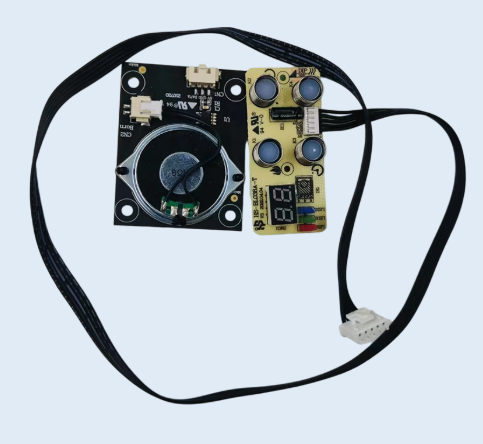
Exploring the Core Architecture of the ESP32 IoT PCBA
Deep within contemporary smart ecosystems, the physical circuit board serves as the nervous system for any automated hardware. Utilizing an esp32 iot pcba allows developers to consolidate processing power and dual-band communication onto a single, space-conscious platform. This specific printed circuit board assembly manages complex instruction sets without requiring bulky external components. By integrating memory, power management, and input-output interfaces closely around the main silicon, these assemblies minimize signal degradation and thermal output.
The design philosophy behind an integrated assembly prioritizes long-term durability and electrical stability. When engineering a board destined for domestic appliances, spatial efficiency is critical. The placement of traces, the shielding of high-frequency components, and the isolation of high-voltage relays must be executed with absolute precision. A well-designed board handles volatile electrical environments gracefully, ensuring that minor power fluctuations do not disrupt the broader smart network. This underlying stability is precisely what makes advanced embedded assemblies the preferred foundation for engineering firms worldwide.
The Dynamic Performance of the ESP32 Wi-Fi Bluetooth Control Board
Wireless communication requires a delicate balance between range, speed, and power consumption. Implementing an esp32 wi-fi bluetooth control board gives appliances the unique ability to handle two distinct wireless protocols concurrently. Wi-Fi functionality connects the appliance directly to local networks and cloud servers, enabling remote monitoring, over-the-air firmware updates, and complex data logging. This high-bandwidth connection ensures that the device remains accessible from across the globe, feeding telemetry data to application dashboards in real time.
Simultaneously, the Bluetooth low energy capabilities of the system handle localized interactions. When a user approaches an appliance, Bluetooth facilitates immediate, low-latency pairing for setup, diagnostic troubleshooting, or localized control without burdening the home Wi-Fi network. This dual-protocol capability prevents network congestion and provides a fallback mechanism; if the primary local internet connection drops, localized Bluetooth communication ensures the appliance remains operational and controllable via nearby mobile applications.
Engineering Efficiency via a Smart Appliance Control Board with ESP32
Integrating computational intelligence directly into household machinery changes how devices interact with their environment. Building a smart appliance control board with esp32 involves programming the system to interpret raw sensor data and execute localized decisions instantly. Traditional appliances rely on rigid, hardcoded timers and mechanical switches. Modern alternatives, however, utilize adaptive logic loops to modify their behavior based on variables such as ambient temperature, humidity, and operational load.
Consider a refrigeration unit or a climate control system equipped with this level of embedded intelligence. Instead of cycling a compressor on and off at fixed intervals, the control board monitors usage patterns, door openings, and external thermal changes. The onboard dual-core processor calculates the optimal operational curve, driving variable-speed motors smoothly to conserve energy. This local processing minimizes the need to constant rely on cloud-based computation, ensuring that critical safety and efficiency algorithms execute flawlessly even during network outages.
Overcoming Industrial Challenges Using an ESP32 Appliance Control Board
Deploying delicate electronics into heavy-duty domestic machinery presents severe environmental challenges. An esp32 appliance control board must be engineered to withstand constant vibration, localized heat generation, and potential moisture exposure. For instance, in laundry systems or dishwashers, the control unit sits in close proximity to electric motors and water lines. Electrical noise generated by large inductive loads can easily disrupt sensitive digital signals if the control architecture lacks proper isolation.
To combat these harsh conditions, advanced manufacturing techniques are employed during the physical assembly process. Conformal coating is applied across the surface of the board to shield sensitive pins from moisture and corrosion. Specialized optocouplers isolate the low-voltage processing core from high-voltage switching circuits, protecting the delicate silicon from inductive spikes. Furthermore, thermal vias and dedicated heat dissipation zones are integrated into the circuit board layout, preventing localized hotspots from degrading the lifespan of the components over years of continuous operation.
Future Innovations Driven by the IoT Appliance Control PCBA
As artificial intelligence moves from remote data centers to local edge devices, the role of embedded hardware is expanding rapidly. The deployment of a sophisticated iot appliance control pcba enables predictive maintenance capabilities right at the machine level. By utilizing localized machine learning frameworks, the control assembly can analyze subtle changes in acoustic signatures or electrical current consumption over time. When a bearing begins to wear down or a filter becomes clogged, the system identifies the anomaly before a catastrophic failure occurs.
This shift toward localized edge intelligence dramatically reduces the volume of data that must be transmitted over the internet, enhancing data privacy and reducing cloud infrastructure costs for manufacturers. Future iterations of these control platforms will focus on seamless integration with decentralized smart grids, allowing household machines to automatically schedule energy-intensive tasks during off-peak hours when electricity is more affordable and sustainably sourced. The evolution of these compact, connected control centers ensures that the homes of tomorrow will be significantly more self-sustaining, efficient, and intuitive than ever before.