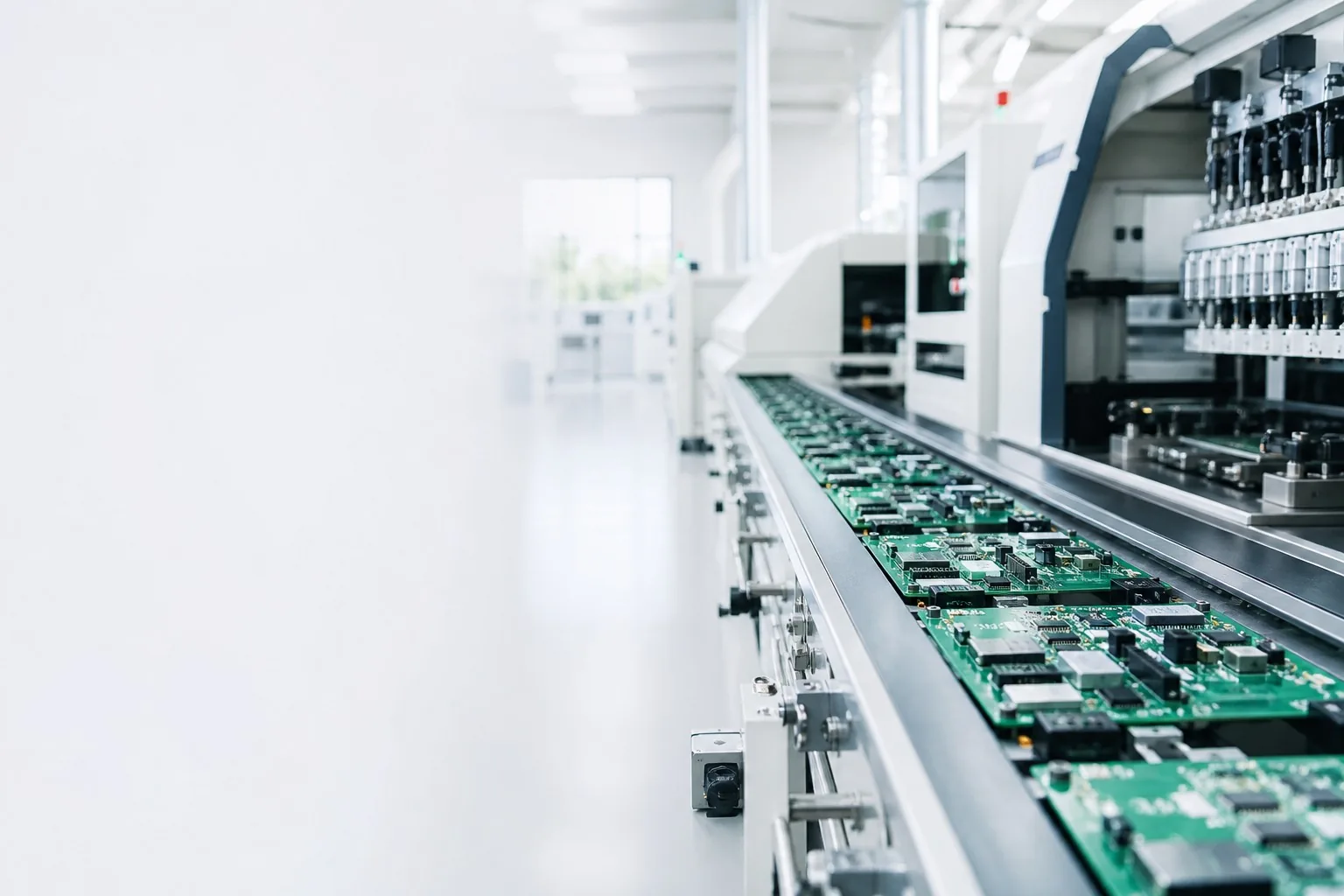
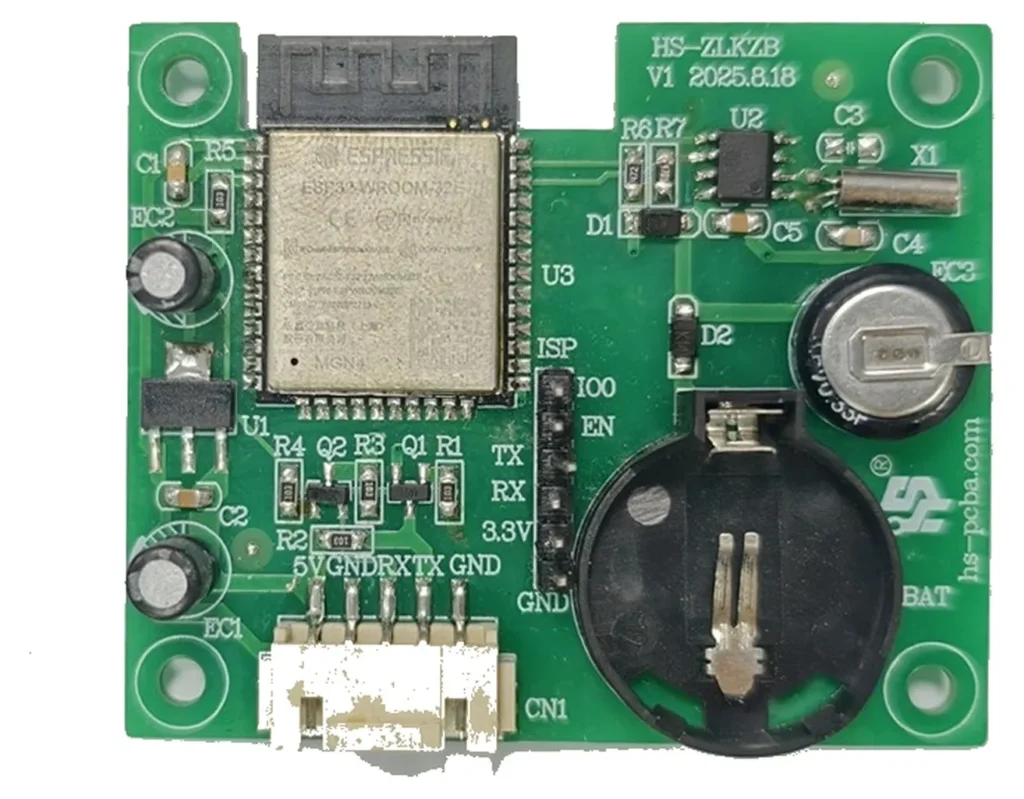
An ESP32 Wi-Fi + Bluetooth control board pairs a dual-core 32-bit Xtensa LX6 processor with integrated Wi-Fi and BLE 5.0 radio, so one board carries both the appliance logic and the connectivity layer. The split is deliberate: one core runs thermal control, sensor sampling and user-interface logic, while the other maintains the network stack, keeping the device reachable even during heavy local processing.
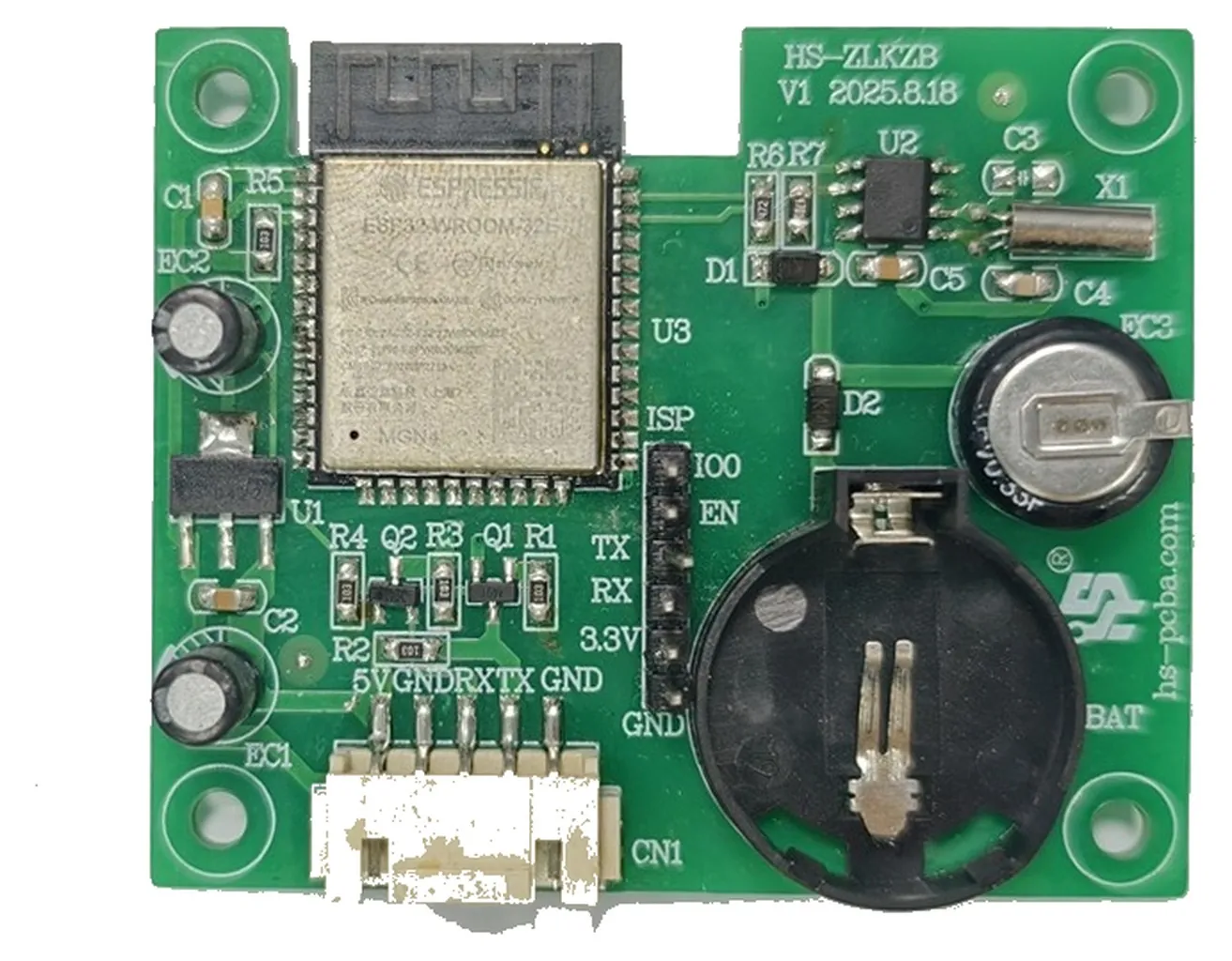
Architecture: two cores, two jobs
The dual-core split removes the failure mode common to single-core IoT designs, where a busy control loop starves the network task and the device drops off the home Wi-Fi. In our boards, core separation is enforced in firmware structure: sensor PID loops and safety interlocks run deterministically on the logic core, while the communication core handles association, keep-alives and cloud messaging. For the end user the effect is simple — the appliance stays online through its full duty cycle.
Connectivity stack
- Wi-Fi + BLE 5.0 in the same module — BLE for fast, low-power app-based setup, Wi-Fi for long-range cloud operation.
- OTA / FOTA: firmware, and in some builds the application profile, can be updated after installation. New flame patterns, energy algorithms or safety parameters ship without a service visit.
- MQTT-ready messaging for standard cloud and local-home-hub integrations.
- Cloud platforms such as Tuya Smart Life for app control and voice-assistant hooks.
Peripheral set available on the board
| Peripheral | Typical use in appliance controls |
|---|---|
| Capacitive touch inputs | Glass-panel or sealed-surface keypads with no moving parts. |
| ADC channels | NTC temperature sensing, current sensing, battery/level monitoring. |
| Hall sensors | Door/cover position, brushless fan commutation. |
| SPI / I2C | Monochrome or color displays, external sensors, secure elements. |
| GPIO / PWM | LED flame channels, relay and triac gate drive, pump speed control. |
| Low-power sleep modes | Standby current reduction between network events. |
Board-level engineering that decides field reliability
Three decisions separate a robust ESP32 control board from a prototype-grade one. First, multi-layer routing with dedicated ground and isolation planes, so the RF path is electrically separated from the high-current motor and heater lines that share the same enclosure. Second, conformal coating on the logic and RF section, because appliance environments — kitchens, laundry rooms, humidifiers — deliver condensation to uncoated boards. Third, a clean power path for the radio: a stable, low-noise supply keeps RSSI and throughput consistent instead of the intermittent drops that drive warranty claims.
For the heating-appliance side of this architecture — how the same board drives two-stage elements and runs the safety stack — see our next-generation control board design guide and the smart home integration article.
Quality system behind the boards
Every ESP32 control PCBA we ship is built under our ISO 9001-certified quality management system (scope: PCB assembly, certificate No. 51824Q09327R0), with IPC-A-610 acceptance, J-STD-001 soldering and IPC-2221 design practice. Details on our certifications page.
Request a Quote for Your ESP32 Control PCBA
Send your schematic, Gerber files or a reference board photo. Our engineers reply with a DFM review, RF-layout check and a quotation.
Request a QuoteAbout Author